

In the early 2000s, Dyneema was a breakthrough lifeline material. It is as strong as steel and much lighter, inexpensive, simple to install (at least it seemed that way), low stretch, UV resistant, and chafe resistant. World Sailing accepted it for racing. And then in 2016, World Sailing changed their rules, restricting Dymeena lifelines to inshore and multihull racing. Several boats had broken lower lifelines. It turned out that when rail meat leans over bare stainless wire lifelines, the rocking wire forms sharp burrs inside the stanchion holes, and when you switch to Dyneema and hang rail meat on them again, the burrs can saw right through Dyneema lifelines. Another risk, recognized by super maxis, such as Comanche, was that the heat generated by a spinnaker sheet running across a lifeline at high speed could melt it. For the boats we sail we assumed this was only theoretical.
Polyester Heat and Dyneema Don’t Mix Well
I noticed the potential for chafe on my PDQ 32. Genoa sheets would saw through the vinyl lifeline covers after just a few hard winchings. But the wire underneath would not be damaged, so we added protective cover to protect the rope and nothing came of it.
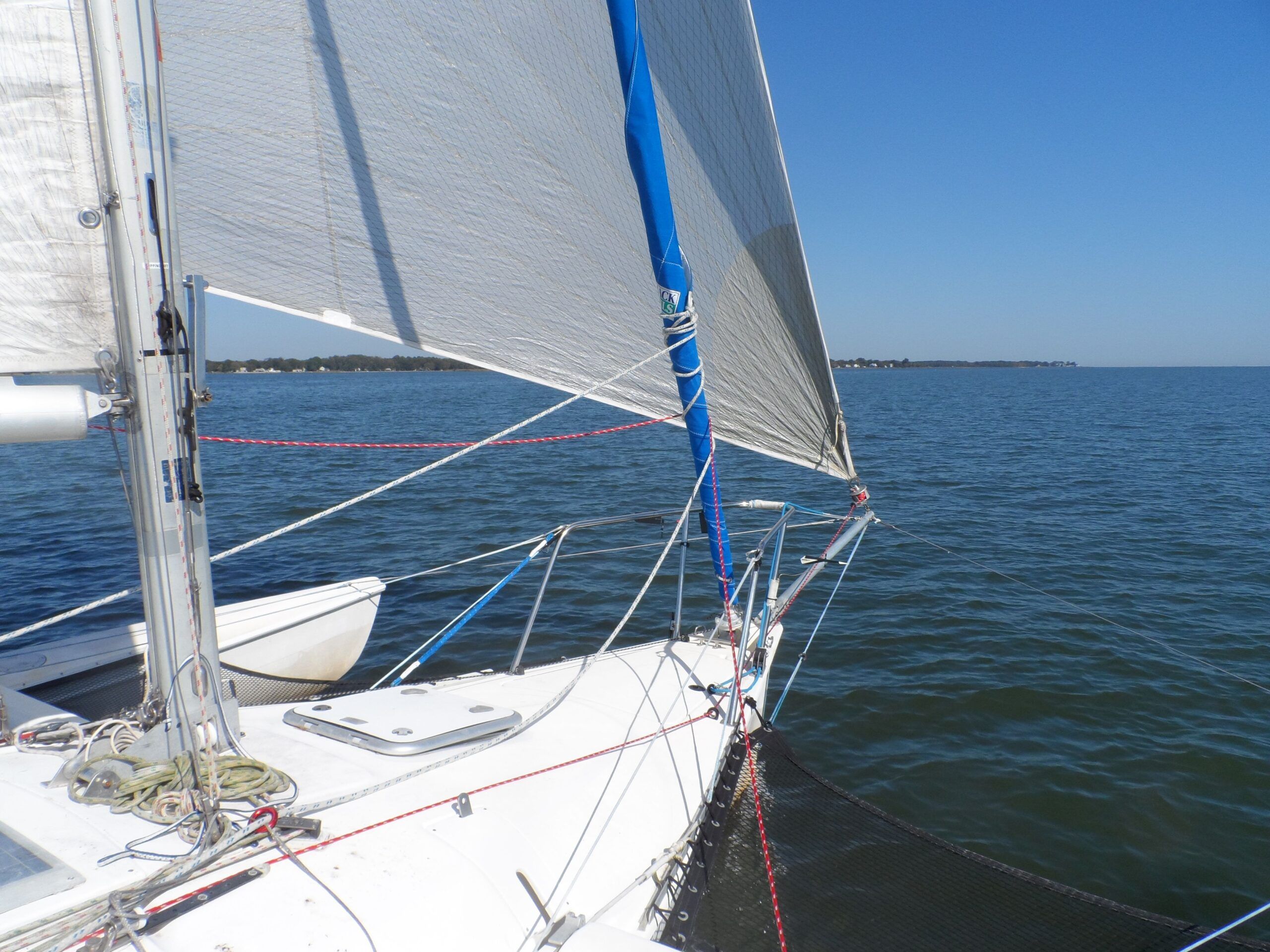
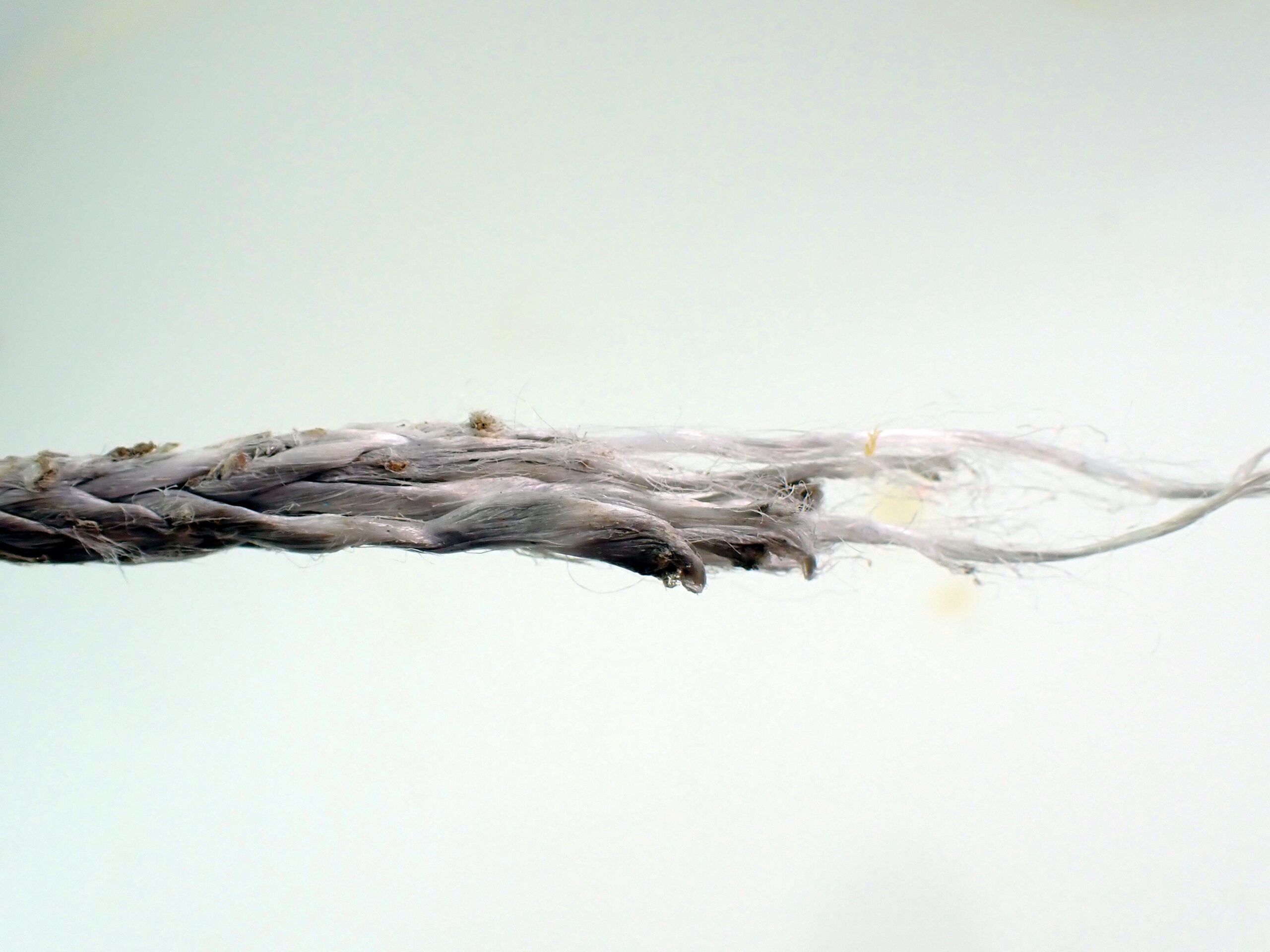
Last week I burned through a 3-year-old 6 mm Amsteel whisker stay—8,600 pounds minimum breaking strength when new—during a high wind jibe on and F-24 trimaran (1,800 pounds). I’m uncertain of the exact sequence, since the boat was moving at about 12-15 knots, I was single handing, and was looking the other way at the moment it happened.
As an experiment, in part because of higher winds, I decided to rig for an outside jibe, which is unusual for a reacher. Instead of tacking through a jibe, like a genoa, the sheets were run forward of the reacher tack so that the sail could float around the bow during a jibe, avoiding the need to pull it through the gap between the tack and the forestay. This is common with asymmetrical spinnakers, working well in stronger winds, but the lazy sheet must be carefully tended to avoid running it over.
Sheet Burn-Through
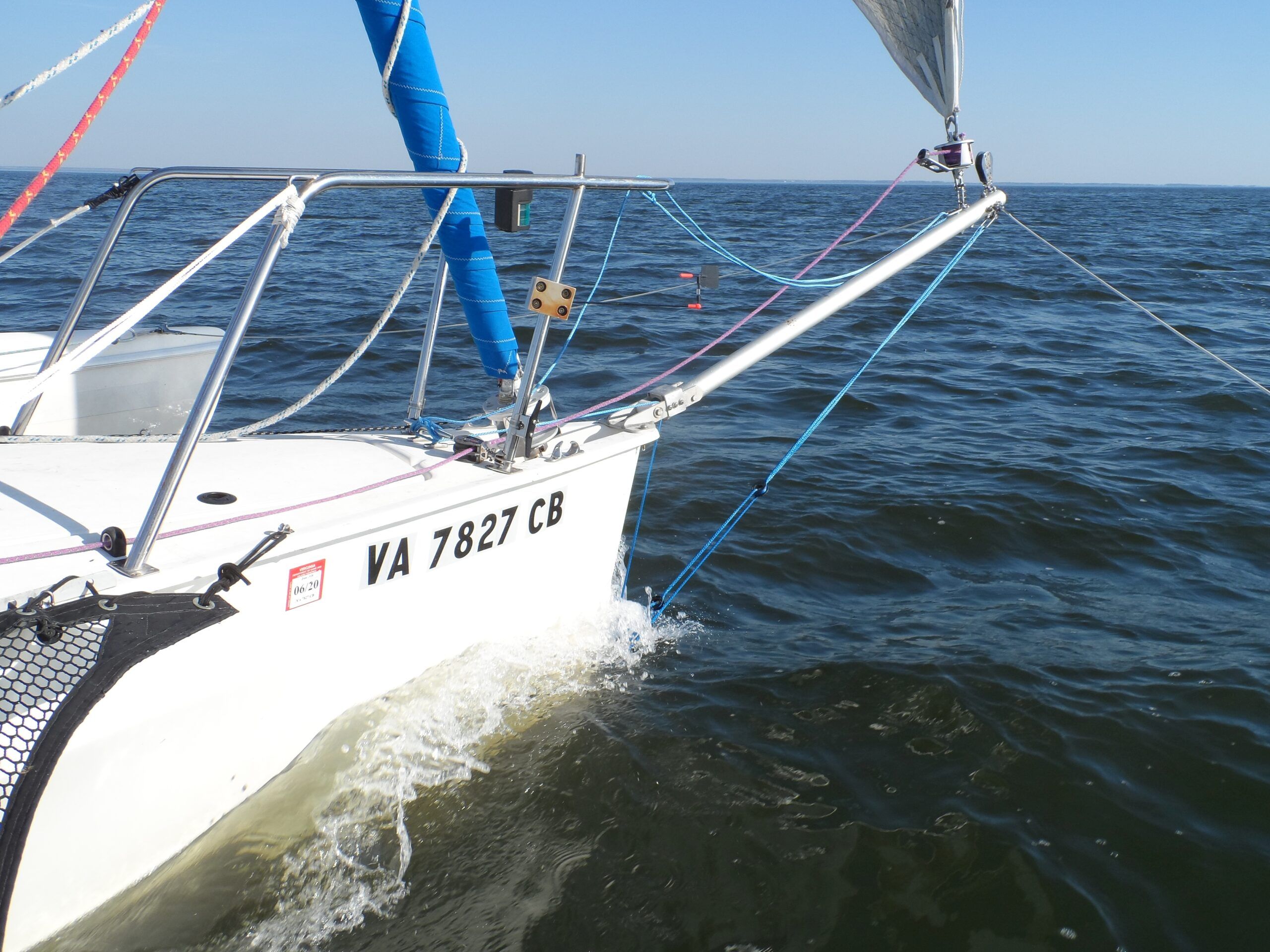
I believe the lazy sheet got under the bow sprit, a kink caught in a block at just the wrong moment, and thus it took the load when the sail opened on the new tack. The sheet made like a saw across the whisker stay, lightly melting the surface for about a foot, and then found a stable center and burned its way through. By that time the load had come onto the bobstay and the other whisker stay, and so miraculously there was no collateral damage.
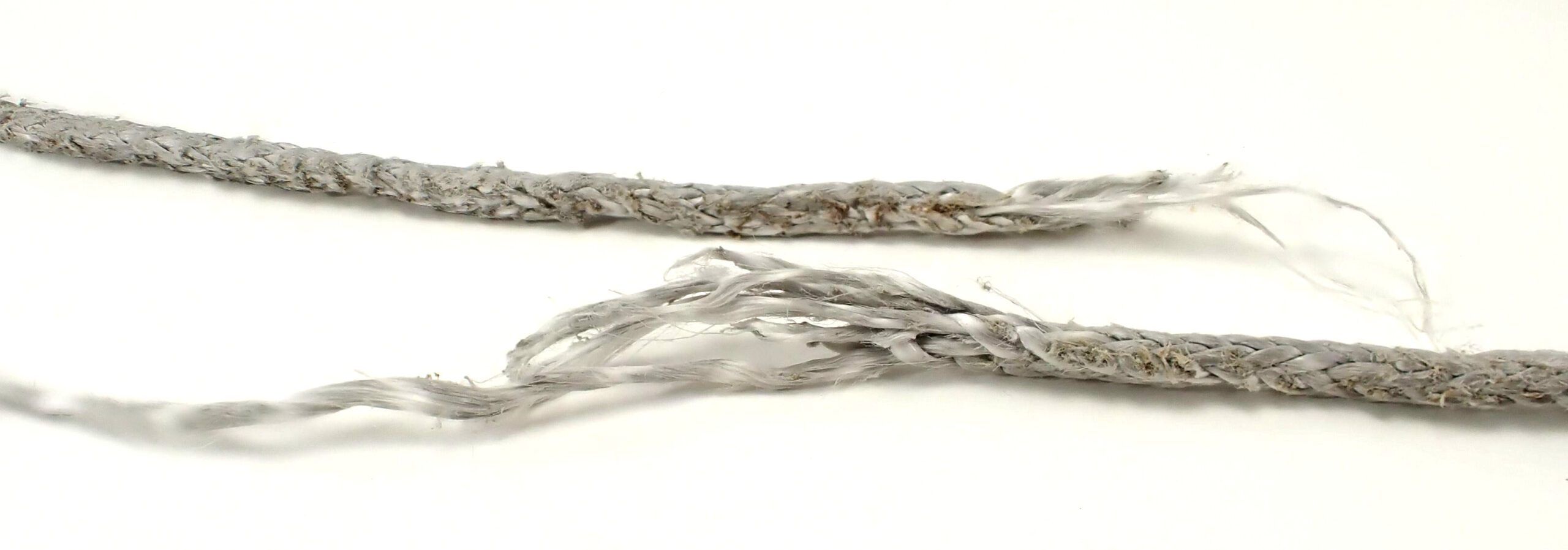
I heard a thud, but the reacher came around the way it was supposed to and everything seemed intact. It was not until after I sorted out the sheet that I saw the leeward whisker stay just hanging. How could it break under so little load, no more than the tension on the sheet?
Assessing the Cause of the Damage
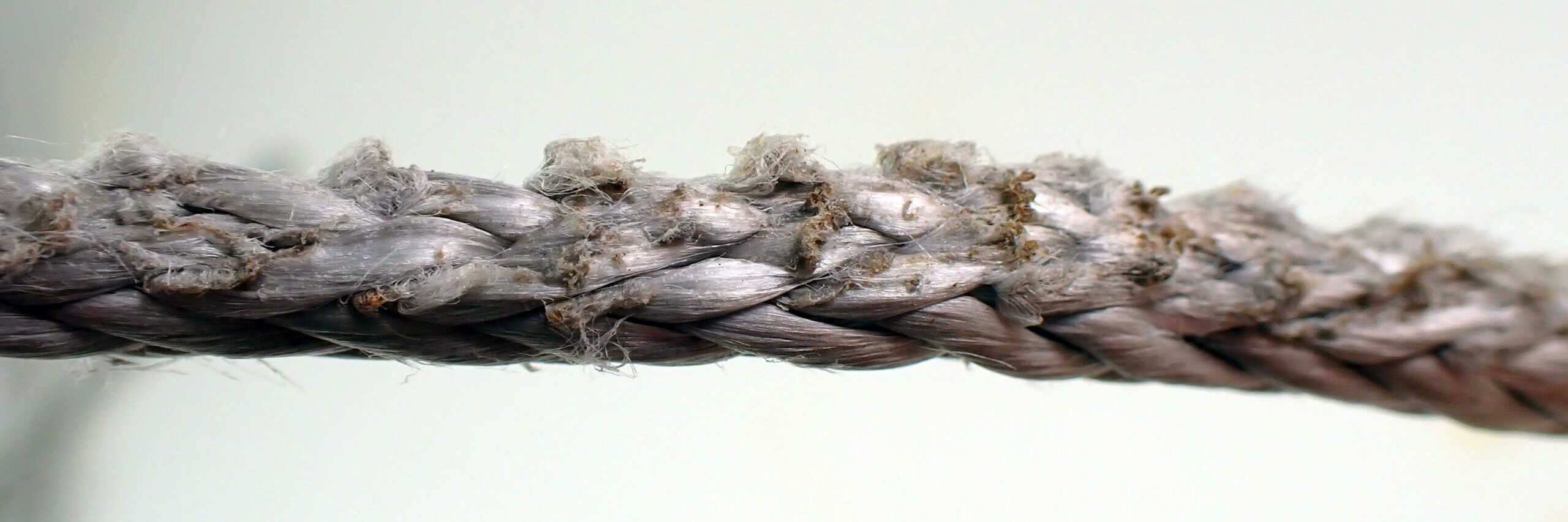
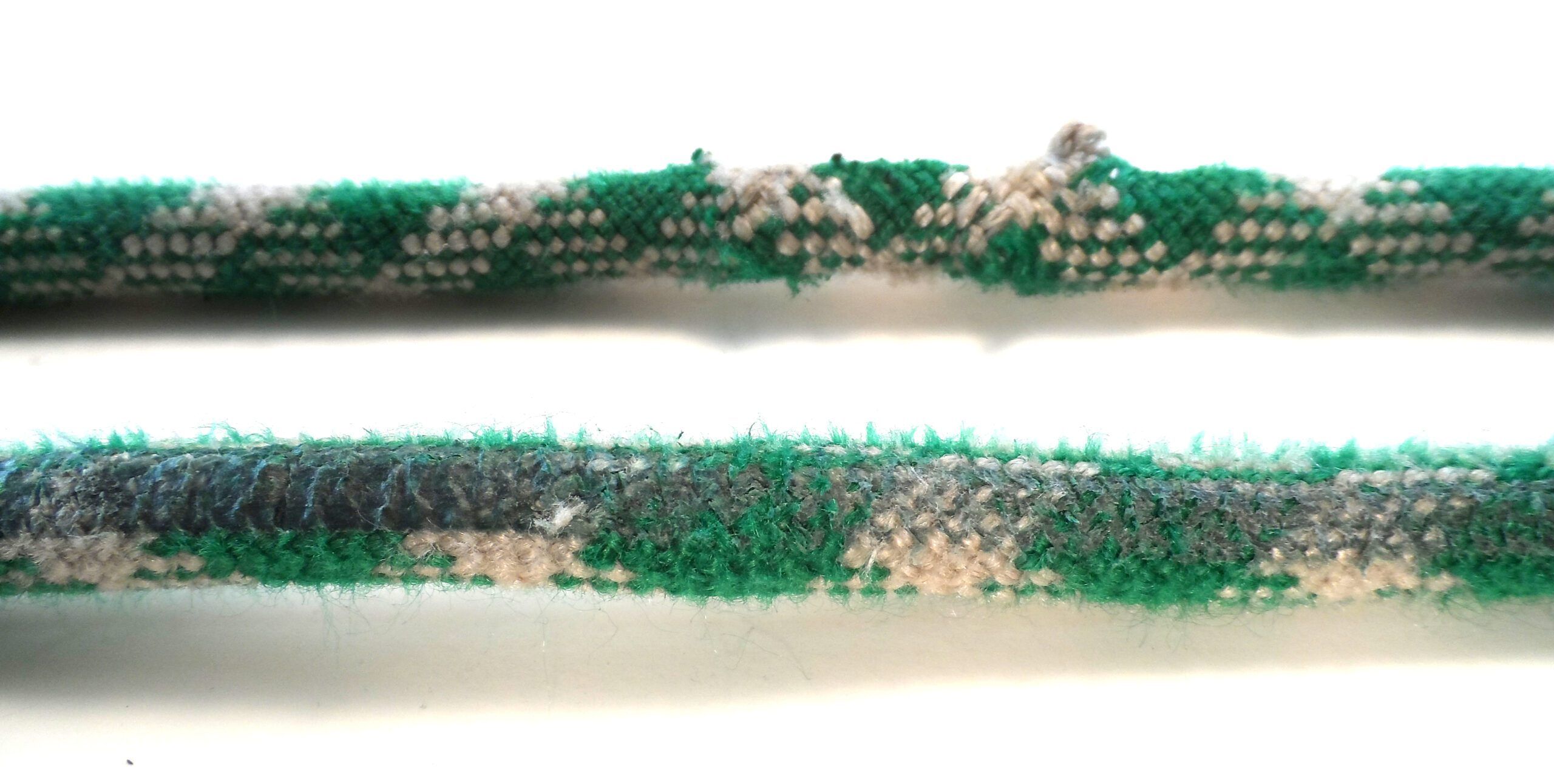
It wasn’t until I began measuring the broken stay for replacement back at the dock that I noticed the evidence of melting. I examined all of the hardware and found no distortion. The spliced eyes were not flattened and distorted in the way have come to expect after high load testing. The lashing was not hard to untie. Based on the angles and the wind, the load on the sheet was no more than 200-400 pounds. I believe it wrapped around the whisker stay about 120 degrees, and probably ran like that for a few feet under load.
Because the whisker stay was very tight and non-stretch, the tight rope effect was present, increasing the tension on the stay many times beyond that of the sheet doubled around it. Based on all of this, I estimate that the stay broke at about 800 pounds, or less than 12 percent of breaking strength and less than half of the recommended working load for Dyneema. It seems that friction and resulting heat from the moving polyester double braid sheet reduced the strength of the Dyneema whisker stay about 4-6 times, depending on what assumptions we make about UV and aging. There was no observable damage to the sheet.
Bottom Line
So it’s not theory. The frictional heat generated by polyester rope running over tensioned Dyneema can melt and weaken the line even on a modestly sized boat. This type of failure is not reserved for maxis and huge loads, any more than it takes thousands of pounds of pressure to reach the 700 F required to start a campfire by rubbing two sticks together. All that is required is the right combination of load, speed, materials and wrap angle sufficient to melt the surface (300 F) and heat the core yarns above the recommended operating temperature (160 F) of Dyneema.
Something to think about when sheets and guys go whipping around synthetic shrouds. Perhaps vulnerable parts should be covered. See “Adding a Polyester Cover to Dyneema Single Braid.” But ideally, rig to avoid the problem in the first place. For example, I won’t try an outside jibe on a reacher again, but that is a boat-specific solution.










After this discussion, why use it at all!!
Because there are applications (most cascade purchases, for example) where Dyneema outperforms anything else, including steel cable. There can also be a tendency to use Dyneema for everything, which is wrong.
Like anything, design and material selection go hand in hand.
Spectra is the default line choice for modern skydiving parachutes. Spectra linesets are typically replaced every 200-300 jumps because friction heating and the resulting contraction pull the sets out of trim. It’s a great material, but you do need to be low-key paranoid about it in applications with significant friction.