When a rope is no longer fit for purpose, for example a halyard with a chafed spot, we either keep it for future might-needs or coil it up and leave it by the dumpster. But used chain, when replaced due to corrosion at one end or the decision to fit a longer length, usually ends up in the dumpster. What use is an old rusty chain? As it turns out, there are quite a few possibilities, perhaps not for you, but for your fellow sailors. Let’s start by assuming it’s not a rusty lump, but that in fact there are some good parts with the galvanizing intact.
Leaders for Dinghy and Small Boat Anchors
Every dinghy or small boat needs 5-20 feet of chain between the anchor and the chain. All of mine have been salvaged from the good parts of retired cruising boat chains.
Chain Kellet
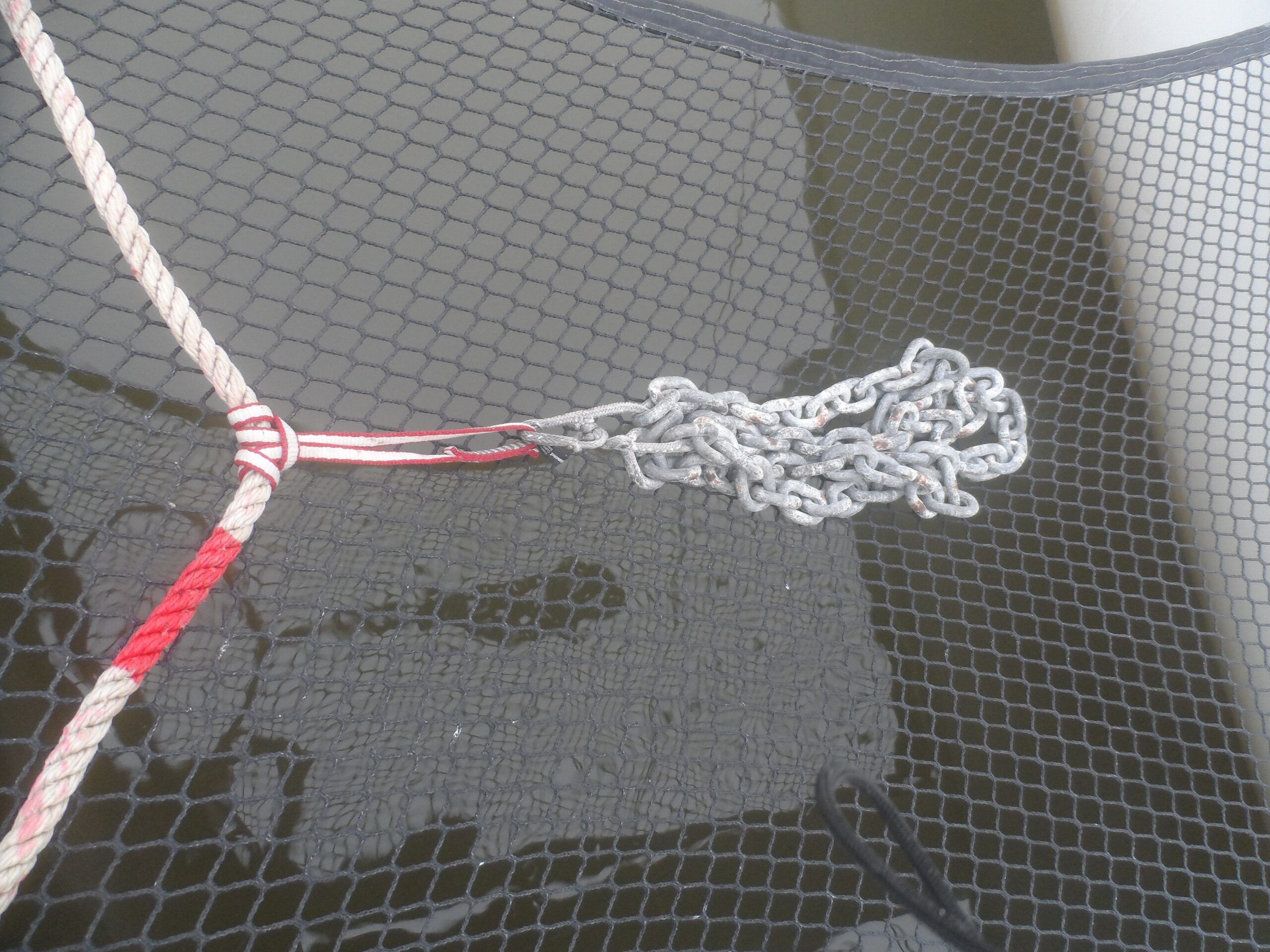
Although chain rode is king for abrasion resistance, yawing reduction, and short scope anchoring, a kellet on a rope rode can help smaller boats with combination rodes anchor on shorter scope and avoid swinging into boats using all-chain in crowded harbors. Unfortunately, attaching and removing a kellet involves leaning over the bow and lifting an awkward weight, not the best thing in bumpy conditions or with an old back. However, a loop of 10-20 feet of chain attached to the rode with a prusik sling and a shackle can be deployed and recovered right over the rollers. Having an open anchor locker (no hawse pipe) I often leave mine on the rode. Super easy.
Hammerlock with Chain
The usual hammerlock mooring uses a second anchor on about 1.5:1 scope. You lower it from the bow at the extreme of swing, it sort of sets, but mostly it drags back and forth, reducing yawing. The same can be done with a kellet or chain kellet. Again, the chain is best formed into a loop and deployed over the bow with just enough rope rode so that it rest on the bottom, plus a few feet. The dragging can be damaging to sensitive seabeds, so do not use any sort of bottom drag yaw reduction method on bottoms with coral or seagrass.
Chafe Protection on Concrete Docks
In many of the harbors in Hawaii, every boat is attached to iron ring on the concrete bulkhead with a few feet of chain, to which the nylon mooring lines are shackled. The constant surge eats any sort of rope or rope covered with chafe gear in a matter of days. The galvanizing wears off the chain within days, but rust barely forms because of the constant rubbing. The short pieces are easily replaced. Also shore fasts for rocky coasts (but never around a tree without effective padding). We do not recommend using chain for chafe protection on wooden docks and around cleats.
Curtain and Screen Weights
Bug screen for hatches can be installed with Velcro, but a simple oversized rectangle with chain sewn into the hem can be simpler. I have a weighted fleece covering over my companionway to keep the warm in when I coming and going. I have a tightly fitted inner cover that seals when I’m inside for a while, but the simple weighted hem is faster and far simpler than fussing with Velcro when ducking in and out.
Drift Anchor
Drift fishing over sand bars in your dinghy, but having trouble controlling the speed? Drag a length of chain on the bottom, adjusting the length to set the speed. Ten feet of chain tied to 10-20 feet of rope is common.
Racing Course Marker Anchors
The local sailing club might appreciate a donation.
Drogue Tail Weight
But only aft of the drogue, not as part of the rode unless it is a good bit and or considerably over strength. Steering drogue loads are considerably lower than anchoring loads, but JSD, parachute, and other stopping storm drogues can have very high loads. See “How Much Drag Is in a Drogue.”
Dinghy Drogue
Often 10-20 feet of chain is enough to keep the dinghy from surfing and bumping your transom.
Fishing Sinkers
About 1 to 1.5 ounces each, depending on the chain size. For comparison, sinkers in this range are about $1 each, and if you fish around rock, you can break off a lot. But consider the environmental angle. Sinkers are lead, which eventually corrode and enter the water. Used chain is practically free of zinc and the rest is iron, which is harmless. Proof coil is easily chopped up with bolt cutter, but high test chain is probably not worth the trouble.
Fences
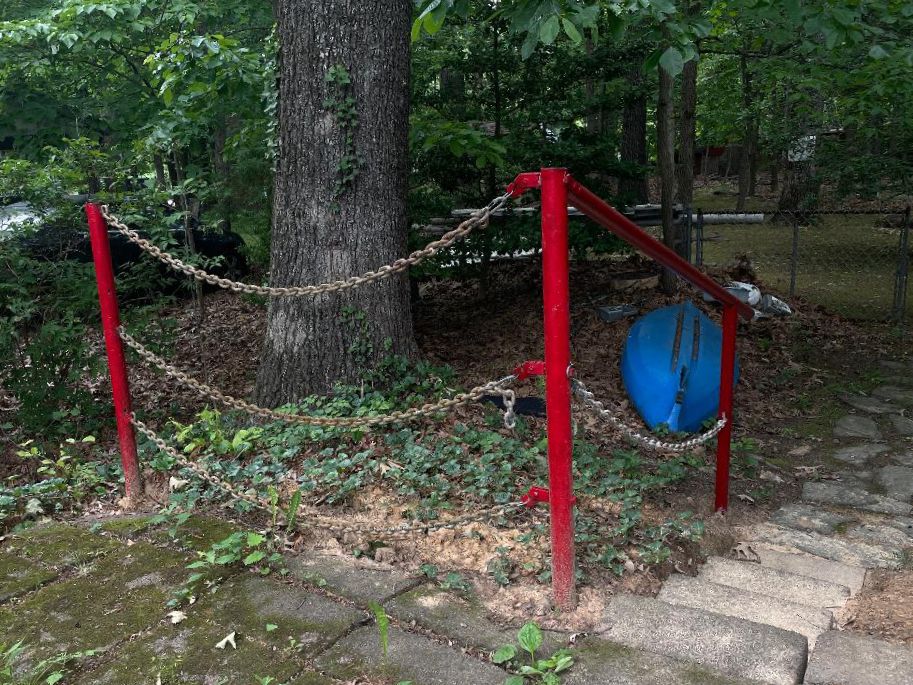
Set the posts where you need them, not more than 6-8 feet apart or the tension becomes great. By placing a hook on the post end, the chain section quickly becomes a wide gate. The hooks also make chain length adjustable.
Farm and Garden Use
There is always a gate in need of a chain or something that needs towed or secured. Weight down the edges of bird netting. Cannonball-type gate closers (about 7 feet of chain, plus a loop of chain can be used in place of the ~ 3-4 pound weight, so about 9 feet will do).
What About Re-galvinizing?
Ask around the marina and sailing forums for a place near your home. Expect a $250 minimum and for the cost after that to be about half that of a new chain or anchor. If the links are worn, they’ll still be worn. If it is grade 70 it will be reduced to about grade 40. Grade 40 is little affected by the re-galvanizing process. There can be problems with preparation (removing old rust and paint) and we’ve heard cases of links getting stuck together. It should come out nearly new.
Is it worth it? Probably, if the chains are very good, if a few of you get together, and if there is an anchor or two thrown in the mix.