

Caution. Do NOT use hoses or funnels that are not rated for gasoline to transfer gasoline. In addition to potential material compatibility problems, they do not conduct static electricity, which can lead to an explosion. Gasoline-rated containers and hoses are made with plastics that incorporate additives that allow them to dissipate static, even though they appear non-conductive to a multi-meter. Certain solvents, gasoline among them (although not diesel), can generate static electricity when pumped through a hose or splashed, in much the same way that a comb pulled through your hair can charge a balloon. Explosions triggered by static are not that unusual; I did an accident investigation for one such explosion. Non-conductive hoses and cans are VERY dangerous with gasoline. People die. It is illegal to use non-rated containers and hoses.
This is prevented at gas station by a wire that runs through the hose, static-dissipating rubber in the hose, an aluminum nozzle at the car-end, and a ground at the pump end. Few people are aware that they ground their car every time they fill up via this passive engineering. Never fill a jerry can in the pickup truck bed. Also the filler hose must stay in contact with the filler pipe while fueling. Gas stations engineer some of these precautions so that they are passive and you are unaware of them (for example, there is a grounding wire inside the hose), but with portable containers, hoses and funnels, the responsibility is back on you.
1. Shaker Siphon
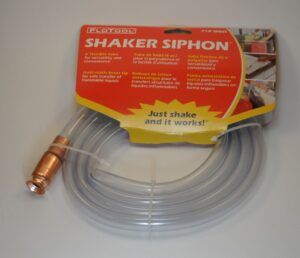
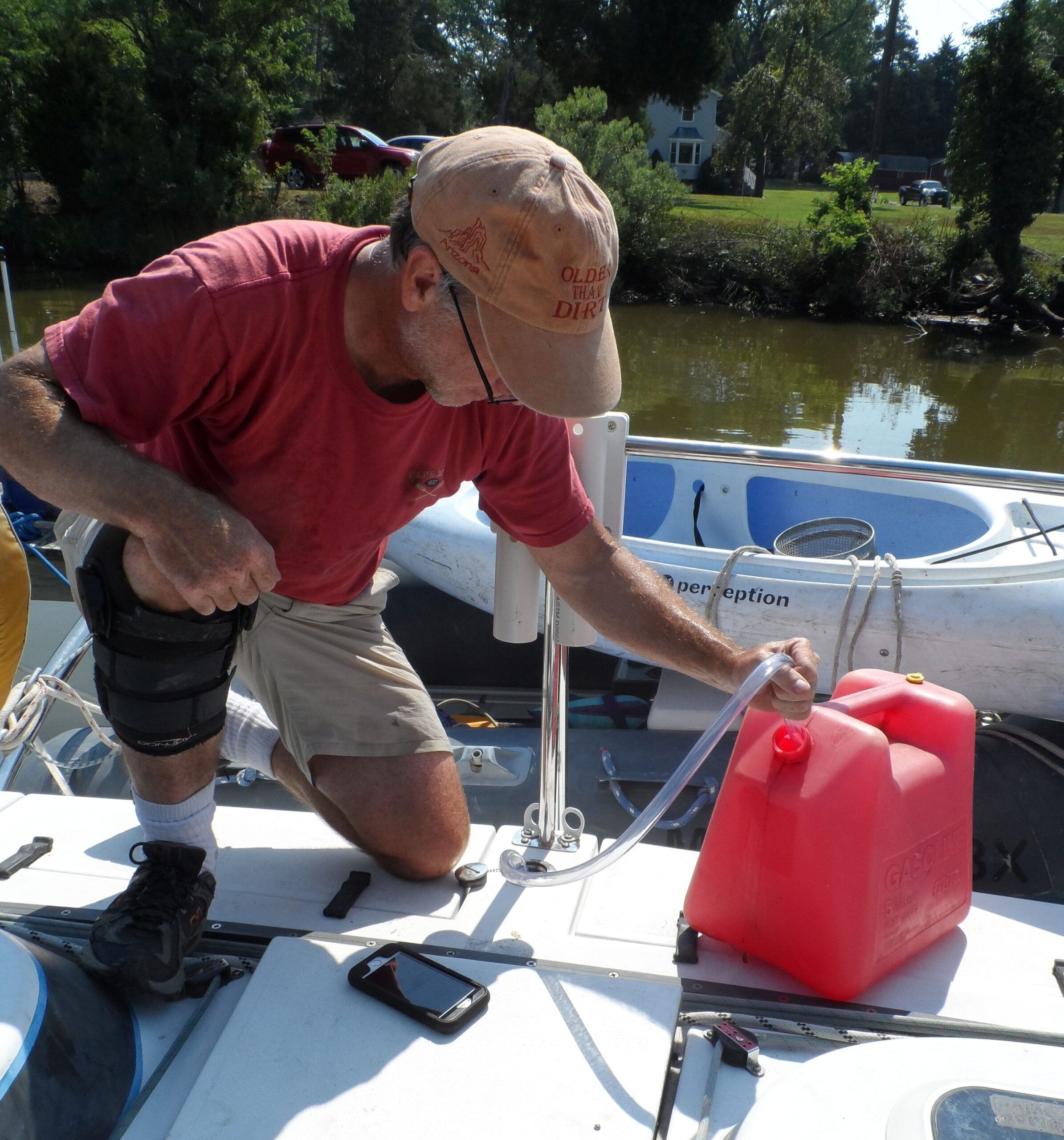
The simplest way to transfer diesel or gasoline from jerry cans to an installed tank is a shaker siphon. Simple, reliable, inexpensive and spill proof. If the nozzle arrangement is drippy or inefficient, no problem; you screw off the top and don’t use it. Nearly as fast as pouring, simply place the valve end into the jerry can, push the other end deep into the filler neck, and shake vertically three to four times to start the flow. Lift the valve out of the fuel to stop. No holding heavy cans. No messy funnels. There are many brands, and they cost about $10.
2. Dispensing Can
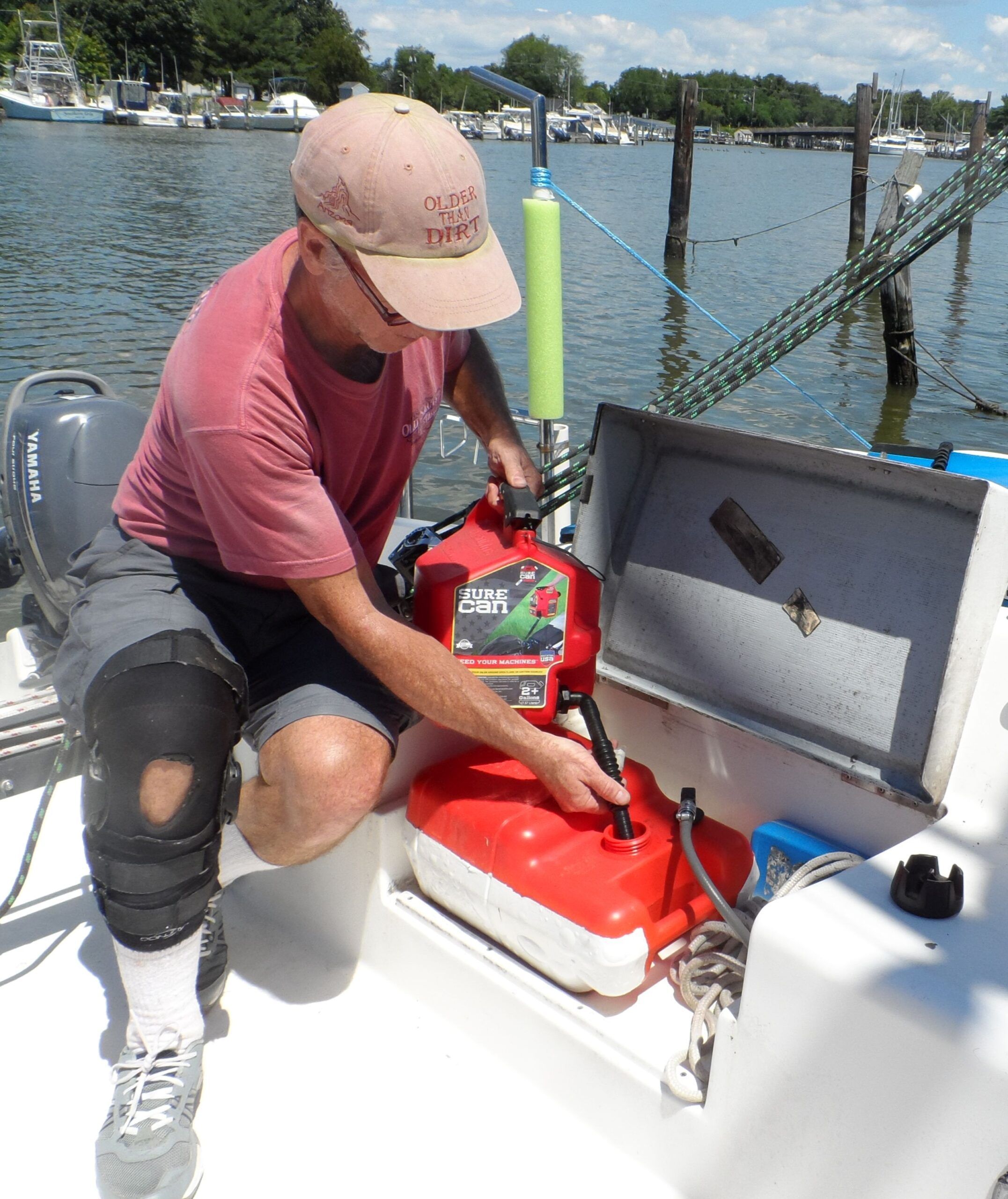
The new generation has come far from the spill-prone first generation of CARB gasoline cans. Our favorite is the SureCan ($58-$78). Instead of tipping the can to pour, it has a rotating filler hose that is opened by a valve you control with your hand. The valve is so accurate we can fill sample jars for fuel tests to within about 5 ml. Filling a small integral tank is a breeze. At the same time, it is fast enough for large transfers to bigger tanks.
3. Filter Funnels
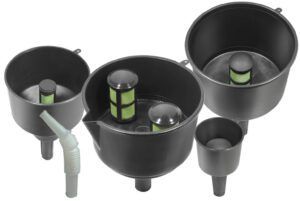
The Baja Filter was the old standby for cruisers traveling off the beaten track. Consisting of a stack of very fine wire mesh screens, it would catch solids, and once wetted out with diesel, block water. But then you would have to clean it, and if wet it would not allow the cleaned diesel to pass. In any case, they have been out of production for decades. The more modern, and truthfully, improved versions, use a Teflon or olefin screen that repels water while still allowing clean fuel to pass. Mr. Funnel ($38), Raycor ($45) and West Marine ($20) all market good versions.
Is it needed? Not in the U.S., where fuel docks are required to filter all fuel to 30 microns. You’ll be holding up the line for nothing. In the developing world … maybe. If you’re fueling from jerry cans you won’t delay anyone.
These are not applicable to E10 gasoline. E10 dissolves the first 0.5 percent water and a separator will not remove it. After that, the entire 10 percent ethanol phase separates, like water. However, because the separated water-like phase contains 80-90 percent ethanol, the water-blocking membrane will not block it. It is more alcohol than water, and thus is not sufficiently different from gasoline. Additionally, the hazard of transferring gasoline through a funnel is excessive (fumes in the air create a flash fire risk). What you need to do is keep the gas dry by renewing the o-ring in the filler and keeping the vent closed when not in use (portable tanks).
An ordinary funnel can be handy on occasion, certainly for adding lube oil. If you use it for gasoline it must be gasoline-rated.
4. Anti-Spill Funnel
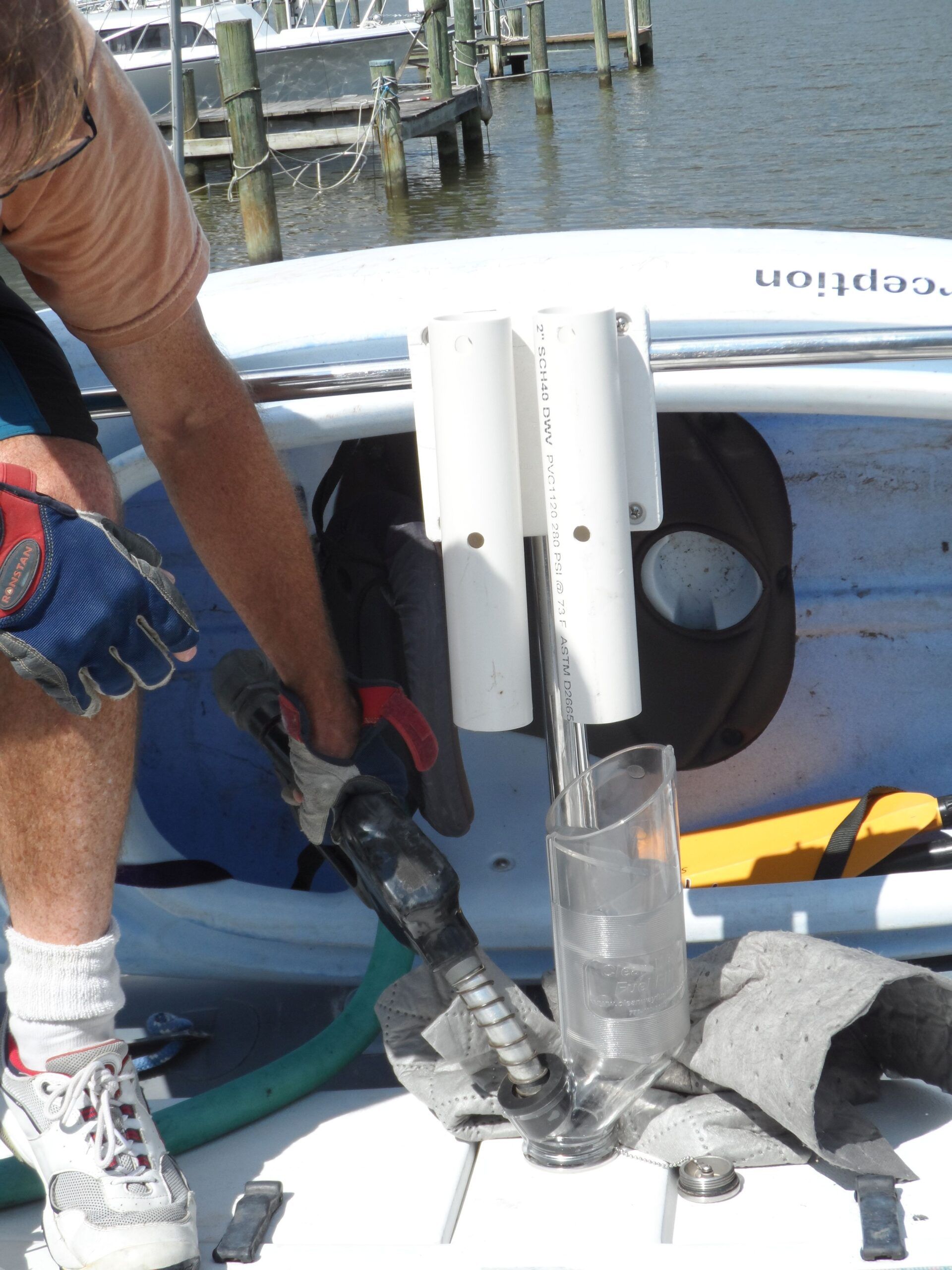
Some boats give little warning before the fuel comes out the filler, particularly when there is some foam. The Clean Way Funnel ($100) stops this by giving the foam a place to go. We tested it by intentionally over filling our tank. Normally, before the tank really overflows, foam will back-up out of the filler. The Clean Way funnel has a chamber where this foam is captured, breaks, and drains back in the tank. Of course, you need to stop filling the moment you see foam.
5. DIY Spill Catcher
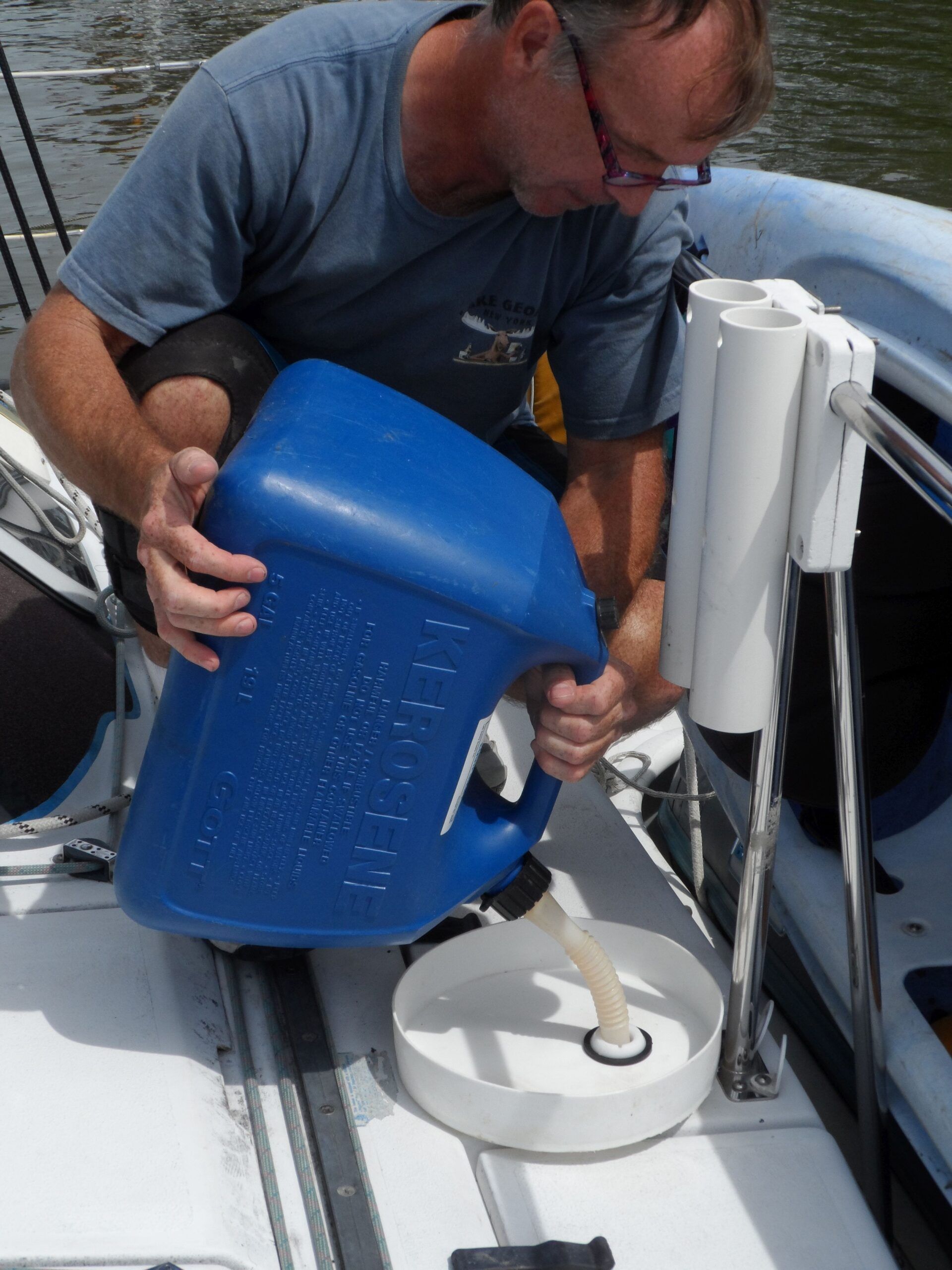
Finally, we have our DIY spill catcher, which turned out to be the handiest bit of kit, for us, right after the shaker siphon. Made from the bottom few inches of a 5-gallon bucket and a nylon mushroom-style through-hull fitting, it is very stable and catches dribbles. Simple and just a few dollars, but not for gasoline (not conductive—static build-up is a concern).
Bottom Line
Spills make a mess on the deck and pollute the water. Good fueling equipment makes avoidance easy.








Love using the Shaker siphon. Just got to be careful cleaning and transporting it after use. Too easy to have drips on your deck or worse.
Every drop of diesel in our boat has passed through a mr funnel. It surely works. Diesel tank is as clean as a whistle, and the engine filters are years old and look like new. This product works! Haven’t seen a single drop of water in the racor filter!
I can’t get myself to spend the money on a surecan. They are nice but spendy!
Bought a 15 gallon plastic can that came with a dolly and a hand rotary pump, to put gasoline in the internal tank on my Rossiter 14 runabout on a lift on my dock. Well made. It had a clip to ground the boat’s tank inlet to the pump, but it’s not clear how the tank would ground. Worked great, and since it was never in the boat, no fume issues. You could reverse flow by turning the pump handle in the opposite direction, helping control overflow. Also use it for lawn tractor and mower. Believe it was Flo-Rite, but they don’t seem to make it anymore. Large wheels on dolly made it easy to move across lawn and on dock; recent models seem to have smaller integral wheels, sort of like those on the RV market “blue boy” waste tanks. One issue was getting a full tank up into the pickup bed after filling, and back out once home. It was easier ten years ago, but I’m a little older now. They make them for diesel as well. Bought mine through Grainger.
Brand is Flo-Fast, not Flo-Rite. They offer different sizes, and I wish I had sized down. 15gals can be a bear to get into and out of a truck. Still, practical and well made, and works well for the task.
We use a fuel syphon that is available at Lowes or Home Depot $9.95. Small red hand pump with suction release twist at the top of the pump to stop the flow. They are sold with Kerosene heaters at most hardware stores. We have used one for years and makes the task much easier.
Shaker Siphon appears to be designed for moving liquid from one elevation to a lower elevation, such as filling a fuel tank from a jug. If your situation does not meet that criteria, it won’t work. Furthermore, all the ones I have seen come with 1/2″ hoses which can be too large for some uses.
Excellent review on an explosive topic!