





The Big Chill: Preparing to Sail Through Winter
For the first year since escaping New England to take the helm of Practical Sailor in 2005, I’ll be experiencing a true autumn, this time...
Adventures in Onboard Coffee-making
As far as I can tell, no one yet has designed the ideal way to make a cup of coffee underway aboard a sailboat. With the hopes of sparing other coffee lovers years of frustration, or possible injury, I'm sharing my experience with the several methods we've tried.
Refinishing Your Boat’s Non-skid Deck
Although you can allow your varnish and hull paint to fade, crack, or peel with no more penalty than the disdain of those who mistake shine for soul, you don't want to let your non-skid deck paint lose its grip. Even the most soulful boat evokes a sense of pity if its owner is lying flat on their back asking for help.
Connecting Very Small Wires on Boats
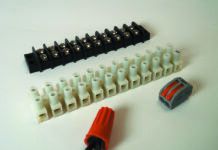
If new LED lights or marine electronics are your horizon, you'll soon find yourself tangling with tiny wire connections that seem so fragile it's hard to imagine any crimp or connector providing the reliability we need in marine systems. Although it's fairly easy to create a reliable crimp or connection between size AWG 12 wires used to power many 12-volt accessories, once the wire sizes start creeping down into AWG 22 size commonly used in data cables and LED lights, creating robust connections requires some specialized tools and techniques.
Building a Better Boat Fender
My main problem with boat fenders is that they appear to violate the cardinal rule of cruising: any object you bring aboard should serve at least two purposes (the way your crewmate's favorite yellow shirt makes a great Q flag). A fender, however, does only one job-cushion the blow between the hull and something hard-and then it swallows up valuable lazarette or anchor locker space when that one job is not required.
Engine Spares for the Cruising Sailor
Cruising sailors rely on their engines a lot more than they like to admit. Although the internet has helped close the gap between parts suppliers and cruising sailors in far corners of the earth, the long-term cruiser still has to carefully consider which spare parts and supplies he needs to carry with him. …
Improving Roller Furling Efficiency
One of the easiest ways to improve the furling efficiency of all types of furlers is tackle the line-lead challenge. It starts with the angle that line leads on and off the drum, progresses into a sweeping arc as the line makes its way to the cockpit and ends with another change in direction that leads the line to the hands of a crew member or a winch drum.

Defeating Bacteria in Your Diesel Fuel
The crud that is clogging my filters are microrganisms, primitive creatures that live in water and feed on oil, informally called “HUM-bugs.” The HUM stands for Hydrocarbon Utilizing Microorganisms.
There are many kinds of HUM-bugs—bacteria and fungus (mold, yeast, algae, etc.). Some need oxygen, some don't. Many are airborne. Some thrive best in freshwater, some in salt. They all create thick slime, which helps them stick to surfaces and protect themselves from attack. It's unlikely that you can buy diesel fuel without getting some.
Diesel Fuel Polishing Systems
If you plan on doing some long-term cruising on a boat with on an auxiliary diesel, and expect to be picking up fuel in out of the way places, or if the boat has a history of clogged filters, then it might worth the time and expense to install a fuel polishing system.
Upgrading the Cruising Mainsail
The old main was constructed of Dacron, and polyester continued to offer the best balance of cost, longevity, and performance for our particular situation. We decided to go with a premium-grade polyester (Dimension 360AP-MTO 8.4 ounce). Premium polyester is tightly woven and has a high yarn count that provides good shape retention and good performance over a wide range of wind speeds.

What Happens When Lightning Hits a Sailboat?
Lightning striking a sailboat sounds like something out of a disaster movie—but what actually happen when it does? In this episode, we break down...



Latest Sailboat Review
Caliber 33 Used Boat Review
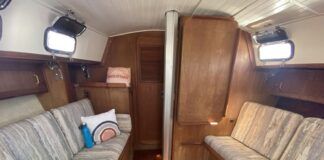
The Caliber is a peculiar blend of tradition and innovation, of security and performance, of practicality and pizzazz. All of the owners we heard from were "satisfied." One called the 33 his favorite boat over six decades of sailing.