

Preparing Your Boat for a Tropical Storm
Hurricane season is off to an early start this year. Tropical storm Elsa, the first tropical storm of the season to make U.S. landfall this season reminds us it's never too early to have a plan in place. If you haven't given storm preparation a thought yet, a good start would be our report, Lines, Snubbers, and Other Gear for Battening Down Ahead of Storms (PS July 2008). Safety expert Ralph Naranjo's first-hand account of his storm preparations Tropical Storm Dos and Donts and How to Help Your Boat Survive A Major Storm should also be required reading.

Affordable Sunglasses for Sailors
I gave up buying expensive sunglasses years ago, when I kept losing them. But I do care about getting good protection. Fortunately, having shepherded at least four different sunglass tests onto the pages of Practical Sailor, I’ve learned that you don’t need to spend a fortune to get a good pair of shades that will protect your eyes and meet nearly all of your on-the water needs. With summer in full swing I thought a summary of our past findings would be helpful for those of you who—like me—just watched as another pair of drug store sunglasses descended into the murk beneath your boat slip.
Staying Cool on the Water
As the first of what will likely be many heat-waves this summer is driving many people indoors, it is a good time to make sure that you are well-equipped to deal with the soaring summertime temperatures. Fortunately, summer temperatures are almost always cooler near the water. Which is good, since we doubt many our readers would skip sailing just because it's hot out.
During our decade of cruising, my partner and I spent most of our days within 20 degrees of the equator. In many tropical ports the temperatures pushed to almost unbearable levels. I recall specifically the Solomon Islands, Guam, and Thailand, where the glue holding my shoes together literally melted. Over time, we adapted some effective strategies for staying cool. Scrolling through the archives, I was able to find several articles to help us all ease into the season of heat.
Make Your Own Dinghy Wheels
As refit projects keep us busy in the boatyard, we find ourselves rifling through back issues looking for buried do-it-yourself gems. This week's blast from the past is a real back saver. Practical Sailor contributor David Liscio describes how to turn some scrap plywood, a few screws, and a lawnmower axle and wheel set into durable and inexpensive portable dinghy wheels.

The Pitch for Summer Sailing Camps for Children
Perhaps you are on the fence this summer. The drive is too far, the cost too high, or the child says, It doesn't sound like much fun. There are a million reasons to encourage your child (or grandchild) to sail this summer. Here are a few that I like.

Pondering Options for Varnishing a Mast
One of the most common questions we get regarding marine varnish is what kind of finish is best for a mast. Even though aluminum has long since replaced Sitka spruce as the material of choice for a sailboat mast, there is no shortage of boats that still have wooden masts. Many of the Taiwanese-built boats of the 70s and 80s had wooden masts, and of course, a wide range of U.S.-built classics still have their original wooden masts.
Gearing Up for Hurricane Season
My old home island of Guam got whacked by a Supertyphoon Mawar on Wednesday. Power is still out, so still no word from friends....
The Pre-Launch Checklist
Away we go. A well earned summer of sailing is fast upon us. If your boat isn't already in the water, it will be soon. Amid all the excitement of launch day—your desire to be back in the water, and the boatyard’s eagerness to make room for another client (cha-ching)— there’s a chance something might get missed. A pre-launch checklist can help avoid spoiling the big day.
Powering Your Boat Through a Storm
A sailing auxiliary engine should never be fully relied upon to bash into a storm; they are not sized for that. In many boats,...
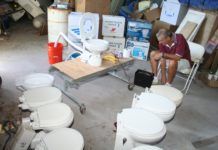
More Great Tips for Stopping Boat Stink
As our long-term test of sanitation hose winds its way through another long, hot-and progressively smellier-summer, it is a good time to think about ways to keep your plumbing system from becoming an olfactory horror. Here are some of the tips that hose manufacturers shared with us when we launched our test of sanitation hose.
Latest Logbook

Practical Sailor Logbook – September 2026
In September we tour the Hans Christian 48T — the offshore cruiser many sailors call the holy grail — walk the custom Antigua 60...

Video: The BEST Sailboat You Can Buy for $35,000 – Catalina...
If you’re searching for a mid-30-foot sailboat, affordable cruising sailboat, liveaboard sailboat, first sailboat, or a capable used sailboat for coastal cruising, the Catalina...


Latest Sailboat Reviews
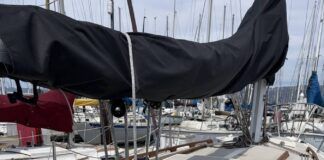
Cal 2-27 Used Boat Review
Our story begins in 1970, with the introduction of the Cal 29. Looking for something similar but a bit smaller, the company asked designer Bill Lapworth for a 27-footer, which at first was the Cal 27, a fin keel, spade rudder design with a convertible pop top; another incarnation of this basic hull was the T/2. But the concept of the 29 found its full expression in the Cal 2-27, which began production in 1975 and continued to 1977, after which it was again modified and called simply the Cal 27...again. Production of it ceased in 1986.