



Coast Guard Nav Light Safety Alert
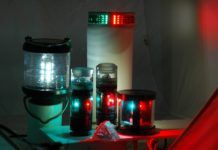
The U.S. Coast Guard has determined that an increasing number navigation lights being used on sailboats do not meet the basic requirements for these lights, making them less visible to nearby ships. According to the Coast Guard's Inspections and Compliance Directorate, part of the problem is that some boat owners are retrofitting existing incandescent nav lights with LED lights, or LED components that were designed for powerboats.
When Splicing Isn’t an Option
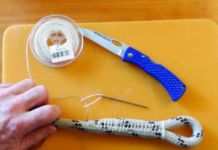
My previous blog post on rig inspection prompted a question about how to splice old ropes that are too stiff to splice. It wasnt long before the ice-climber in our group of contributors, Drew Frye, decided to grab this rope by its braided cover, so to speak, and see where it leads. Here is a brief description of the method that Frye found worked best, perimeter round-stitching. Perimeter round-stitching will take place over a length of rope that is the equivalent of six to eight times the diameter of the rope. For example, stitching 3/8-inch line requires about 2.5 inches of available line, not counting the tail of the line (about 3.8 inches in length) that will not be stitched.
Striving for a Stronger Boat Cleat
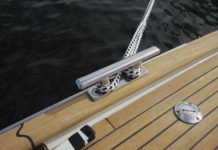
Zinc, though often found chrome-plated on low-end powerboats, is too weak a metal to be used for cleats on a sailboat. Aluminum alloys are light and relatively strong as long as the casting process has kept void (air bubble) content to the barest minimum possible.
Varnish Touch-ups and Take-downs
To keep brightwork healthy, approach it as you do your own health. Whether its a touch-up or a complete take-down that's on your horizon, here are a few tips on wood care that can save you hours of sweat down the line.
What Old Gear Do You Swear By (or at)?
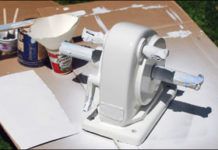
Instead of fixing or replacing tired mechanical equipment with new gear, we can often find a less-expensive substitute on the used-gear market. In many cases, this is equipment that is just as good as new gear, if not better than new. The trick is separating the gems from the junk. A poster child for this sort of refit quandary is the old Simpson Lawrence manual windlass, a British-engineered oddity that has long been a source of cruising sailor ire. Commonly found on cruising boats made in the 1980s, these windlasses use a troublesome chain drive rather than a gear drive. This, along with the dissimilar metals used in its various components (cast-steel gypsy, aluminum case, etc.), make these windlasses a poor candidate for rebuilding.

Going Overboard in Icy Water
When you get to the surface, focus on floating and stabilizing your breathing. You are not going to be able to swim or do anything productive for several minutes, and as a cold water overboard victim, there is nothing you need to do for a minute or two. Focus on not drowning. If you have a PFD, that will be a huge help. If not, try to tread water with as little effort as possible. Calm down and realize you have some time.

Capt. Marx Memorial Safety at Sea Seminar
Join Practical Sailor Editor-at-large Ralph Naranjo for a day-long Safety at Sea Seminar in Hampton Roads, VA on February 24th. The seminar is aimed at mariners of all levels and will cover navigation, heavy weather sailing, and man-overboard recovery. The cost is $130 ($150 after Feb. 1). The unique event is being in honor of Capt. Henry Marx, a respected safety-at-sea expert and frequent contributor to Practical Sailor.
Anchor Design for Soft Mud
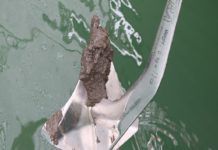
Most recreational anchors are optimized for hard sand or clay bottoms, which provide much better holding than softer bottoms (or rocky or weedy bottoms, for that matter). This logical bias toward hard-sand bottoms might actually hinder anchor performance in soft mud. For example, one of the observations from our 2006 test of anchors in soft bottoms was that anchors equipped with roll bars performed far below our expectations in soft bottoms. But there was one exception.

Rope Washing Advice from the Pros
The rope should be tightly coiled or tied in a daisy-chain, and then placed inside a pillowcase. Front-loading washing machines are recommended; an up-and-down motion is preferable to the rotary motion of most common household machines. Without coiling or daisy-chaining, a rope can turn into an impressive tangle. The pillowcase further restricts the motion of the rope and prevents the rope from wrapping around the central agitator, which can destroy ropes and break washing machines.

Fuel Storage Tips for Sailors
Sometimes it is not what has been added to your fuel that matters, but what is missing. Anywhere between 5 to 20 percent of the contents of a portable or installed polyethylene tank can vanish during the course of a year, the result of breathing losses and permeation. The remaining fuel is lower in octane, contains fewer of the volatiles that are so essential for easy starting, and has reduced solvency for gum and varnish. It often looks perfectly good, but is perfectly rotten and potentially harmful as fuel.

Morgan 382 – The $30K Boat Nobody Talks About
The Morgan 382 might be one of the most overlooked cruising sailboats ever built. Designed by legendary naval architect Ted Brewer and produced between...



Latest Sailboat Review

Jeanneau 55 Boat Review
This recent sailboat from Jeanneau may as well be a spaceship. They’ve taken all the time-honored designs of a monohull aft cockpit and turned...