
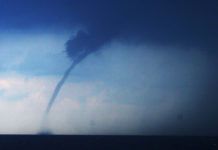
Squall Tactics for Sailors
The danger in running before a squall (or jibing downwind, a tactic sometimes employed by Transpac racers) is the inevitable wind shift that can cause an accidental jibe. Since squalls are usually short lived, with the strongest winds lasting less than 20 minutes, simply reducing sail to a safe configuration and motoring or motorsailing through or past the squall can be a less taxing approach than trying sail through it. What is a "safe" configuration?
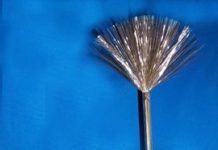
Lightning Protection: The Truth About Dissipators
About this time of year, when lightning strikes become common, we receive a good deal of mail asking about static dissipators such as the Lightning Master. These are the downside-up, wire-brush-like devices you see sprouting from antennas and rooftops in cities and towns, and, more frequently, on sailboat masts. When these devices first appeared on the market, we did a fair amount of research to find out whether they realistically could be expected to spare a sailboat's mast from a lightning strike.
Testing Sailing Knots that Really Grip
The widespread use of Dyneema and similar high-strength, high-tech lines presents a slippery problem for the knot-tying sailor, especially if they are tying a gripping hitch. A gripping hitch is the knot you would use to tie one line to another (or itself) when you don't want the line to slip. Here's a look at some of the gripping hitches that we've tested for holding ability and ease of tying.
Conquering (or Coexisting with) Waterline Stains
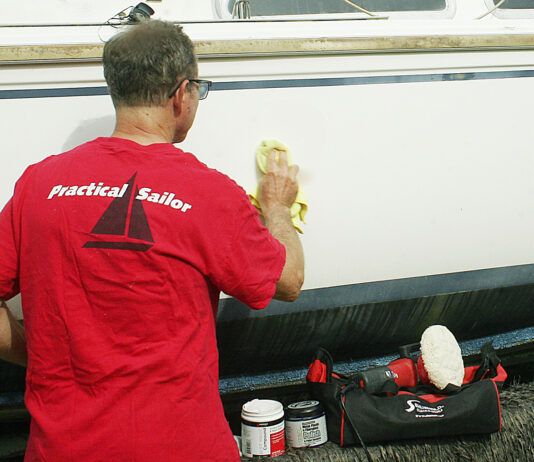
Summer is here, and our routine maintenance chores now require some serious elbow grease. Our first impulse is to go for the super-strength acids that will take care of the hard growth as well as the stains. But there are kinder, gentler options, if you have the willpower and the patience.
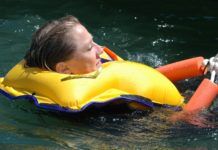
Reframing Our Views on the Auto-inflate PFD
In the July 2019 issue of Practical Sailor we dive again into the world of inflatable PFD/harnesses. The report, written by marine safety expert Ralph Naranjo, highlights common mistakes mariners make with regards to proper care and use of various inflatable PFDs on the market. The crux of his report, however, is the potentially dangerous shift in perceptions among offshore sailors with regards to this equipment.
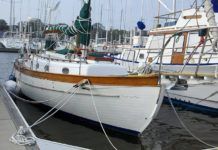
Preparing a Marina-Bound Boat for a Tropical Storm
With the official start of the North Atlantic hurricane season starting earlier this week, boat owners in vulnerable coastal areas should already have a hurricane response plan ready. Practical Sailor has covered storm preparation on several occasions. Here is some of the guidance we can offer.
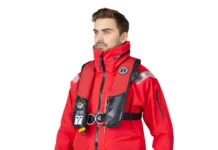
Inflatable PFDs: Know the Ins and Outs
Some sad news this past weekend from the 2018 Chicago-Mackinac race prompted me to update, and repost this advisory from 2015 regarding the care and use of personal flotation devices. It's a relatively long post, but if you depend on inflatable PFD, the text and accompanying links are worth reviewing.

Sailing Helmets and the Risk of Head Injury
Should sailors wear helmets? As we gain greater awareness of the risks of long-term brain injury linked to concussions in various sports, it is only natural that sailors would reexamine the risks associated with sailing. After all, one of the first things we learn upon boarding a sailboat is to avoid a boom-strike to the head.

Installing and Maintaining A Watermaker
Installing a watermaker can be a serious project, and its not to be taken lightly. First, you need to find a suitable location for the system. For those with limited mounting space, consider a modular watermaker.
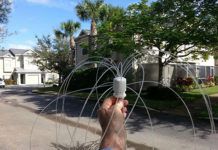
Do-It-Yourself Bird Deterrents
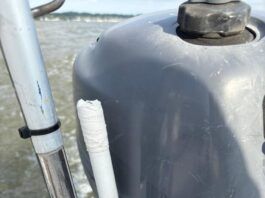
As we found in our last major test of bird deterrents, there is no perfect solution for every bird problem, but weve come across one that seems to work well in the marina in Florida where we keep one of our test boats, an Endeavour 42 Lost Boyz owned by boat builder Robert Helmick. The main perpetrators in this particular marina are starlings that feed on the berries near the marina then apparently find a comfortable roost to digest (and deposit the remains of) their meal. Sailboat masts seem to be the preferred perch, as the dockmaster reports that he rarely sees them atop powerboats.
Latest Logbook

Practical Sailor Logbook – September 2026
In September we tour the Hans Christian 48T — the offshore cruiser many sailors call the holy grail — walk the custom Antigua 60...

Video: The BEST Sailboat You Can Buy for $35,000 – Catalina...
If you’re searching for a mid-30-foot sailboat, affordable cruising sailboat, liveaboard sailboat, first sailboat, or a capable used sailboat for coastal cruising, the Catalina...

Latest Sailboat Reviews
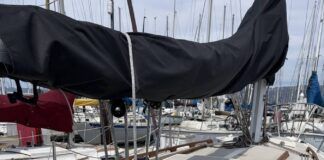
Cal 2-27 Used Boat Review
Our story begins in 1970, with the introduction of the Cal 29. Looking for something similar but a bit smaller, the company asked designer Bill Lapworth for a 27-footer, which at first was the Cal 27, a fin keel, spade rudder design with a convertible pop top; another incarnation of this basic hull was the T/2. But the concept of the 29 found its full expression in the Cal 2-27, which began production in 1975 and continued to 1977, after which it was again modified and called simply the Cal 27...again. Production of it ceased in 1986.