





Clipper Fatality Highlights Adventure Sail Risks
Most conclude that football is a contact sport and that sailing takes the other tack. But after the amateur crew aboard the 75-foot ocean racer IchorCoal suffered its second fatality in six months, many have suggested that its time to take a closer look at just what went wrong and whats really at stake in pay-to-play big boat ocean racing.
Choosing a Sailmaker
If you are planning to add a new mainsail or genoa during the Northeast winter, now is the most likely time to be able to negotiate a good price. While the migration to high-volume lofts abroad has smoothed the peaks and valleys of sail prices, there are still seasonal bargains to be had. Generally, the lull occurs October through December. By the time spring rolls around and the sailmakers find themselves swimming…

Tips for the Havana Daydreamer
Now that U.S. sailors can so easily can go to Cuba, the question remains should they go? I think most cruisers would not want to miss the chance. To explore the reefs of the fabled Jardnes de la Reina, to reach close along the green mountains between Punta Maisi and Boracoa, to wander the streets of La Habana- what more could the cruising life offer than to explore far (and not so far) corners of the world under sail? If you are Havana daydreaming here are some helpful resources to set you on your way.
Florida Anchoring Battles Begin Anew
While the Florida Senate approved House Bill 1051 prohibiting anchoring in parts of Miami-Dade County, over on Floridas west coast, a live-aboard sailor was still working to have his 36-foot Hunter hauled off the beach. Although the two events would at first seem unrelated, any sailor would likely see a clear connection.
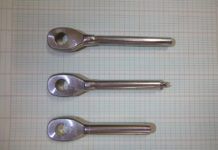
Swaged Rigging Terminal Failures Raise Concern
Among the many chores to add to the spring to-do list, a rig inspection should rank high. And any rig inspection should include a close look at any swaged terminals on the shrouds and stays. Although corroded or cracked swages have been know to be a common point of failure on older rigs, the environment and working loads are almost always the main contributing factors. But our recent tests suggest that the weaknesses on some terminals may exist since the day they were assembled.
Bottom Paint Anti-slime Additive Goes Away
Last year, multi-national chemical company BASF decided it would not renew its U.S. license for the pesticide Irgarol. A common additive to copper-based paints, Irgarol helps prevent the growth of algae and other soft growth. Bottom paints containing Irgarol are priced around $30 higher than similar formulas without the additive. If you are interested in a slime-resistant ablative paint, be sure to confirm that Irgarol is still an ingredient before plunking down the extra cash.
Darwin, barnacles, and organ envy
The oceanic equivalent of implacable in-laws, the barnacles addled me to no end. Do they ever stop eating? Do they ever sleep? Why wont they leave my boat alone? Their unrelenting click, click, clicks on the hull kept me up at night. An obsession bordering on madness set in. My only comfort was that barnacles on the brain can have interesting side effects, like an idea that changes our view of the world.
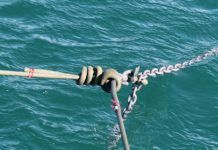
Rethinking Anchor Snubbers
Anyone who has spent a night pitching in an exposed anchorage would not be shocked to learn that in many dragging incidents the snubber parted, or was stretched to its limit, allowing the chain and boat to absorb some teeth-rattling shock loads before something finally gave. Recently, PS testers have devised a series of tests to determine what the ideal snubber looks like. Some of our findings run contrary to popular assumptions. Some will surely surprise you, and may even-one day-save your boat. What does your snubber look like?
Maximizing Bottom Paint Coverage
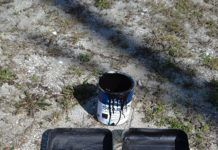
In my own experience, Ive found that I rarely can match the manufacturers coverage estimates using a 3/8-inch nap roller cover, so for this project we decided to do a comparison. One section of the boat would be painted with a foam, solvent-resistant hot-dog or sausage roller cover, a technique that has worked for me in the past. The roller, more commonly used for topside finishes, soaks up far less paint than a conventional, 3/8-inch cover. An adjacent section would be painted using a conventional roller.
Keel Failure Redux
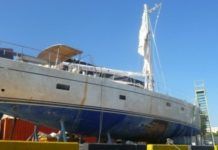
This summer, the once lovely Oyster 825 was hauled from the water with its keel missing and a large chunk of skin laminate peeled back. Another casualty in a disturbing trend. I wrote a lengthy post on the subject of keels last year, and technical editor Ralph Naranjo discussed the topic in his report Rethinking Hull Structure in the February 2015 issue of Practical Sailor.

Morgan 382 – The $30K Boat Nobody Talks About
The Morgan 382 might be one of the most overlooked cruising sailboats ever built. Designed by legendary naval architect Ted Brewer and produced between...



Latest Sailboat Review
Caliber 33 Used Boat Review
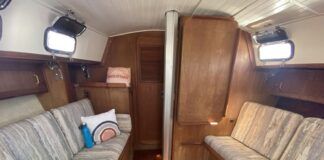
The Caliber is a peculiar blend of tradition and innovation, of security and performance, of practicality and pizzazz. All of the owners we heard from were "satisfied." One called the 33 his favorite boat over six decades of sailing.