



Rethinking Faux Teak Temperatures
Our recent report on synthetic-teak decking options (see PS December 2015) raised a bit of a ruckus among the contenders in what is an extremely competitive market. The main bone of contention was our reported temperatures of the various materials after they were left in the sun. Several manufacturers contended that the temperatures we listed in the table accompanying the article were not consistent with their own findings.
Preventing Winter Damage to Your Deck
The freeze-thaw cycle can also break the bond between the fiberglass and the core, further weakening the deck structure and introducing new problems. In a worst-case scenario, you return to your boat in the spring and find bubbles, bulges, and cracked gelcoat or fiberglass where water has pooled and frozen, pushing your deck's outer skin upward.
Portable Electrical Propulsion for Small Sailboats
In part one of our two-part test of five and six-horsepower engines in the upcoming January issue of Practical Sailor, we take a second look at portable electric motors. Our interest in modern portable electric propulsion dates back to 2004, when then editor Doug Logan began to lose faith in the two-stroke outboard on his Boston Whaler. While awaiting the prognosis on his unresponsive 15-horsepower Evinrude, he bought a Minn Kota Riptide 55 trolling motor.
Fortune Favors the Cold and Wet
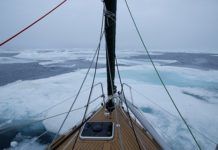
Two stories in the upcoming December issue-installing a fireplace and sealing portlights and hatches-had me pondering the challenges of a winter afloat. But what literally raised goose bumps were images sent to us by Jimmy Cornell, whose popular cruising rallies and books have inspired countless dreams of sailing around the world.

Open-source Software and the Sailor
The more controversial-in my mind-element of open-source software is how our navigation data is used. The success of open-source software depends on the willingness of sailors to share data via the cloud. Were told, of course, that this is anonymous meta-data (the sort of non-identifying data with that the National Security Administration scrapes from phone records), and that the user can control which data he shares. Most of us are already sharing all kinds of information with various smart-phone apps, so this is nothing new. Still, I worry.

O Tayana 37, How do I Loathe Thee?
I loathe thee for your lovely teak decks, prone to leaking, hot to touch in the tropics, and forever accumulating dirt. I loathe thee for thy alluring bowsprit, a precarious perch where no man with two hip replacements should ever be. I loathe thee for thy water tank sloshing in the bow, turning thee into a teeter-totter when the mildest swell rolls into the bay.
Antifouling Paints for Freshwater Sailors
Freshwater fouling organisms are no weaklings. One of the most notorious, the zebra mussel, introduced by the ballast water of voyaging ships, can wreak havoc with power-plant cooling systems. For sweetwater sailors who have but the summer to sail, the most common threat to the hull is algae. In fact, algae (aka slime) actually tends to grow much faster in fresh water than it does in salt water.
Making a Case for the Hank-on Staysail
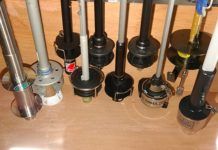
In my view, having a foolproof hank-on sail ahead of the mast is not a bad thing. On your average cruising boat, the staysail is usually small, and stay itself is far enough aft that dousing or setting it doesn't put the crew in jeopardy. The nice thing about this approach is that it greatly reduces the cost of retrofitting a sloop with an inner forestay and sail to set on it.
Broken Anchor Swivels and the Tales They Tell
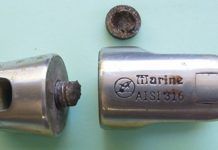
An important question that comes up in our upcoming report on stainless-steel swivels for anchors is where the shackle should be introduced to the rode. A common approach is to attach the swivel at the end of the chain rode directly to the anchor, in lieu of a common anchor shackle.

The Art of Seamanship
Although anyone headed offshore will benefit from 'The Art of Seamanship,' it is aimed squarely at the sailor. Its not a book for the novice tying his first bowline, or the yachtsman interested in flag etiquette. The topics, particularly those dealing with weather, anchoring, sail-handling, and navigation, are examined with a depth and insight that only come through years of experience.

Morgan 382 – The $30K Boat Nobody Talks About
The Morgan 382 might be one of the most overlooked cruising sailboats ever built. Designed by legendary naval architect Ted Brewer and produced between...



Latest Sailboat Review
Caliber 33 Used Boat Review
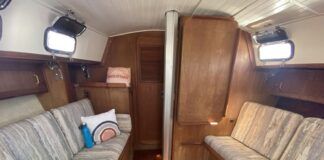
The Caliber is a peculiar blend of tradition and innovation, of security and performance, of practicality and pizzazz. All of the owners we heard from were "satisfied." One called the 33 his favorite boat over six decades of sailing.