
Hidden Risks of Life Jackets
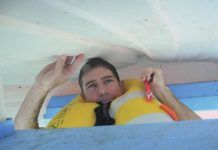
Testing any sailing equipment entails a high degree of responsibility, but this is especially true of safety equipment. A tragic accident off the coast of Costa Rica this week called to mind an important study that Practical Sailor did in March of 2013 on the dangers that life jackets can pose to sailors in the event of a capsize. No one will challenge the fact that life jackets save far, far more lives than they ever put at risk, and the accident in Costa Rica is proof of this. However, sailors need to be aware that in certain rare circumstances a life jacket can be an impediment to keeping you alive.
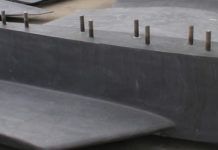
Keel Bolt Repair Options
In a few of our past reports on boat financing, Practical Sailor discussed how to pre-inspect your potential dreamboat before committing to the next step and how to bring in a surveyor. Although the articles are geared to the prospective buyer, it is just as relevant to the owner of an older boat. If the boat in question has more than 20 years behind her, one item that will likely come up on a survey is keel bolts - the heavy duty fasteners that keep your keel from going on a bottom tour while you reach for handholds on your suddenly tippy craft.

Clipper Fatality Highlights Adventure Sail Risks
Most conclude that football is a contact sport and that sailing takes the other tack. But after the amateur crew aboard the 75-foot ocean racer IchorCoal suffered its second fatality in six months, many have suggested that its time to take a closer look at just what went wrong and whats really at stake in pay-to-play big boat ocean racing.
Choosing a Sailmaker
If you are planning to add a new mainsail or genoa during the Northeast winter, now is the most likely time to be able to negotiate a good price. While the migration to high-volume lofts abroad has smoothed the peaks and valleys of sail prices, there are still seasonal bargains to be had. Generally, the lull occurs October through December. By the time spring rolls around and the sailmakers find themselves swimming…

Tips for the Havana Daydreamer
Now that U.S. sailors can so easily can go to Cuba, the question remains should they go? I think most cruisers would not want to miss the chance. To explore the reefs of the fabled Jardnes de la Reina, to reach close along the green mountains between Punta Maisi and Boracoa, to wander the streets of La Habana- what more could the cruising life offer than to explore far (and not so far) corners of the world under sail? If you are Havana daydreaming here are some helpful resources to set you on your way.
Florida Anchoring Battles Begin Anew
While the Florida Senate approved House Bill 1051 prohibiting anchoring in parts of Miami-Dade County, over on Floridas west coast, a live-aboard sailor was still working to have his 36-foot Hunter hauled off the beach. Although the two events would at first seem unrelated, any sailor would likely see a clear connection.

Swaged Rigging Terminal Failures Raise Concern
Among the many chores to add to the spring to-do list, a rig inspection should rank high. And any rig inspection should include a close look at any swaged terminals on the shrouds and stays. Although corroded or cracked swages have been know to be a common point of failure on older rigs, the environment and working loads are almost always the main contributing factors. But our recent tests suggest that the weaknesses on some terminals may exist since the day they were assembled.
Bottom Paint Anti-slime Additive Goes Away
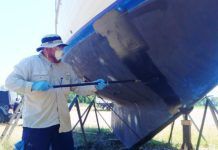
Last year, multi-national chemical company BASF decided it would not renew its U.S. license for the pesticide Irgarol. A common additive to copper-based paints, Irgarol helps prevent the growth of algae and other soft growth. Bottom paints containing Irgarol are priced around $30 higher than similar formulas without the additive. If you are interested in a slime-resistant ablative paint, be sure to confirm that Irgarol is still an ingredient before plunking down the extra cash.
Darwin, barnacles, and organ envy
The oceanic equivalent of implacable in-laws, the barnacles addled me to no end. Do they ever stop eating? Do they ever sleep? Why wont they leave my boat alone? Their unrelenting click, click, clicks on the hull kept me up at night. An obsession bordering on madness set in. My only comfort was that barnacles on the brain can have interesting side effects, like an idea that changes our view of the world.
Maximizing Bottom Paint Coverage
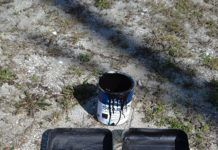
In my own experience, Ive found that I rarely can match the manufacturers coverage estimates using a 3/8-inch nap roller cover, so for this project we decided to do a comparison. One section of the boat would be painted with a foam, solvent-resistant hot-dog or sausage roller cover, a technique that has worked for me in the past. The roller, more commonly used for topside finishes, soaks up far less paint than a conventional, 3/8-inch cover. An adjacent section would be painted using a conventional roller.
Latest Logbook

Practical Sailor Logbook – September 2026
In September we tour the Hans Christian 48T — the offshore cruiser many sailors call the holy grail — walk the custom Antigua 60...

Video: The BEST Sailboat You Can Buy for $35,000 – Catalina...
If you’re searching for a mid-30-foot sailboat, affordable cruising sailboat, liveaboard sailboat, first sailboat, or a capable used sailboat for coastal cruising, the Catalina...



Latest Sailboat Reviews
Learning by Doing on a $5,000 Catalina 30 Mk II
When Davis’s mother started talking about wanting to do something “big” for retirement, Davis and Gloria half-jokingly threw out an idea that seemed suitably...