

An Eye-opening Boat Show
They say a photo is worth 1,000 words, and this one certainly says a lot. On our way to a very serious study of hose clamps at the Miami International Boat Show, the nice sales ladies at the booth of some nameless speedboat showed their appreciation for Capt. Frank Lanier, a retired Coast Guard officer and one of our contributors. It is a standard boat show ploy: Beautiful girls attract men (even those as high-minded as Capt. Lanier) and men buy boats. For many complex reasons (including the fact that Frank's incredibly supportive wife might one day stumble on this blog post), I hesitated to publish this photo. But it serves to illustrate a point that struck me at this years Miami show . . .

New Man Overboard Tracking Technology
More affordable electronic man-overboard tracking technology is on the way. The US-based Radio Technical Commission for Maritime Services has just completed a new standard for man-overboard beacons using Digital Selective Calling (DSC) and/or Automatic Identification System (AIS). According to a news release from the RTCM, the standard requires MOB beacons using DSC and sending "open loop" messages (i.e. standard all-ships distress calls) to be fitted with a GPS and a DSC channel transceiver. The GPS automatically inserts a position in the DSC (and AIS) call, making it easier for boats to locate and recover a crew member who has fallen overboard.
No Rest for the Weary
Weve got so many tests in the air, Im afraid to open my inbox these days, for fear that one of our testers has again spiraled off into the deep end of data collection. This, you see, is the greatest challenge we face. So consumed by their mission, our testers like to pick up every detour and follow it to its end, wherever it may lead. Three-week tests drag on for years, with the final results forever lying tantalizingly out of reach. So where are the detours leading these days? Heres a sampling of whats ahead.
Eco-friendly Bottom Paints 2012
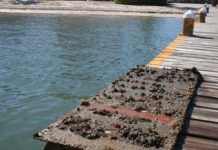
There are very few times when the door to my office is closed. Bottom paint rating tabulation time is one of them. For the past week, Ive been poring over bottom paint data collected earlier this month: three Excel tables representing more than 300 data points. Although mammoth data tables are not what drew me into this business, the bottom paint program is still one of my favorite projects. Ive spent enough time scrubbing, scraping, and painting to appreciate the importance of what we do.
Taming Engine Room Noise
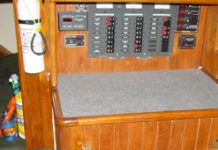
Practical Sailor reader Duncan Hood wrote us last week, asking about engine room noise insulation and prompting me to dive into our files to find our last test. Its been over a decade, so were due for another round of testing, but much of the information in our last report is still helpful. Many of the players are the same, and one of the most prominent players in our last test, Soundown, is still regarded as a leader in the field.For those like Hood who are contemplating ways to silence the engine, the following excerpt from that article offers some general guidance.

Holding Tank Test Correction
In the February 2012 issue, we tested two holding tanks-one from Trionic and one from SeaLand. Both tanks slightly leaked water while under pressure. The leaks were very small and occurred at top-mounted fittings that were supplied separately with the tanks and were installed by our tester according to the manufacturers instructions. After the storys publication, SeaLand informed us that tank that we tested and recommended was not the most current model.

Winning the Battle Against Holding Tank Odors
Take a look at this photo and imagine it is your backyard. Or your patio, or sun-deck. Yep, those are sealed 5-gallon buckets full of iguana poop and other waste, ripening in the Chesapeake Bay area's autumn sun. Do you ever wonder whether those bright blue bottles of chemicals that claim to eliminate your head odors actually work? So did we. Did you ever wonder how the neighbors would react if you set up a head odor testing facility in your backyard? So did PS contributor Drew Frye. So far, it seems, Operation Potty Odor, has not alarmed the local zoning tipsters . . . and it is yielding some interesting results.
Pondering Solar Panels
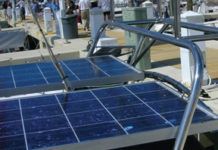
My post last week on storing batteries for winter prompted a couple comments and letters on solar panels, so I thought I'd point out some of our past articles on the topic that can be found online at www.practical-sailor.com. It is a timely project for me, since our upcoming project testing one of the new sonic-pulse antifouling devices will require a solar panel. According to the device's maker, Smart Antifouling, the unit draws about .08 amps, which means will want to put a small 5-watt solar panel on our Cape Dory 25 test boat, Skimmer, which typically lies on a mooring.

Jamming GPS Signals, the Lightsquared Way
This months report on satellite communication devices focuses on existing technology, so it does not dig into one of the more controversial satcomm topics of the moment: a proposal by the upstart wireless company Lightsquared to provide a combined satellite and land-based broadband service that will reach remote areas of the United States where broadband is not yet available. While the idea of giving everyone the ability to stream reruns of "The Simpsons" at lightning speed seems noble, Lightsquareds $14 billion plan does so at the expense of GPS-based navigation systems-the kind that land you safely at OHare.

The Bight Before Christmas
Will Swagel, the engaging publisher of Sitka, Alaskas classified ad circular, The Sitka Soup (motto: Hearty Ingredients-Tasty Leftovers-A Dash of Silliness), has given the Christmas poem The Night Before Christmas, an Alaskan twist. Illustrated by former fisherman and local Sitka artist and musician Colin Herforth, "The Bight Before Christmas" replaces reindeer with coho, hootchies, and humpies - and a glossary that explains what all of these are. It also introduces the bellyfish, which according to Swagel is a made-up word because we needed a rhyme for jellyfish.
Latest Logbook

Practical Sailor Logbook – September 2026
In September we tour the Hans Christian 48T — the offshore cruiser many sailors call the holy grail — walk the custom Antigua 60...

Video: The BEST Sailboat You Can Buy for $35,000 – Catalina...
If you’re searching for a mid-30-foot sailboat, affordable cruising sailboat, liveaboard sailboat, first sailboat, or a capable used sailboat for coastal cruising, the Catalina...


Latest Sailboat Reviews
Learning by Doing on a $5,000 Catalina 30 Mk II
When Davis’s mother started talking about wanting to do something “big” for retirement, Davis and Gloria half-jokingly threw out an idea that seemed suitably...