



No-Rust Bags? A Bit of a Bust.
Cleaner than coil and grease coatings, these bags protect areas that are hard to reach. Additionally, the protective coating does not need to be removed, since it is very thin and will slowly evaporate once the part is removed from the bag.
Clearing the Air Around Odor Testing
After several rounds of chemical testing for holding tanks, we have got this stink detection down to a science. Because the masking chemicals are more effective in in port-a-potty applications, there is only one true measure of effectiveness: whether the toilet still stinks after it is flushed.

Controlling Porta Potty Odor
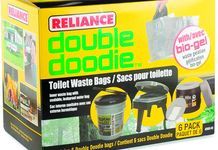
Another consideration is that many day sailors avoid using the boats head at all, often going for many months at a time without needing it. When it is used, once in a blue moon, is it worth the hassle of hauling it home to clean it out, knowing that most likely it will not be used for another 3 months? When Katrina hit New Orleans, the Red Cross handed out WAG (waste alleviation and gel) bags by the thousands to provide an emergency option. Weve been living with these too, evaluating them as an option for small boats.
Mailport: Tourniquets at Sea
Add a tourniquet to your first aid kit and know how to use correctly - it is less likely to accidentally loosen or inflict additional tissue damage.For further training, I would refer you to the American Red Cross, they have a Basic and Advanced First Aid certification, and along with the American Heart Association offer classes in cardiopulmonary resuscitation, and the use of automated external defibrillators (AEDs).

What You Have Now is Probably Enough
While product testing is a central part of the Practical Sailors aim, it is hardly the whole mission. Those who have been with us long enough understand that many of the topics that we have covered over the past 44 years arent directly related to a specific product or category of products. Our online archives, now reaching back almost 20 years, are packed with a variety of do-it-yourself articles, tips on maintenance, and advice on how sailors can become more self-sufficient.

Download the Full September 2018 Issue PDF
- Porta-potty Perfumes
- Anti-corrosion Bags
- Pinny-pinching Plan
- Ground Tackle Check
- Spar Rivets vs. Screws
- Anchor Shackle Sizing

Beneteau Responds to Seacock Query
Beneteau wrote a detailed response to our recent query from a reader regarding seacocks in his Beneteau (Seacock, Through-hull Caution Mailport, PS July 2017). We are continuing to look at seacocks and seacock materials. Our last big report was in 1994, so this is long overdue. If you have a relevant seacock story to share, send it to the editor at [email protected].

Cure for Holding Tank Clog
Any suggestions about what to do with a clogged holding tank? Ive isolated the clog to between the base of the tank and the elbow after the toilet macerator. Ive been treating the system with straight vinegar down the pumpout tube and thru the bowl to no avail.
Cetol Versus Teak Sealer
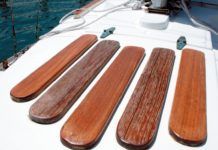
I own a 42-foot Pearson 424 with lots of bright work. Ive absolutely had it with Cetol! There must be something that is easier to use than this. It forms a dark coating after a few years and begins to peel in splotches. Then you have to remove it, clean the teak, and start over. Oh, the stuff goes on clear so if you spill a drop on your gelcoat, you can't see it until it ambers. Once that happens, you can never get it off. Im trying Semco Natural. I tried a small area a couple of years ago and so far have had good luck. While it isn't as durable as Cetol, it doesn't build-up.
DIY Fishing Gear for Sailors
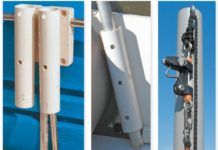
We reviewed clamp-on rod holders a few years in the past, but found them expensive (see PS October 2006). Fortunately, there are alternatives that can save hundreds of dollars and be installed in an afternoon. Less shiny, but functional.

Bahamas for $5000? The Watkins 27 foot Sailboat
Is the Watkins 27 the ultimate small cruising sailboat? In this video, we take a deep dive into the Watkins 27 — a classic...



Latest Sailboat Review

Tartan 30: An Affordable Classic
The early 1970s was the heyday of the Tartan 30' racer/cruiser. In all, no less than two dozen boats of a similar size and type were introduced in just three years, many of them to become highly successful among sailors eager for the performance and amenities of big boats at a modest price. Among the most noteworthy and enduring of the 30-footers from this era has been the Tartan 30.