


Mailport: October 2015
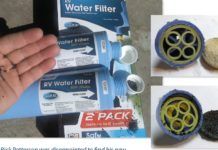
On the recommendation of Practical Sailors water filter test (see PS June 2015), I bought a two pack of Camcos RV Taste Pure water filters through Amazon after finding sediment in my water tank. One of the filters dumped 1/8-cup of the carbon/KDF granuals all over when I took the protective cover off the filter, and it continued to shed the media when I shook the filter. If I had connected the filter to my water supply, it would have contaminated my water system and probably ruined my water pump. Only one of the two filters is dumping carbon/KDF material, so I assumed that this is a product defect.

Product Update
Weve tested Bebi Electronics lights in the past (PS May 2010) and recently mentioned the companys photo-sensitive Beka anchor light in our report on do-it-yourself onboard security projects (PS August 2015). However, we recently learned that the Fiji-based, sailor-owned and -operated business has closed its doors. According to Bebis website, www.bebi-electronics.com, the company reluctantly went out of business because of mounting political problems in Fiji that put the owners safety at risk.
Tea for the Tillerman
The tiller on Tosca was a rough-hewn piece of sawn ash-tough and springy. Where it fit in your hand, it was about as big around as a teacup. Tosca, our William Atkin ketch, was built in 1937, and I liked to believe that the tiller was the last piece of timber the builder had shaped, a piece of wood carefully selected from a tree he had known as a boy, endowed with hidden magic.

Editors Tap Top Sailing Gear of the Year
Each fall, Practical Sailor editors sort through the best test products of the past year to pick those deserving of a spot on our PS Editors Choice roster. To be named to the list, products must earn the Best Choice rating among their respective peers and clearly stand out above others in their field.
The Best of Bottom Paints
Our Editors Choice roster would not be complete without the top performers in our semiannual bottom paints tests (PS October 2014 and April 2015). The most recent test looked at 55 different paints from Blue Water Paints, Interlux, Epaint, Pettit, and Sea Hawk. This years hard paint standouts were Interluxs Micron Extra with Biolux and West Marines Bottomshield. Made by Pettit, the West Marine-branded PCA Gold was the top ablative paint. Micron Extra and PCA Gold tied for best performance of the bunch.

VHFs, SSBs, and Reading the Weather
In the April 2015 issue, Practical Sailor evaluated four handheld VHF radios loaded with all the bells and whistles, including longer battery life, positive flotation, internal GPS, and digital selective calling (DSC) capabilities. Out performing VHFs from Icom, West Marine, and its own product line was the Standard Horizon HX870, which grabbed a spot on our Editors Choice list.
Fighting Mildew, Mold, and Lichen
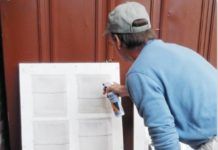
Most boat owners regard their boat as a living, breathing thing, but when real living things-especially the microscopic variety-move aboard and start occupying large swaths of damp real estate, its time to draw the line. Weve done a series of reports on mildew in past articles, but those black spots on the deck, lines, and canvas probably arent mildew. Mildew and mold require darkness, and even the shaded areas on deck are too well lit. Those spots are more likely black algae and lichens, the latter a symbiotic combination of algae and fungus.
Slicing, Dicing Abrasion Data
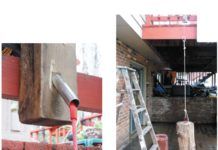
For testing, we used the same abrasion rig we used to test sewn eyes and rope (see PS March 2015). A modified wood lathe sawed line samples back and forth (a 3/4-inch stroke) at seven cycles per second through a 10-millimeter test stanchion hole. We tested each sample to failure, effectively condensing months or years of wear into just minutes.
Visible Harm Doesnt Tell Whole Story with Amsteel
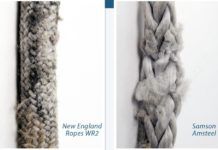
Our testing made us wonder whether we are better off with a core-and-cover lifeline with a tough cover, like New England Ropes WR2, or an uncovered rope like Samson Amsteel, which is much stronger than the smaller-diameter WR2 core. (Because of the way WR2 is spliced, the cover should not be counted toward strength.)
Check for Abrasion Before Switching to Fiber
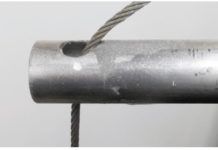
To see how chafe points can develop on stanchions, we ran standard steel cable through our test stanchion holes for an hour. As expected, the sawing action wore a rough-edged groove, but several other things became apparent.

O’Day 40 – A Budget Cruiser for the Bahamas
The O’Day 40 (1986) is one of those cruising sailboats that somehow slipped through the cracks of sailing history. Built during the final years...


Latest Sailboat Review
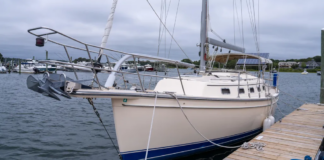
Island Packet Estero Used Boat Review
Florida-based Island Packet targets a relatively narrow niche, so the toughest competitors to its new boats are often older Island Packets. Introduced in 2010, the 36-foot, shoal-draft Estero is the company’s latest attempt to introduce a distinctive model that doesn’t stray too far from the company’s proven formula for success: moderate displacement, full-keel cruisers designed to be lived on, sailed far and in comfort, and endure the bumps, scrapes, and storms that cruising boats inevitably encounter. After sailing the Estero on Florida’s Sarasota Bay and inspecting its interior, construction, and systems, Practical Sailor testers noted that the shoal-water cruiser will appeal strongest to Island Packet fans who’ve been waiting for a shoal-draft, easy-to-sail boat that compares to the IP37 in terms of interior space. These strengths will be most apparent on intracoastal or riverine adventures like the Great Loop.