

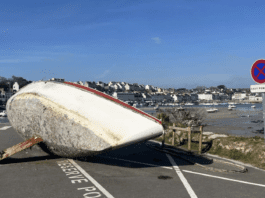

Finishing the Cabin Sole
Im in the process of installing new teak and holly veneer in the interior of my boat. I have the old floor out and have the new plywood/veneer cut. I am ready to varnish/seal the new veneer, but I am in gridlock as to how to go about it.
Mailport: July 2015
I just received the June issue and was pleased to see the sandbaggers Bull and Bear on the cover. However, when I looked inside for the cover photo description, I saw one, possibly two errors. The description reads: The replica 1860 Sandbaggers, Bull and Bear, offer students in Maine a real-world exercise in sailboat stability.

Pitfalls of Going Paperless
As I write this, the resurrected VO65 Vestas Wind has just rejoined the Volvo Ocean Racing Fleet in Portugal for the last two legs of the nine-leg, around-the-world Volvo Ocean Race. Barring any further misfortune, the rebuilt hull should arrive safely in Gothenberg, Sweden, along with the rest of the fleet. No matter where Vestas Wind finishes during the final leg, I wont be surprised if the boat attracts as much media attention as the winner-a twisted ending to a truly bizarre tale that holds as much significance for the cruising sailor as it does for the offshore racer.
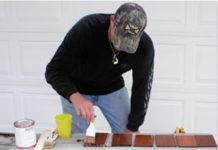
Exterior Wood Finishes
After a brief-and for testers, much needed-hiatus from testing wood finishes, we recently launched a new long-term evaluation of exterior wood coatings. Our last round of tests, a two-year death match, wrapped up in 2011. Although the test field this go-around is smaller than the previous tests lineup, it includes some new products and some that have been reformulated since the last long-term test began in 2007.
Recalled Fire Extinguishers
Spring is a good time to check your fire extinguishers to be sure they havent expired, but if you own a Kidde extinguisher, youll want to also be sure yours wasnt part of the companys recent recall. Well-known fire extinguisher manufacturer, Kidde, in conjunction with the U.S. Consumer Product Safety Commission (CPSC), announced a voluntary recall to replace certain Kidde fire extinguisher units, according to Boat Owners Association of the United States (BoatUS).
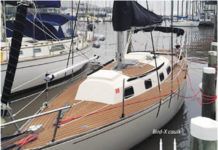
Mailport: May 2015
In regard to your March 23, 2015 blog on bird deterrents: I moved to Florida a few years ago and was the only sailboat in a 20-slip location. Little black birds infested it right away. I tried flying owls, kites, balloons, sitting owls, snakes, etc., and nothing worked for long. Those little black birds would sit on top of my Windex and spin around, and poop all over the boat.
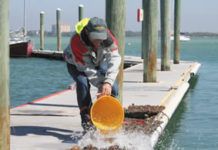
Bottom Paint Checkup 2015
You know that youve been testing bottom paint too long when you start rooting for the slime and barnacles . . . or tunicates and seaweed, or sponges, or algae, or oysters . . . the whole lot of em. Go sea critters, go! If you ever felt an ounce of sympathy for the invertebrates that sailors spend so much money trying to defeat, then here is some news that will warm your barnacle-hugging heart. We just returned from pulling our 18-month antifouling-paint test panels, and the past year and a half has been very good to barnacles.
Sea Hawk Faces Stricter Scrutiny from EPA
Family-owned and -operated New Nautical Paints, the makers of Sea Hawk marine paints, is operating under an environmental compliance program that requires strict monitoring and reporting requirements for the next three years. The program is one of several punishments that a U.S. District Court judge in Miami handed down in December after New Nautical Coatings, its owners, and two employees pleaded guilty to violating U.S. laws regulating the manufacturing and distribution of pesticides.
Check that Antifouling Label
Shortly before this issue went to print, Practical Sailor learned that Irgarol, a pesticide commonly used as a boosting agent in antifouling paints, is in short supply in the United States. Although we have not fully investigated the ramifications of this news for boat owners, it seems likely that the supply of paints containing this pesticide will be exhausted sometime this year.
A DIY Water Filter
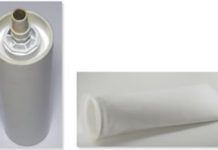
For those of you unfamiliar with Baja fuel filters, they are multi-layer strainers, purchased or handmade, used to filter diesel fuel of dubious pedigree before loading. Water, whether from a dockside hose or rainwater, presents a similar challenge. Weve been exploring freshwater filtration possibilities for a series of articles to come, and while there are great pre-filtration products out there, none offer the versatility of our own home-grown solution, which we call the Baja water filter.

O’Day 40 – A Budget Cruiser for the Bahamas
The O’Day 40 (1986) is one of those cruising sailboats that somehow slipped through the cracks of sailing history. Built during the final years...



Latest Sailboat Review
Island Packet Estero Used Boat Review
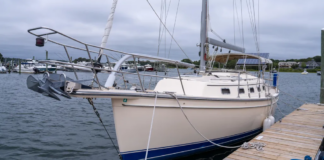
Florida-based Island Packet targets a relatively narrow niche, so the toughest competitors to its new boats are often older Island Packets. Introduced in 2010, the 36-foot, shoal-draft Estero is the company’s latest attempt to introduce a distinctive model that doesn’t stray too far from the company’s proven formula for success: moderate displacement, full-keel cruisers designed to be lived on, sailed far and in comfort, and endure the bumps, scrapes, and storms that cruising boats inevitably encounter. After sailing the Estero on Florida’s Sarasota Bay and inspecting its interior, construction, and systems, Practical Sailor testers noted that the shoal-water cruiser will appeal strongest to Island Packet fans who’ve been waiting for a shoal-draft, easy-to-sail boat that compares to the IP37 in terms of interior space. These strengths will be most apparent on intracoastal or riverine adventures like the Great Loop.