

Chandlery: March 2015
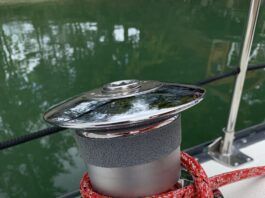
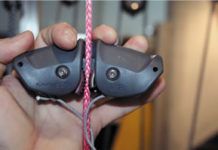
In Edgar Rice Burroughs early Tarzan books, his hero never swings from vines-but Hollywoods version of the ape-man isn't off base. Pre-human hands evolved to grip and hang from branches, and the best sailing hardware takes full advantage of this ability. Whether youre human, ape, or somewhere in between, however, even our most essential grip begins to weaken. In humans, the decline begins at around age 59.
Fixing a Moldy Waste Hose
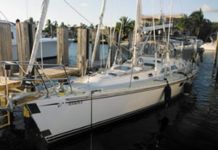
I am a part-time live-aboard and sail from Maine to Grenada. I have a mold problem on my two-year-old Shields VAC XHD series 148 waste hose. The sides of the hull are dry and clean, but the waste hose has a lot of mold. Is this due to the cooler seawater in the hose condensing moisture out of the warmer surrounding air? Could I insulate the hose to reduce this problem, and if so, what would you recommend as insulation?
Making Engine Oil Changes Easier
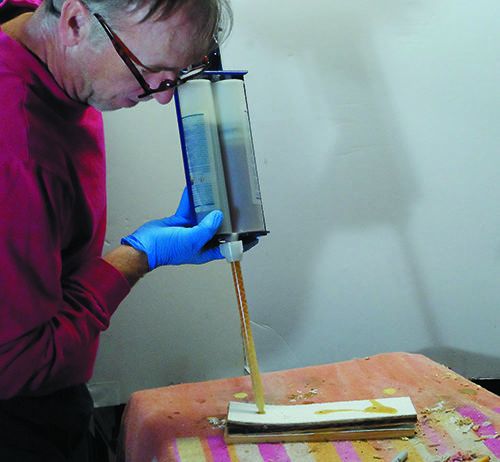
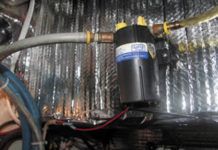
Some boat manufacturers have no concern for simplifying things, like changing the auxiliary engines oil, once the boat leaves the factory. But the process should not be more than a 15-minute job, and at most, only a few drops of oil should need to be cleaned up.
Chandlery: February 2015
Laser rescue flares like those offered by Greatland Laser (see PS February 2004, March 2011, and September 2013 online) have long been marketed as a way to attract the attention of potential rescuers. One issue associated with their use has been accurate aiming to get the rescuers attention. The new Picatinny Mount Laser Flare Holder, made by North American Laser, aims to take the guesswork out of, well, aiming.

40 Years of Breaking Boat Gear
Practical Sailors 40th anniversary came and went last year without hoopla. We talked a while about marking the event with a stroll down memory lane, or a photo-essay tracing our evolution from a courier-type bulletin to our current incarnation, or a best of collection celebrating our most talked-about tests. They were all nice ideas, but at age 40, your limitations become clearer, and routines that a twenty-something might chafe at offer a measure of peace-why break them? Daily ruts feel more like grooves.
Out, Out Brief Wiring Terminals!
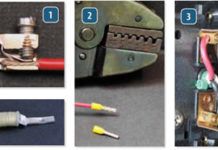
Eurostrips, Euroblocks, set-screw terminations-whatever you want to call them-they are here to stay. Many companies supply set-screw terminations as part of electronics installations, solar controllers, inverter/chargers, navigation lights, or even engine gauge panels. These set screws, if not protected by a pressure plate or a wire terminal, can cause damage to the wire stranding and eventually lead to failure. Attention to the details should always be top on the list when dealing with Euroblocks or any set-screw termination that bears directly onto the wire strands.
New Anchoring Rules on Horizon in Florida
So far, no one at the Florida Fish and Wildlife Conservation Commission has returned my phone calls, so Im left trying to imagine what might have compelled the commission to release a public survey on anchoring restrictions during the days bracketing Thanksgiving week, with very little (if any) advance notice, as far as I can tell.
Searching for Spray Shine
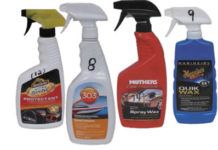
Is there a quick, easy way to get a glossy shine on the deck and topsides between the grueling wax-and-buff efforts? To find out, testers launched a search for affordable spray waxes-liquid waxes designed for speedy touchups rather than full-tilt compounding-and-waxing jobs. We specifically sought out spray-on products that offer a glossy finish and some surface protection and that are applied after rubbing compounds, fillers, waxes, and polishes.

Taking the Other Way Home
Our 38-foot catamaran, Josepheline, was built by Lightwave Yachts near Brisbane, Australia. Josepheline draws 3 feet, 6 inches and has a 22-foot beam. It is a fairly conventional design: mini fin keels, two forward queen berths under the bridgedeck, a double berth aft to starboard, and a decent sized shower and head located aft in the port hull. Shes stood the test of time-and distance. Weve cruised about 35,000 nautical miles aboard Josepheline.
Painting Water Tanks
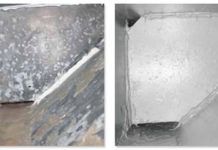
When it comes to onboard water tanks, we prefer stainless, fiberglass, and even roto-molded tanks (in that order) to aluminum ones. Aluminum tanks tend to pit and corrode over time, often needing to be replaced. The insides of the two 60-gallon aluminum water tanks in our 30-year-old Valiant 40 were more like a nasty moonscape than a drinking source. Their surfaces were pitted and rusted from what looked like a reaction to long-time use of chlorine.
O’Day 40 – A Budget Cruiser for the Bahamas
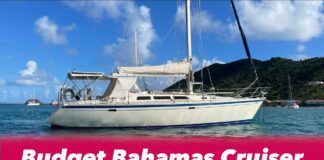
The O’Day 40 (1986) is one of those cruising sailboats that somehow slipped through the cracks of sailing history. Built during the final years...



Latest Sailboat Review
Island Packet Estero Used Boat Review
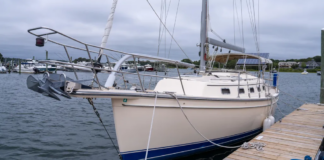
Florida-based Island Packet targets a relatively narrow niche, so the toughest competitors to its new boats are often older Island Packets. Introduced in 2010, the 36-foot, shoal-draft Estero is the company’s latest attempt to introduce a distinctive model that doesn’t stray too far from the company’s proven formula for success: moderate displacement, full-keel cruisers designed to be lived on, sailed far and in comfort, and endure the bumps, scrapes, and storms that cruising boats inevitably encounter. After sailing the Estero on Florida’s Sarasota Bay and inspecting its interior, construction, and systems, Practical Sailor testers noted that the shoal-water cruiser will appeal strongest to Island Packet fans who’ve been waiting for a shoal-draft, easy-to-sail boat that compares to the IP37 in terms of interior space. These strengths will be most apparent on intracoastal or riverine adventures like the Great Loop.