



Stuck Like Glue
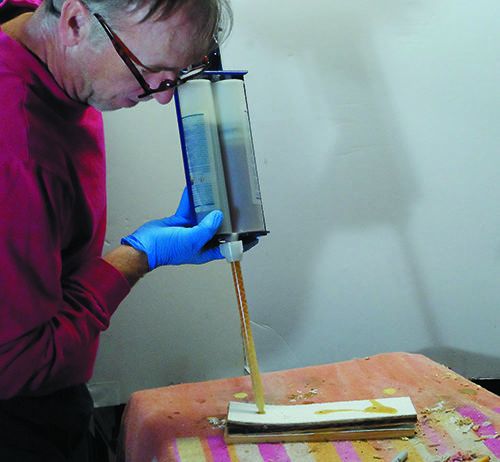
Just about every sailboat owner has at some point mixed up a batch of epoxy to fill a hole, glue parts back together, or tackle an extensive project. Practical Sailor testers evaluated four marine epoxy resins based on their mechanical properties (strength, adhesion, hardness, and flexibility) and key handling attributes such as wet-out, sag, curing, and overall handling. We tested West 105 Epoxy Resin, MAS Flag Resin, Raka UV-inhibited epoxy, and Interlux’s Epiglass HT-9000.
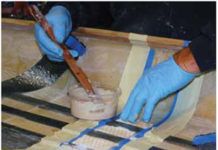
Ralph’s Great Adventures in Laminating
Technical Editor Ralph Naranjo equates spare time with boat projects. His basement shop/test facility has spawned a wide range of boats, boards, and parts for bigger boats. The two latest are test platforms for long-term evaluation of the resins and materials looked at in this round of epoxy evaluation.
Ralphs Great Adventures in Laminating
Technical Editor Ralph Naranjo equates spare time with boat projects. His basement shop/test facility has spawned a wide range of boats, boards, and parts for bigger boats. The two latest are test platforms for long-term evaluation of the resins and materials looked at in this round of epoxy evaluation.

A Copper Alternative?
Prompted by several reader queries and our own curiosity, Practical Sailor recently launched a test of an electronic alternative to metal-based bottom paints: the M20, an ultrasonic antifouling device from the Canada-based SmartAntifouling. Electronic antifouling uses ultrasound waves to prevent algae and other organisms from attaching to a boat’s hull. A transducer, which is mounted on the hull skin inside the boat, emits a high-frequency vibration that creates a micro-thin layer of rapidly moving water blanketing the hull and making it difficult for barnacles and algae to take up residence there. PS installed an M20 on a Florida-based test boat and will be monitoring its performance this season.

Liggett’s Shampoo Soap
After reading PS’s November 2011 report on eco-friendly liquid soaps for onboard bathing, personal-care product maker J.R. Liggett sent us one of his Old-Fashioned Bar Shampoos to try out. Liggett has been making the 3.5-ounce shampoo bar from New Hampshire springwater for 30-plus years. (We reported on his Natural Traveler Kit in the December 2008 issue.)
Liggetts Shampoo Soap
After reading PS’s November 2011 report on eco-friendly liquid soaps for onboard bathing, personal-care product maker J.R. Liggett sent us one of his Old-Fashioned Bar Shampoos to try out. Liggett has been making the 3.5-ounce shampoo bar from New Hampshire springwater for 30-plus years. (We reported on his Natural Traveler Kit in the December 2008 issue.)
Mailport: June 2012
Letters to Practical Sailor, June 2012. This month's letters cover subjects such as: Safety Lessons, USCG Registration Fees, Waterproofing Fabric, and more!
US Sailing Investigating California Sailing Deaths
Nine deaths in two separate offshore sailing races originating in California have prompted investigations by US Sailing. The race tragedies follow last summer’s fatal accident in the 2011 Chicago-Mackinac Race, in which two sailors died, and the near-fatal accident in the 2011 Rolex Fastnet race, which Practical Sailor reported on in the May 2012 issue.
Product Updates
Practical Sailor June 2012 Product Updates
Where Credit is Due: June 2012
Letters to Practical Sailor, June 2012. This month's letters cover topics such as: Accurate Metalworks Marine and Seldèn

O’Day 40 – A Budget Cruiser for the Bahamas
The O’Day 40 (1986) is one of those cruising sailboats that somehow slipped through the cracks of sailing history. Built during the final years...



Latest Sailboat Review

Caliber 33 Used Boat Review
The Caliber is a peculiar blend of tradition and innovation, of security and performance, of practicality and pizzazz. All of the owners we heard from were "satisfied." One called the 33 his favorite boat over six decades of sailing.