



Bilge Oil and Keel Worries
I have been looking at purchasing a Catalina 36 that had an engine oil leak, but first I wanted your opinion. The leaked oil accumulated in the bilge, and, in time, appears to have percolated through the base of the hull on either side of the keel, through the holes in which were mounted the sum/log impeller and the depth transducer. On the underside of the hull, there is a 4-inch dark halo that has impregnated the antifouling around each of these two fittings. I am concerned that the oil will damage the components and bedding seals. Also, the percolating oil has seeped down the keel bolts and darkened the joint where the ballast-keel meets the keel stub.
The Man Who Glued Too Much
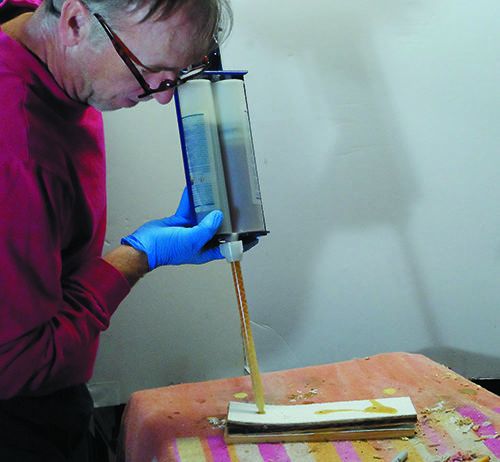
When PS Technical Editor Ralph Naranjo told me he was interested in doing a report on epoxy, I was thrilled. Ralph ran a boatyard for 10 years on Long Island Sound and is mad about glues and fibers and anything that has to do with building boats. I had one small concern: The project could spiral.
Antifouling for Aluminum Boats
When Achim and Erica Ginsberg-Klemmt upgraded to an aluminum sloop, they had to confront one of aluminum’s major pitfalls: copper-based bottom paints don’t like aluminum. After years of good performance from a foreign-made, expensive-to-import inorganic zinc-silicate coating called Inversalu, the couple sought an affordable option distributed in the U.S. Their research led them to a PPG Amercoat product, a hard two-part zinc-silicate paint called Dimetcote 21-5. Practical Sailor’s report covers their prep and painting experience, a look at how zonc-silicate paints works, and Dimetcote’s performance after eight months in Florida waters.
Mailport: May 2012
Letters to Practical Sailor, May 2012. This month's letters cover subjects such as: US Sailing Report, Tether/PFD Designs, Safety Snap Shackles and More!
Product Updates: May 2012
Practical Sailor May 2012 Product Updates
Where Credit is Due: May 2012
Letters to Practical Sailor, May 2012. This month's letters cover topics such as: Sail Rite, Taylor Made, and Inland Marine.

Mailport: April 2012
Letters to Practical Sailor, April 2012. This month's letters cover subjects such as: Engine Free, Climbers' Tether Fix, Waterproof Fabric, and More!
Where Credit is Due: April 2012
Letters to Practical Sailor, April 2012. This month's letters cover subjects such as: ACR, Raymarine, and LCBS.

Bottom Paint Test Checkup
When we last reported on bottom paint, several manufacturers were introducing new copper-free paints in response to increased pressure from environmental groups and regulatory agencies. Another key trend is a move toward water-based paints with a low VOC. At this point in our tests, results are mixed with many of our newest paints. A full Value Guide detailing the performance of almost 30 new paints at four months; over 50 hard and ablative paints at 14 months; and close to 20 hard and ablative paints at 30 months is included in this month’s report. Paints from Blue Water, Epaints, Pettit, Interlux, and Sea Hawk continue to do well. Find out which ones are top rated for racing sailboats, aluminum hulls, cruising boats, and environmental friendliness.

Mailport: March 2012
Letters to Practical Sailor, March 2012. This month's letters cover subjects such as: Durabak Feedback, Inflatable Bottom Paint, US Sailing Reports, and More!

O’Day 40 – A Budget Cruiser for the Bahamas
The O’Day 40 (1986) is one of those cruising sailboats that somehow slipped through the cracks of sailing history. Built during the final years...



Latest Sailboat Review

Caliber 33 Used Boat Review
The Caliber is a peculiar blend of tradition and innovation, of security and performance, of practicality and pizzazz. All of the owners we heard from were "satisfied." One called the 33 his favorite boat over six decades of sailing.