




It’s The Golden Rule for Electronics
If the weather this time of the year is cold enough for you to give up sailing for a few months and curl up in a warm place, there’s a good chance that the electronic equipment on your boat would appreciate a little of the same treatment. A little extra care when the weather is cold can add considerably to the useful life of most electronics. Unless a piece of gear is totally sealed against the environment, the atmosphere on the inside of the unit will be pretty much the same as the atmosphere on the inside of the rest of the boat. In the middle of winter, this can mean a lot of cold and condensation. Needless to say, condensation on the inside of your delicate electronics is not the best atmosphere for long life.
Its The Golden Rule for Electronics
If the weather this time of the year is cold enough for you to give up sailing for a few months and curl up in a warm place, there’s a good chance that the electronic equipment on your boat would appreciate a little of the same treatment. A little extra care when the weather is cold can add considerably to the useful life of most electronics. Unless a piece of gear is totally sealed against the environment, the atmosphere on the inside of the unit will be pretty much the same as the atmosphere on the inside of the rest of the boat. In the middle of winter, this can mean a lot of cold and condensation. Needless to say, condensation on the inside of your delicate electronics is not the best atmosphere for long life.

Avon Introduces New 10-Year Warranty
Avon is offering a new 10-year warranty on their line of inflatable boats. “We’ve had less than 1% return on our former warranty for defects and deterioration of material” states Avon West’s General Manager, Dave Geoffrey, “that’s why we feel confident in extending the warranty to 10 years.”
Maintaining Your Boat’s Electrical System
The battery is the heart of a boat’s 12-volt electrical system. In it, a chemical reaction maintains a potential difference or voltage, which “pumps” or pushes electrons around whichever circuits are switched on or are “closed.” No charges should flow through an “open” or incomplete circuit; if they do, you’ve got a problem, which we’ll get to later. The storage battery’s chemical reaction is reversible, which means that it can be recharged, and will be continuously, as long as the engine is running and the alternator or generator is functioning properly.
Maintaining Your Boats Electrical System
The battery is the heart of a boat’s 12-volt electrical system. In it, a chemical reaction maintains a potential difference or voltage, which “pumps” or pushes electrons around whichever circuits are switched on or are “closed.” No charges should flow through an “open” or incomplete circuit; if they do, you’ve got a problem, which we’ll get to later. The storage battery’s chemical reaction is reversible, which means that it can be recharged, and will be continuously, as long as the engine is running and the alternator or generator is functioning properly.

PS Advisor: A Classic Finish for a Classic Boat
I’m the happy owner of a 31-foot sloop, a replica of a 100-year-old wooden Friendship. Her fiberglass hull was laid up in a mold made from the old boat. My boat is very traditional, with wooden mast and spars, and lots of heavy bronze hardware on her gaff rig. The mast and spars all need to be stripped and refinished this off-season, and the owner of the yard where she’s stored has recommended using Mas epoxy (www.masepoxies.com) as the base, then a coat of varnish, then a sprayed-on clear coat. The Mas people advised not to use an oil or mineral-based spar varnish, as it isn’t compatible with their product.

Boat Maintenance: 18-month Checkup on Wood Finishes Test
Testers rated dozens of wood finishes—including one-part varnishes, two-part varnishes, synthetic systems, and teak oils—after the test panels faced a year and a half of Florida weather exposure. Find out how the finishes ranked for ease of application, gloss, appearance, and durability. Still going strong in the ongoing long-term test are 20 of the original 22 one-part varnishes and all six of the original two-part varnishes. As a group, varnish alternatives such as Interlux Sikkens Cetol, teak oils, and teak sealers struggled to make the 18-month cut, but nine remain in the test. Products that were doing well 18 months after application include coatings from Interlux, Coelan, Pettit, HMG, and Nautiking. The report also includes a brief look at a new product, Vermont Natural Coatings PolyWhey, which was applied to PS's Cape Dory 25 test boat. This unique coating's base is whey, a byproduct of cheesemaking, rather than oil.

Mailport: January 2011
Letters to Practical Sailor, January 2011. This month's letters cover subjects such as: Sailing non-profits, wind gens, pressure cookers, wood finish and mildew remover.

PS Advisor: Can Water Tanks Be Used for Fuel?
We made the embarrassing mistake of putting fuel in one of our water tanks (built-in fiberglass tanks). The silver lining is that we were trying to figure out how to expand our fuel capacity. Can you advise me on how to figure out if the tank can serve as our new fuel tank?
Update on 10 Long-term Practical Sailor Tests
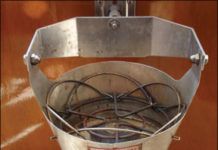
As a publication that strives to give readers a thorough look at similar items competing in the marketplace, Practical Sailor's long-term testing is vital to determining product durability. Over the years, weve found various ways to update our views. Occasionally run a column called Gear Graveyard, and once in a while, we just round up products that have or havent stood the test of time. This is one of those roundups. All of the items mentioned are, or have been, in use aboard either a 26-foot biodiesel-powered inboard powerboat or a 32-foot Union cutter test boat. They are among quite a few items aboard that undergo testing and abuse, formal and informal, intentional and unintentional. The 10 items included in this report are the Plastimo flexible water tank, Seoladair Easystow inflatable fender, Garmin GPSMap 545s chartplotter, Coleman thermo-electric cooler, Jabsco oil changer, ACR Firefly 2 strobe light, Force 10 Seacook single-burner propane stive, FilterBoss, Aere inflatable fender, Boatsense systems alarm.

O’Day 40 – A Budget Cruiser for the Bahamas
The O’Day 40 (1986) is one of those cruising sailboats that somehow slipped through the cracks of sailing history. Built during the final years...



Latest Sailboat Review
Island Packet Estero Used Boat Review
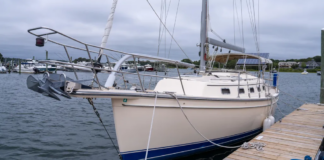
Florida-based Island Packet targets a relatively narrow niche, so the toughest competitors to its new boats are often older Island Packets. Introduced in 2010, the 36-foot, shoal-draft Estero is the company’s latest attempt to introduce a distinctive model that doesn’t stray too far from the company’s proven formula for success: moderate displacement, full-keel cruisers designed to be lived on, sailed far and in comfort, and endure the bumps, scrapes, and storms that cruising boats inevitably encounter. After sailing the Estero on Florida’s Sarasota Bay and inspecting its interior, construction, and systems, Practical Sailor testers noted that the shoal-water cruiser will appeal strongest to Island Packet fans who’ve been waiting for a shoal-draft, easy-to-sail boat that compares to the IP37 in terms of interior space. These strengths will be most apparent on intracoastal or riverine adventures like the Great Loop.