



Are Mildew Preventers the Best Defense?
In January 2009, Practical Sailor tested 14 mold and mildew cleaners, and two household products stood out: the super-chlorinated Klean-Strip Mildew Stain Remover and Spray Nine, a chlorine-free household cleaner. After that test, several readers asked about products to prevent mold. One product in particular, Concrobium Mold Control, was repeatedly suggested for testing. We found Concrobium at Home Depot, and to make things interesting, we included two other mildew preventers that readers suggested: 3M Marine Mildew Block, a treatment formulated to follow the 3M Mildew Cleaner tested in January, and Mold Off, a product billed as an eco-friendly commercial-grade cleaner and protectant.
Backyard Boatbuilding: A Father-Son Odyssey
For many sailors, boatbuilding can be the ultimate do-it-yourself project. The skills derived pay off as extra dividends when it comes to repairs or fitting out projects aboard larger sailboats. And as Matt Zephry and his 12-year-old son Alex found out, sharing the boatbuilding process with a loved one is like passing along an important piece of family history. The father-son duo began their boatbuilding project without any plans. Their intention was to create a boat that was easy to row and could double as a sailing skiff for father-and-son fishing trips. Their dream boat-and first boatbuilding project-was a success, and the Z&S team launched Odyssey in time for a Fathers Day sail.
Practical Sailor Tests Paint Preservers
Weve touched up our varnish, slapped antifouling on the hull and, brightened that bootstripe. Now what to do with those half-full coatings cans? Its not too late to save some bucks next season by making sure the cans wont skin over or go clumpy. The trick is to chase out the oxygen. We could dump marbles into the can to fill up the remaining air space or transfer the contents to a smaller can from the local paint supplier. Instead, following a suggestion from several readers, this year, we pumped our half-empty cans of finish with Bloxygen.
Inflatable Boat Coatings Long-term Test Launched
Topside paints for inflatable boats, in general, have a poor reputation for durability. Practical Sailor checked out a selection of coatings for Hypalon and PVC fabrics to see which one would best stand up to the tests of time on the water-and under the sun. Testers coated PVC and Hypalon panels with dinghy paints from MDR-Amazon, Synergy Research Corp. (Tuff Coat), Inland Marine, Polymarine (Flexithane and Superflex), and Flexdel Corp. (Flexabar Buoy Coating).

Mailport: June 2010
The June 2010 issue featured letters on subjects such as: spiders, addition of color to handheld electronics, DIY boatyard recommendation and propane fridges.

Living with Elvis Leg
Rock climbers call it Elvis leg. It usually struck me about two-thirds the way up the ratlines, where the rungs began to narrow. Then Id make the mistake of looking down, and a combination of nerves and over-contraction of calf muscles would start the shaking reflex: "One for the money, two for the show . . ."
Two-Part Teak Cleaners
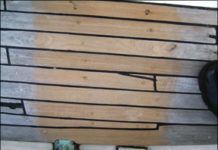
Whether its wood flooring or boat decks youre dealing with, cleaning teak presents special challenges. In March 2008, we tested one-part teak cleaners to see which ones cleaned teak decks without being too harsh on the wood, the applicator, or environment. In this report, Practical Sailor follows up with an evaluation of two-part cleaners and how they compare to one another and to the top pick from the test of one-part solutions for cleaning teak. Testers applied five two-part cleaners for this test. Four of these were liquids: Amazons Quicki-II Teak Cleaner, Nautical Ease Teak Cleaner and Brightener, West Marines Teak Cleaner and Brightener, and TE-KA Teak Wood Cleaner by Marinetex. Tip Top Teak combines liquid and granular powder parts. Two-part cleaners were compared to Iosso one-part teak cleaner.
PS Advisor: The Right Fastener for the Job
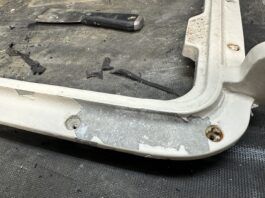
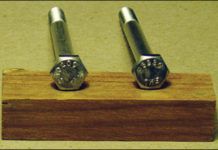
I am re-mounting the handrails and deck hardware on our 26-year-old Tartan 33. I had detected some moisture around the mounting area on the handrails and decided to remove them, and fill and re-drill them with epoxy. To my surprise and dismay, I found a lot of crevice corrosion on the existing bolts, and at least three of the heads broke off when I removed the rails.

TruPlug is a Handy Emergency-kit Tool
Spring is here, and that means its time for systems and safety checks. Among the items that should be on your to-do list are checking your seacocks and making sure essential safety gear is on board. For us, that has always included keeping an inventory of soft wood thru-hull plugs for plumbing emergencies, but this year, we decided to also add a few of Forespars new closed-cell foam TruPlugs.
K2r Works on Canvas, Carpet, and Teak
As all boatowners know, spills and stains are inevitable, particularly when you count children among your crew. Our heavily trafficked teak cabin soles and fabric-covered settees have seen their fair share of misfortune, so we keep our ears open for any recommended stain removers. A recent hunt for a product to clean stains from teak led us to K2r SpotLifter, which came highly recommended by Teak Decking Systems Jeff Scott.

O’Day 40 – A Budget Cruiser for the Bahamas
The O’Day 40 (1986) is one of those cruising sailboats that somehow slipped through the cracks of sailing history. Built during the final years...



Latest Sailboat Review
Caliber 33 Used Boat Review
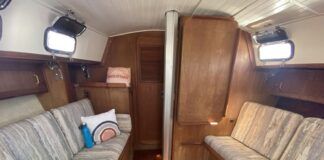
The Caliber is a peculiar blend of tradition and innovation, of security and performance, of practicality and pizzazz. All of the owners we heard from were "satisfied." One called the 33 his favorite boat over six decades of sailing.