



The Search is on for the Best Degreaser for Marine Grit and Grime
Practical Sailor searched for the top liquid degreasers to tackle heavy grease on marine stoves and marine engines. Eleven products were tested, including Chomp oil eater, Holy Cow degreaser, Kafko degreaser, Krud Kutter degreaser, Mary Kate Grease Away, Star brite All Purpose Citrus Cleaner Degreaser, and Star brite Sea Safe Cleaner Degreaser. Practical Sailor tested the liquid marine cleaners on grimy fiberglass panels and on aged, greasy farm equipment engines.
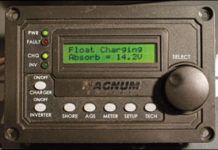
Which is the Best Marine Inverter-charger for Your Boat?
To decide which marine inverter-charger best meets your onboard power demands, first consider how it will used, how and where it will be mounted and what is required to fit with your electrical system. After testing multiple marine inverter-chargers, Practical Sailor offers this report on the units’ inverter capabilities and a follow-up review will report on the units’ charger functions. There are two classes of marine DC inverters: true sine wave (TSW) and modified sine wave (MSW). Each uses a different method to produce AC voltage. Practical Sailor evaluated modified sine wave units from Charles Industries, Magnum Energy, ProMariner, and Tripp Lite, and true sine wave units from Magnum, Mastervolt, ProMariner, and Xantrex.
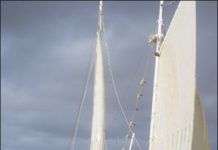
Legacy of Colin Archer is Still Alive and Kicking
If you think your boat is a bear to maintain, you might take some consolation in this months used-boat review of the Union 36. It is a fiberglass boat, but considering the amount of teak on deck and belowdecks, it might as well be made of wood. Not that there is anything very wrong with that. The 32-footer my wife Theresa and I cruised on for 11 years was very similar-a big, heavy double-ender-and ours was made of wood. While our 1937 William Atkin Thistle design differed significantly from the Union 36 and the modern double-enders that Bob Perry would later unveil (the Tayana 37 and Valiant 40, among the better known), these boats can be broadly traced to a common ancestor: the North Sea rescue boats designed by the renowned Norwegian naval architect Colin Archer.
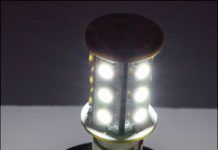
Practical Sailor Tracks Down the Best LED Tri-color Light
Practical Sailor found that the full brightness that LEDs offer, coupled with a huge energy savings, a wide tolerance to voltage changes, and a very long expected lifespan, make LED a great alternative to incandescent lights for masthead tri-color. The tradeoff is the considerable heft of the price tag. Practical Sailor tested LED tri-color lanterns from Orca Green Marine (OGM), Signal Mate, and Lopolight. We also evaluated LED tricolor bulbs designed to replace those in the popular Aqua Signal Series 40 tri-color light. Those were bulbs from Lunasea, Dr. LED, and LED Shop.
PS Advisor: Replacing Wire Rigging
Over the years, I’ve heard various timeframes for when to replace standing rigging, but I’ve never seen any empirical data to back up those recommendations. It would be very informative to know from a metallurgical/metal failure point of view estimated lifespans of the average wire used for standing rigging.
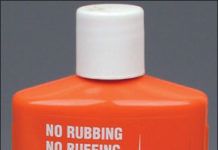
Liquid Wax Test Reaches Six-month Mark
Practical Sailor applied dozens of liquid boat waxes to fiberglass test panels in 2009 to determine which was easiest to apply and was the best for long-term protection of a fiberglass boat. The panels were set out to suffer in the Florida weather for six months, when testers checked in on them to see which waxes still had a gloss and which could still bead water. Topping the marine wax test field in their respective categories were products from Star brite, Cajun Shine All, Collinite, 3M, Nu Finish, Yacht Brite, and West Marine Pure Oceans,. Testers’ top picks for a shiny hull that lasts and is protected from UV damage were the 3M Scotchgard Marine Liquid Wax and Star brite’s Premium Marine Polish.

Boater Resources and Sailing Stories to Kindle Your Winter Daydreams
From gut-wrenching novels to marine maintenance manuals, lessons in boatie Spanish, a sailor’s cookbook, an anchoring handbook, and a new twist on an old classic—here are a few sailing books we’ve plucked from the Practical Sailor library to help get us through the winter. The reading list includes the Annotated Sailing Alone (Rod Scher / Joshua Slocum), the Motion of the Ocean (Janna Esarey), Ten Degrees of Reckoning (Dr. Hester Rumberg), and the Outboard Motors and Marine Diesel Engines maintenance and repair manuals.
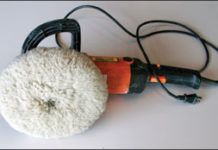
Mailport: January 2010
The January 2010 issue of Practical Sailor features letters on such subjects as: orbital polishers, seasickness, MOB technology and heads.
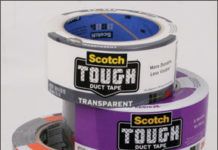
If You Cant Duct It, Tough Duct It
The new line, Scotch Tough Duct Tapes, includes: a new No Residue tape, said to handle temps up to 200 degrees, that can be left on for up to six months without leaving a sticky mess behind; an Extreme Hold tape, which uses a double-layer adhesive for a better grip that wont fail under pressure; a Heavy-duty All-Weather tape designed for long-term (even permanent) exterior repairs that 3M claims will stand up to UV and moisture without cracking or peeling; and Outdoor Painters Clean Removal tape, which is marketed as a paint pros choice for high adhesion, waterproof backing, and clean removal for up to two weeks. The line also touts the first-ever transparent duct tape for "invisible" repairs.
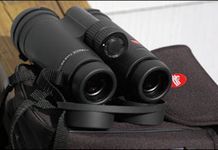
Good Lookin Leica
Sight is the mariners most important sense, and tools that enhance visual acuity can be worth their weight in gold. Leicas newest addition to its line of premium-priced, high-quality optics delivers brilliant viewing-and at $2,200 costs nearly its weight in gold-but for the sailor preferring an uncompromising pair of binoculars, the German-made Ultravid 7x42 HD is a navigators dream. Although they lack a compass, they do afford camera-lens quality resolution and their low-light gathering ability is truly astounding. The ergonomic two finger-focus adjuster, water-tight armored coating, and extendable eye cups round out their superior design.
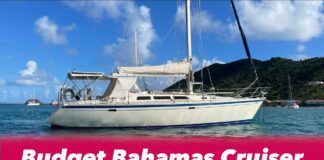
O’Day 40 – A Budget Cruiser for the Bahamas
The O’Day 40 (1986) is one of those cruising sailboats that somehow slipped through the cracks of sailing history. Built during the final years...


Latest Sailboat Review
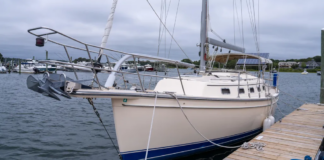
Island Packet Estero Used Boat Review
Florida-based Island Packet targets a relatively narrow niche, so the toughest competitors to its new boats are often older Island Packets. Introduced in 2010, the 36-foot, shoal-draft Estero is the company’s latest attempt to introduce a distinctive model that doesn’t stray too far from the company’s proven formula for success: moderate displacement, full-keel cruisers designed to be lived on, sailed far and in comfort, and endure the bumps, scrapes, and storms that cruising boats inevitably encounter. After sailing the Estero on Florida’s Sarasota Bay and inspecting its interior, construction, and systems, Practical Sailor testers noted that the shoal-water cruiser will appeal strongest to Island Packet fans who’ve been waiting for a shoal-draft, easy-to-sail boat that compares to the IP37 in terms of interior space. These strengths will be most apparent on intracoastal or riverine adventures like the Great Loop.