



Practical Sailor Sheds Some Light on LED Flashlights
Testers evaluated 25 different flashlights. Among these were products from Inova, Underwater Kinetics, Tektite, Sea Fit, Streamlight, Garrity, Pelican, Dr. LED, and IQ Lights. The goal of this test was to find a flashlight that was compact, light, and provided superior spotlight and wide angle illumination for objects in close range. Unfortunately, no light we tested answered all of these requirements. The winners proved to be units that excelled at one. We also discovered that size still matters, and more batteries means more power, more light, and more life. The best marine flashlight is one that suits your needs. A well-equipped sailor needs a few different flashlights to cover all the bases: one thats a dedicated spotlight, one that lights up the lockers, one that serves the needs of bright, wide angle floodlight, and lastly a tiny pocket light used for in-the-cockpit chart reading or other instances when you need a quick light but want to preserve your night vision.
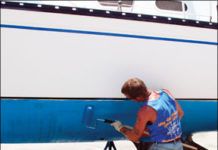
Practical Sailors 2007 Bottom Paint Field Test Update
For the last year, Practical Sailor has been conducting head-to-head antifouling field tests on four boats (two sail, two power). In August 2005, we painted one of our test power boats-a 21-foot Parker-with three coats each of two products: Interluxs Tarr & Wonson Copper Boat, a soft paint, or sloughing workboat paint, that is one of the cheapest on the market, and Interluxs Micron 66, an advanced (and expensive), ablative copolymer paint blended to release biocide at a controlled rate. So far, Tarr & Wonsons field testing and panel results indicate that a budget paint will hold out well for at least one season without hard growth, although you may have to scrub the bottom once or twice. At one-third the price of Micron 66, the Tarr & Wonson paint is not as effective, nor do we expect it to be.

Ocean Tested: A Professional Carpenter and Cruiser Tells Practical Sailor What’s in His Power-tool...
In the last decade, tool manufacturers have drastically improved their standard products. Today, all of the major manufacturers offer professional-grade power tools at reasonable prices. My personal choices are based on a wealth of experience with literally hundreds of tools owned by myself, my employees, and subcontractors. It boils down to reliable and versatile tools. The must-haves include: Hitachi angle grinder, Porter Cable Orbital Sander, Fein Multi-master, Dremel, Makita 14.4-volt drill driver, Makita 9.6-volt angle drill, and an 18-volt Milwaukee reciprocating saw.
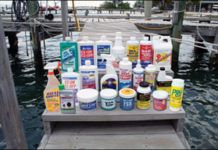
Practical Sailor tests 22 hull cleaners on scummy, brown waterline stains to find the...
We tested 22 products from 15 companies, dividing the playing field into four categories based on the type of stain remover: gel, liquid, spray, and powder. Those tested included products from Boatlife, Davis FSR, Interlux, Marykate, Spray Nine, West Marine, Y-10, Aurora, Nautical Ease, Star brite, Poli-Ox, Boat Brite, MDR Amazon, Sudbury, and Toon Brite. Picking the top products was a tough job considering the minor differences in performance. We found that the thicker gels worked best and were the safest to use. They are easier to apply thanks to their easy-to-see color and their consistency. In the end, all of the Excellent rated products are effective, but to avoid the cleaners with sinus-scorching vapors, go by the individual product descriptions in the review.

For the Multi-tasker: Bridgenorth Bailer
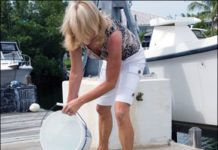
The Bridgenorth Bailer is a combination hand-pump, telescoping boat hook, and deck brush, but it has more than three uses. As a boat hook, it is-as Dr. Evil says-pretty standard, really. The hook tip is smaller than many, but stout, and will work to snag lines and pendants up to about 3/4 of an inch. The tip of the hook has the intake/discharge hole for the pump, and can be fitted into the deck brush. Unlike a typical boat pump like the Beckson Thirsty-Mate, the Bridgenorth has no flow-through valve for a separate discharge-you push out what you pull in through the same hole, so its not meant for serious de-bailing. Instead, the first purpose of the Bridgenorth is to suck water out of hard-to-reach places like the catacombs of the bilge, a dinghy skeg well, or under floorboards. The second is clean-water squirting. The volume is not great, but the pressure is excellent. Its ideal for spot [IMGCAP(2)]rinse-offs, and with the brush attached, decks can be scrubbed without hauling around a bucket or hose.
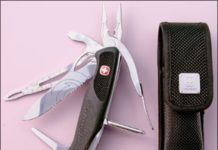
Wave Survives Alinghi Challenge
One of our campaigns over the last several years has featured knives and multitools as personal emergency tools that maintain and implement a sense of preparedness for the unexpected, even when ashore. Articles in several previous issues (March and August 2004, January and August 2005) have touched on this subject. To provide instinctive access in an emergency, the tools must be personal (worn on the person). So, when we evaluate personal tools, we always pose the question, "Would we wear this tool off the boat?" If yes, then the tool is personal gear; if no, we consider it strictly a multitool.

Where Have All the Bearded Sailors Gone?
Careful readers of Practical Sailor may note an obvious shortage of grumpy old men scratching their heads over sailing gear in this months issue. We have contributing editor David Gill brewing a variety of cleaning acids on page 27 ("Boat Bath"), but most of the articles are illustrated primarily with photos of boats, sailing gear, and perhaps most notably, women. In John Spiers power tools report on page 31, we have his wife, Kerri Spier, aloft and handling one of his recommended cordless tools, a Makita angle drill. And in our analysis of the new Torqeedo electric outboard on page 18, we have Associate Editor Ann Key enduring a South Florida bake-athon and waiting for the battery to peter out. And in our test of remote microphones on page 13, instead of the familiar mug of our electronics guru Al Herum, we have his more photogenic girlfriend, Patti Schrader demonstrating the function of the Standard Horizon unit.
Solving the Power Puzzle
I want to be able to tell how discharged my batteries are in order to maintain them properly (not let them discharge below 50 percent of their capacity). Im dealing with deep-discharge batteries ("house" and for trolling motors). Relying on sources such as Nigel Calders books, Im told that the approximate voltages corresponding to 100 percent, 75 percent, 50 percent, 25 percent, and 0 percent of a batterys capacity are 12.65 volts, 12.45 volts, 12.25 volts, 12.1 volts, and 11.9 volts, respectively. However, contradicting those figures, the standard for measuring ampere-hours (Ah) is based on how long it takes a battery, providing a standard flow of current, to drop to 10.5 volts. This would mean that the battery is 1.4 volts lower than when its considered discharged to 0 percent (according to Calder). Whats the difference in meaning between the 11.9 and 10.5 volts?
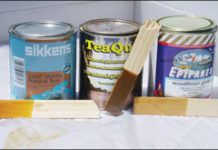
Practical Sailor’s Exterior Wood Coatings Test Continues for Inexpensive Wood Finish for Boats
This round of testing included familiar wood protection products like Interluxs Cetol Marine and Marine Light , West Marines WoodPro Plus, WoodPlus Marine, Amazons Teak Lustre, Aces Wood Royal stains, and Deks Olje stains. Products new to our tests were Teak Guard, TeaQua, and Interluxs Cetol Marine Natural Teak. Picking the best marine wood coating for your boat largely depends on your needs, your taste, and your patience. Synthetic coatings and stains are the perfect prescription for the average sailor who wants a product that looks good and protects well, without the fuss of more traditional coatings and without the knee-bruising cleaning teak oils require. They wont have the classic look of a meticulously applied hard varnish-and in our opinion, the jurys still out on whether theyre as durable as two-part varnishes-but for ease of application, no other type of wood coating can compare.
Practical Sailors Marine Antifouling All-stars Lineup
This update to our continuous bottom paint test takes a look at four sets of paint panels from two locations (Long Island Sound and a south Florida saltwater canal). One set was dunked in 2006, and the other in 2005. The paints run the gamut as far as type-from hard antifouling coatings to ablative to white and bright to those with anti-slime additives. Products from the top brands were included-Interlux (http://www.yachtpaint.com/), E Paint (http://www.epaint.net/), Pettit (http://www.pettitpaint.com/), Sea Hawk (http://www.seahawkpaints.com/), Flexdel (http://www.aquagard-boatpaint.com/) , and Blue Water Paints ( http://www.bluewatermarinepaint.com/) -as were the top performers from our past tests, including Micron Optima. For the average northern sailor, who hauls out each winter, we would recommend buying the cheapest of our recommended paints that fits your preferences (water based, eco-friendly, whatever), and rates well among local sailors and paint pros. Any one of these paints will get you through the season without barnacles.

Small Boat, Big Keel Why This 27 Footer Works
What makes a small sailboat truly seaworthy? In this video, we take a deep dive into the Pacific Seacraft Orion 27, a rugged, long-keel...



Latest Sailboat Review
Island Packet Estero Used Boat Review
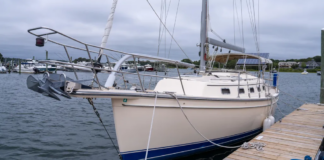
Florida-based Island Packet targets a relatively narrow niche, so the toughest competitors to its new boats are often older Island Packets. Introduced in 2010, the 36-foot, shoal-draft Estero is the company’s latest attempt to introduce a distinctive model that doesn’t stray too far from the company’s proven formula for success: moderate displacement, full-keel cruisers designed to be lived on, sailed far and in comfort, and endure the bumps, scrapes, and storms that cruising boats inevitably encounter. After sailing the Estero on Florida’s Sarasota Bay and inspecting its interior, construction, and systems, Practical Sailor testers noted that the shoal-water cruiser will appeal strongest to Island Packet fans who’ve been waiting for a shoal-draft, easy-to-sail boat that compares to the IP37 in terms of interior space. These strengths will be most apparent on intracoastal or riverine adventures like the Great Loop.