

Mailport: Max Prop
Regarding Folding vs. Feathering Props, (PS February 2018), we sailed with a Max-Prop for a number of years. The Max-Prop caught lobster pot lines daily and often more frequently when cruising Maine. One day I dove three times to cut the like off my prop and we are very careful to watch and steer around pots as best as we can. We finally switched to Flexofold and never in many more years have we caught a line. We are still very careful to steer around pots or immediately put it in neutral if we think we have run over a pot. I would not recommend cruising Maine with a feathering prop. I highly recommend a folding prop for line infested waters like the coast of Maine.
Mailport: Seawind Treasure Trove
Seakindly with sweet lines and good bones, the 30-foot Allied Seawind remains for me the benchmark of a good small bluewater sailboat. Designed by Thomas Gilmer and launched in 1960, 161 of these sturdy vessels were produced by the end of the run in 1973. That was the same year I bought my own Seawind, hull #122, built in 1969. I had no idea at the time that I would still be sailing the same boat 44 years later.
Caring for Seacocks
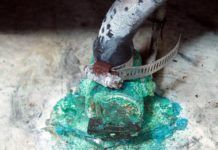
Considering the excitement a failed seacock can generate, the lack of attention they typically receive is almost criminal. Tucked away in the dim recesses of your bilge, seacocks typically don't get a second thought with regards to preventative maintenance or inspections - until they fail to operate or even break off in your hand during operation (it happens, Ive seen it, and it isn't pretty).
Mailport: Renting Adventure and Risk
As a long-term subscriber to Practical Sailor, and a former Clipper Round the World crewmember on the 2015/2016 race onboard IchorCoal, I needed to respond to your Risk Management and Renting Adventure article recently published (PS, January 2017 online). Your normal review articles on all things sailing have always been done with a very even-handed manner, providing your readers the information we need to make decisions on spending dollars and time on our sailboats. In my opinion, in the subject article, you have strayed away from the pure professional presentations and presented incomplete and damning comments specifically about the Clipper Round the World Race and its owner, Sir Robin Knox-Johnston.

What About GlowFast Tethers?
In response to your request regarding safety tether knowledge or suggestions (see Safety Tether Warning, Inside Practical Sailor) please test and include information about Glowfasts HLR Safety Line system.
Which Bottom Paint for a Watertender?
I have a West Marine Watertender 9.4 with a polyethylene hull (versus polypropylene for the Walker Bays) and am wondering if there is an anti-fouling paint that is suitable. Looking through the product info for both, the manufacturers both claim that the plastics are slippery enough to not need paint, however, the plastic wrap (unknown material) on the wooden pilings on my own docks in Florida have marine growth on them, so I suspect the same will happen with my Watertender (currently stored on the dock).There are conflicting reports/opinions on various forums as to if there is a paint that would actually stick to the hull, as well as potentially damage the plastic.
Mailport: EPIRB Battery Shocker
We have an ACR Global Fix EPIRB and an ACR Aqualink PLB. We had the EPIRB battery replaced 5 years ago in the USA, and it is time again to do so. We are currently in New Zealand and have been given a quote of close to $350 to replace the EPIRB battery and $120 for the PLB.
Jerry Can Storage Tips
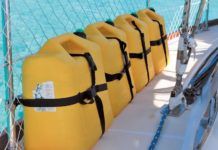
Jerry cans are a fact of life when cruising on small to mid-size cruisers. When fitting out our 37-foot cruiser for an extended trip from Lake Ontario to the Bahamas we supplemented our diesel tankage with four jerry cans for diesel and three gas cans to power the dinghy and run the water maker/generator.
Stopping Centerboard Pin Corrosion
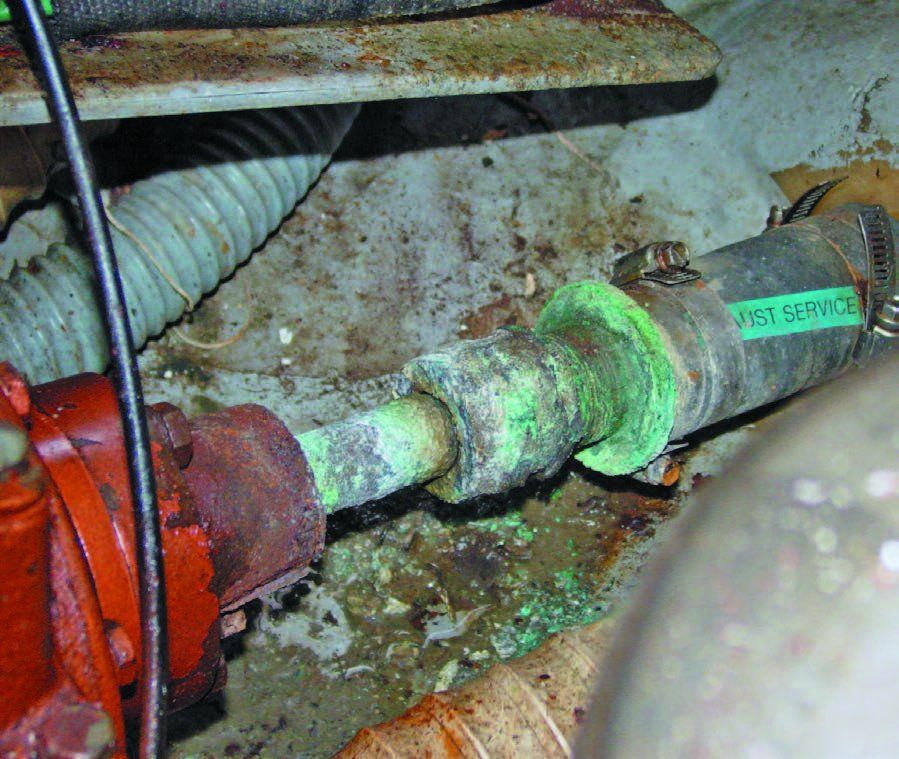
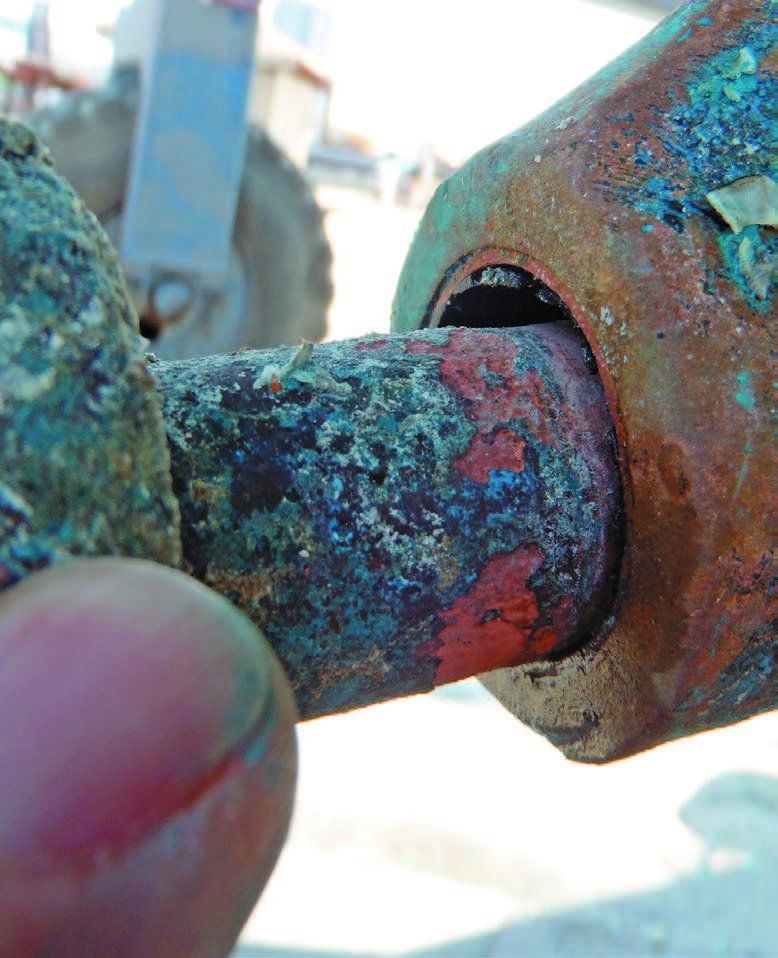
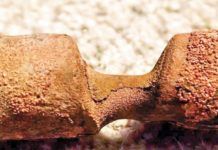
Im trying to determine the cause of erosion of the centerboard pivot pin from Arcturus, our 36-foot Soverel keel/centerboard cutter. It is a -inch diameter silicon bronze pin installed new in 2004. I removed the centerboard a few weeks ago and was surprised to see that the pin was heavily corroded. Ive attached a few pictures of the pin. The boat has a fiberglass encapsulated lead keel, with the lead bedded in a resin/sand mixture. The pivot pin fits in a hole drilled through the keel and centerboard trunk (which has encapsulated lead on both sides).
Mailport: Shackle Sense
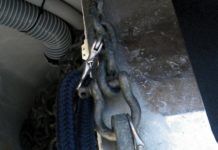
You have written thousands of words about shackles. One item that I don't think you have ever addressed is the use of double shackles. Our boat weighs 14,000 pounds dry (probably 17,000 pounds fully loaded for cruising). We use a 45-pound Manson, 200 feet of 5/16-inch G4 chain rode, and a Crosby 3/8-inch shackle (working load limit 2 tons). After hundreds of nights at anchor we have never dragged. We are big fans of a having a single anchor that you trust, and keeping a spare ready-but don't ever use it unless you lose the one you love. So I have no motivation to change the set up.
Latest Logbook

Practical Sailor Logbook – September 2026
In September we tour the Hans Christian 48T — the offshore cruiser many sailors call the holy grail — walk the custom Antigua 60...

Video: The BEST Sailboat You Can Buy for $35,000 – Catalina...
If you’re searching for a mid-30-foot sailboat, affordable cruising sailboat, liveaboard sailboat, first sailboat, or a capable used sailboat for coastal cruising, the Catalina...



Latest Sailboat Reviews
Cal 2-27 Used Boat Review
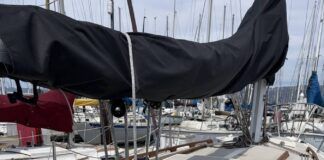
Our story begins in 1970, with the introduction of the Cal 29. Looking for something similar but a bit smaller, the company asked designer Bill Lapworth for a 27-footer, which at first was the Cal 27, a fin keel, spade rudder design with a convertible pop top; another incarnation of this basic hull was the T/2. But the concept of the 29 found its full expression in the Cal 2-27, which began production in 1975 and continued to 1977, after which it was again modified and called simply the Cal 27...again. Production of it ceased in 1986.