

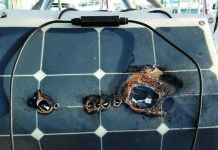
Solar Panel Self-destruction?
Solar power has become ubiquitous on sailboats, first on cruising boats, but now even on sport boats, where a small solar panel is the...
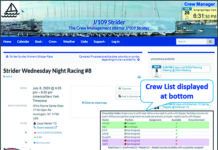
Online Crew Management Software Compared
If you are familiar with how coaches, parents, and kids coordinate details of their team sports with each other through software, you may have...
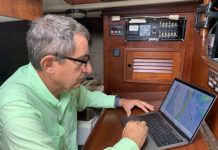
2 Weather Routing Apps Go to Sea
During a recent delivery from Punta Gorda, FL to St. Augustine, FL I had the opportunity to compare two routing apps, one of them...
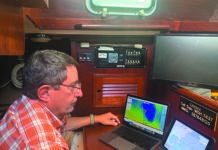
Weather Routing with Iridium Go
Last month, in part one of this report on portable weather routing options, I described why I selected Iridium Go to help guide my...
Getting Weather Data at Sea
As a USCG Master who does offshore deliveries, I rely on accurate and current weather forecasts. After exploring several options, I finally settled on...
Networking the Old and New
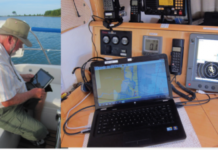
Over the years Practical Sailor has done many articles analyzing VHF radios, chart plotters, etc. This article will discuss how to get various brands of electronics that use different communication protocols to work together seamlessly. It is proven to work on my 39-year-old personal boat and parts of this process has been used on boats I have delivered for my customers.
Making Sense Out of NMEA 0183 and NMEA 2000
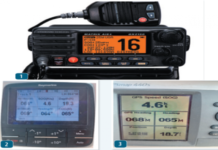
The NMEA 0183 has two different communication (baud) rates for-4800 baud and the faster 38400 baud (also known as NMEA 0183-HS). You have to match the baud rate of both devices for communication to occur. AIS will always use the faster rate. Once the speeds correlated on our test boat, the radio presented targets on its one-inch display. Sitting at the dock it was apparent that info below decks was useless.
Converters and Connectors Round Out the Expenses
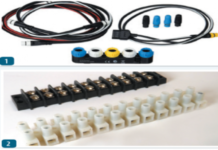
Although wireless systems have gradually made their way aboard modern cruising boats, hard-wiring remains an essential part of most systems, especially when you are matching old and new gear, or using converters. One of the biggest challenge for those of us with terrible fine motor skills is dealing with the tiny wires. Stripping, splicing and connecting these wires isn't neurosurgery, but definitely not the sort of thing you want to deal with on a rocking boat. But like any installation, it is a job you want to get done the first time-especially when you consider the challenges of troubleshooting electronics faults.
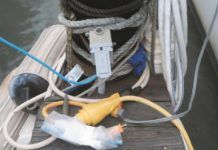
Preventing Electric Shock at the Dock
The human body runs on electricity and if you overload the nervous system with an external field, everything goes haywire. Every year several people die because they go swimming near a dock, a wiring fault creates an electric field in the water, and their muscles freeze. It is called Electric Shock Drowning (ESD).
Wireless Boat Monitoring
Most of us spend a great deal of time away from our boat. Whether shes on the hard, moored in our home harbor or anchored in a foreign port, we want to know whats going on with critical systems. Is my vessel where it should be? Has someone disconnected a power source or tried to gain access? Is the bilge pump cycling more frequently? Is the house bank okay? Is the freezer holding its set-point? If your boat was struck by another vessel, wouldnt it be helpful to have photos?
Latest Logbook

Practical Sailor Logbook – September 2026
This month we tour the Hans Christian 48T — the offshore cruiser many sailors call the holy grail — walk the custom Antigua 60...

Video: Morgan 44 Review – The Catalina Cruiser Everyone Forgot
The 1989 Morgan 44 is a big center-cockpit cruising sailboat with Catalina DNA—but it may be one of the most overlooked boats of its...



Latest Sailboat Reviews
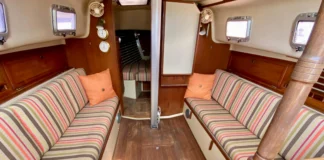
Bayfield 32 Used Boat Review
At first glance, the Bayfield 32 looks less like a fiberglass production boat from the 1980s and more like somebody shrank a traditional sailing...