



US Sailing Recommendations
The US Sailing report makes seven specific recommendations, several calling for important research into ways to prevent future accidents such as the one that took the life of Olivia Constants.
Safety Lessons Learned Part 1
This is the first in a two-part series that examines extensive reports on three sailing accidents. Each capsule summary of the reports is followed by a brief analysis of the US Sailing reports, and our recommendations for sailors. Fourteen-year-old Olivia Constants died last summer when her harness was accidentally hooked in the trapeze and she could not surface after the boat turned turtle. US Sailing made recommendations regarding capsize and recovery training; life jackets; trapeze gear and training; entrapment; electronic communication; language; and crisis, incident, and disaster plans.
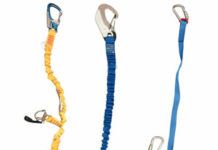
The Sailor’s Leash: Single or Double? With Elastic or Without?
Once you’ve settled on the types of clips you want on your tether, the next choice is the webbing construction. Currently, there are two main types of tethers: single tethers with one hook at each end; or double tethers, with two legs and three hooks. Double tethers have an extra clip, usually attached to a short leg at the mid-point of the tether, that shortens the length to about 3 feet.
West Marine Updates Recalled Tether
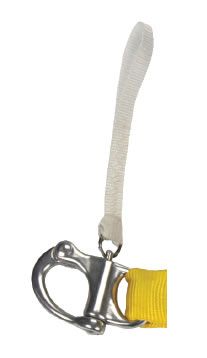
West Marine has released a new, improved version of the safety tethers it voluntarily recalled last summer. As we reported in the August 2010 issue, West Marine recalled its model 9553512 (single) and 9553504 (double) safety tethers—which featured Kong hooks on the boat end and snap shackles on the user end—over concerns about the durability of the split ring connecting the snap shackle’s release pin and the lanyard.

Cold Water Survival
When we read about a sailor lost overboard in the storm, we think about PFDs and personal locator beacons, and accept the sea is unforgiving. When we read of novice boaters drowning in a local lake, were sad, but say that will not happen us because we wear PFDs. But when we read of a PFD-equipped sailor falling overboard and dying within minutes its a real eye-opener.
Mailport: July 2013
A few issues ago, you had a short article on deck hardware (blocks, traveler, cars, etc.) that included Garhauer, and you mentioned that the manufacturer offered individual parts and complete systems that allow conversion from on deck to cockpit adjustment of the car position. We recently installed the EZ adjustable genoa car system from Garhauer and are very pleased with the results. This equipment fits on existing traveler tracks, is easy to install, and performs as advertised.
PS’s Safety Tether Test Results Reignite Concerns
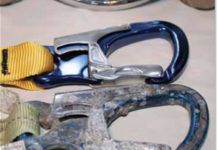
The safety tether is the sailor’s leash—a short stretch of webbing or rope that keeps a sailor from going overboard. Its purpose is complicated by the fact that it must be capable of two opposing functions: It must offer a secure means of attachment to the boat, and, when the need arises, provide a quick means of release. The recent Chicago-Mackinac Race tragedy and similar accidents, recent product recalls, and findings in Practical Sailor’s latest round of tether testing also bolster the argument that sailors—and manufacturers—need to pay more attention to the safety tethers on the market today. For this test, we evaluated three different West Marine tethers and found that despite improved engineering, they still fall short of perfection.
Time to Review Tether Regs
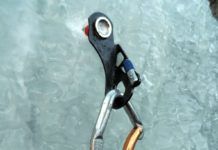
Like a car seatbelt, the snap hook on a sailors safety tether has only one essential job to do. It must support the dynamic loads of a human body should a sailor fall overboard or get thrown across the deck to the end of his tether (about six feet). But late last year, when British sailor Simon Speirs was swept overboard during the Clipper Ventures Round the World Race, the resulting load bent and opened the stainless-steel snap hook that connected him to the 70-foot racing yacht CV-30.
Horseshoe and Ring Buoy Mounts for PFDs
The December, 1993, issue contained an in-the-water test and evaluation of 16 different Type IV life preservers (cushions, horseshoes and ring buoys). Besides their throwability, flotation and the ease with which a person in the water can get to and utilize them, an important consideration was said to be how quickly these Coast Guard-required "throwables" can be detached from the boat and made available to the man overboard. …
US Sailing Recommendations
The US Sailing report makes several specific recommendations to prevent future accidents such as the one that involved WingNuts, among them:
Morgan 382 – The $30K Boat Nobody Talks About
The Morgan 382 might be one of the most overlooked cruising sailboats ever built. Designed by legendary naval architect Ted Brewer and produced between...


Latest Sailboat Review

Jeanneau 55 Boat Review
This recent sailboat from Jeanneau may as well be a spaceship. They’ve taken all the time-honored designs of a monohull aft cockpit and turned...