



US Sailing Investigators Recommendations
Ron Trossbach, the lead investigator for US Sailing in the Rambler 100 incident, recommended the following changes to US Sailing’s Offshore Special Regulations (OSR) and US Sailing Prescriptions. He also recommended that these be forwarded to the International Sailing Federation (ISAF) to be included the ISAF Special Regulations Governing Offshore Racing for Monohulls. The items in parentheses reflect the OSR section that would be amended.
New Trends in Sailing Safety Gear
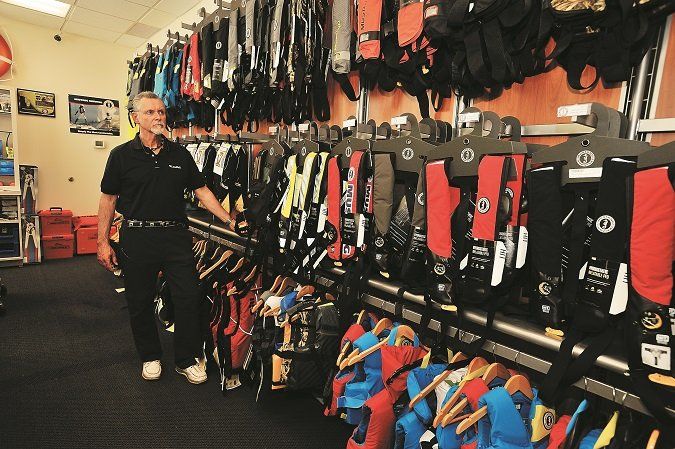
Safety at sea has become more than a noteworthy slogan. Many feel it defines the right game plan and gear choice to ensure a favorable outcome in challenging conditions. But at Practical Sailor, we also recognize its role in incident prevention, and we understand why ones boat handling ability, navigation competency, weather awareness, and sound decision-making are just as important as the gear in the grab bag-perhaps even more so.
Safety Lessons Learned Part 1
This is the first in a two-part series that examines extensive reports on three sailing accidents. Each capsule summary of the reports is followed by a brief analysis of the US Sailing reports, and our recommendations for sailors. Fourteen-year-old Olivia Constants died last summer when her harness was accidentally hooked in the trapeze and she could not surface after the boat turned turtle. US Sailing made recommendations regarding capsize and recovery training; life jackets; trapeze gear and training; entrapment; electronic communication; language; and crisis, incident, and disaster plans.
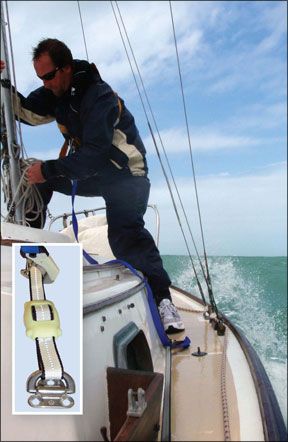
Safety Tethers Under Scrutiny
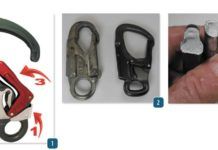
On November 18, 2017, Simon Speirs, an experienced sailor, went overboard while at the bow assisting with a headsail change on a Clipper Round the World Boat CV30. It was blustery, with sustained winds of 20 knots, gusting to 40 knots. Shortly after he went overboard, his safety tether detached and he was separated from his boat. His body was recovered 34 minutes later. The cause of death has not been determined but drowning is the suspected cause. While such accidents are tragic, they offer a chance to re-evaluate equipment standards within a real-world context.
Life Raft Stowage: The Overlooked Necessity
Sometimes, it seems that safety is a dirty word in the boat-building industry. A favorite marketing catchword is “blue water cruiser.” We assume this means a boat capable of going to sea, rather than a boat designed to tiptoe along the shore.
Mailport: April 2013
I recently purchased the cord, and as packaged on the plastic spool, the shore end of the new 25-foot EEL cord has a very tight bend at the plug, in order to force it into the package. The bend is much tighter than Id normally allow on a power cord, and upon inspection, I noticed what appears to be a separation of the seal between the cord and the plug. I checked other packages on the shelf at my local West Marine (one of many retailers of the cord), and found all of the 25-foot cords have the same tight bend at the shore end, and most have the same apparent seal issue.
Tether recall likely no factor
In 2010, West Marine voluntarily recalled two tether models (SKU #9553512 and #9553504), the same model tethers worn by Mark Morley and Suzanne Bickel the night they died. According to West Marine’s recall notice on its website: “West Marine has discovered that under heavy load, the shackle end may not release. “
Horseshoe and Ring Buoy Mounts for PFDs
The December, 1993, issue contained an in-the-water test and evaluation of 16 different Type IV life preservers (cushions, horseshoes and ring buoys). Besides their throwability, flotation and the ease with which a person in the water can get to and utilize them, an important consideration was said to be how quickly these Coast Guard-required "throwables" can be detached from the boat and made available to the man overboard. …
Life Jackets for Active, Racing Sailors
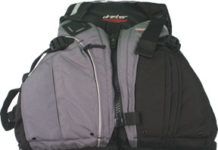
For this test, we rounded up seven flotation aids from four manufacturers: Float Tech, Gill, Spinlock, and Stohlquist. The test field included an inflatable rash guard, foam racing-style life vests, inflatable PFD-harness combinations, and PFDs designed specifically for women. Only the Stohlquist PFDs meet U.S. Coast Guard standards, but all have innovative features and offer increased comfort and mobility over many Type I and Type II PFDs.
Practical Sailor Tests Lightweight Tether Aimed at Racing Sailors
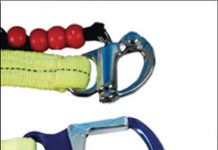
Theres a reason why we recommend safety tethers-the umbilical cords that connect the jacklines on our boats to the harnesses on our bodies-be 6 feet long or shorter. Getting dragged behind a boat, even at the sedate speed of 4 knots, can easily drown a person. Unless someone is on hand to haul you on board, survival relies on a superhuman burst of adrenaline. Though rare, there have been some highly publicized deaths involving harnesses. The story of Harvey Shalsky, a sailor in the 1999 Double-handed Farallones Race, is familiar to most racers. Shalsky, racing with longtime partner Mark Van Selst, drowned while tethered to his J/29 White Lightning. Van Selst was unable to slow the boat or haul his partner in, and eventually cut loose Shalsky (who was by then unconscious) so that following boats could recover him. The hazards associated with a tether that cannot be easily released under load prompted the International Sailing Federation (ISAF, the council responsible for regulating offshore sailing races) to recommend this feature in tether designs. It is not a requirement, only a recommendation, and ISAF does not stipulate what method should be used for the release.
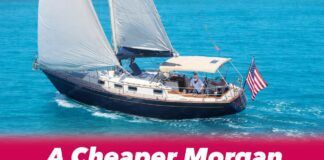
Morgan 382 – The $30K Boat Nobody Talks About
The Morgan 382 might be one of the most overlooked cruising sailboats ever built. Designed by legendary naval architect Ted Brewer and produced between...



Latest Sailboat Review

Jeanneau 55 Boat Review
This recent sailboat from Jeanneau may as well be a spaceship. They’ve taken all the time-honored designs of a monohull aft cockpit and turned...