

Do You Really Need a Bigger Boat?
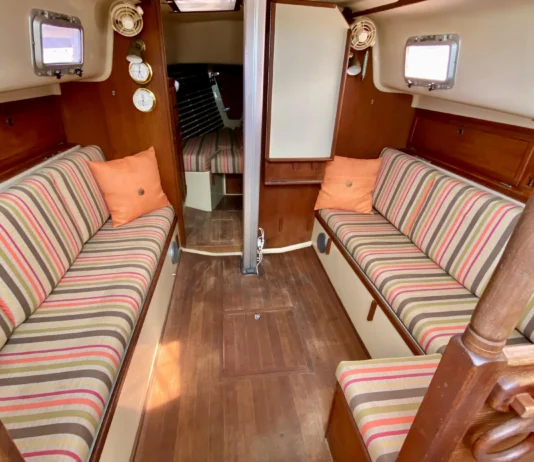
Questions arise at cruising seminars and it’s always encouraging when attendees provide the answers. In one such case, a young couple asked how much...

Mailport: Carl Alberg, Tinned Wire, Fiberglass Durability
HIGH PRAISE FOR CARL ALBERG
Regarding your report “Small-boat Dreams and Carl Alberg’s Classic Daysailers,” my first sailboat, 25 years ago, was a Pearson Electra....
Rebuilding a Cape Dory 36 Part III
This is Part III of a multi-part series describing the rebuilding of our 1982 Cape Dory 36. In Part I (PS November 2022), I...
Mailport: X-yachts, Soverel 33, tropical storms
PRAISE FOR X-YACHTS
Your report “Stowing Gear on Deck,” in the July 2022 issue had some good tips for line and miscellaneous storage on board....
Must New Owners Pay Old Yard Bills?
Unless the Purchase and Sale Agreement or the Acceptance of Vessel forms specify otherwise, the buyer is responsible for any work that is done...
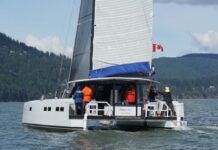
Designing a Dump Line for the Multihull Mainsheet
Many of Practical Sailor's previous reports have explored the risks of multihull capsize, and what sailors and designers are doing to reduce this risk, which, though generally low, increases as designers push for more speed. One detail that we have not explored in great depth is the engineering of a “dump line,” which allows the helmsman (or automatic system) to quickly release the mainsheet in case a capsize is imminent. Simon Angus, a Canadian sailboat designer and builder who recently launched a new 40-foot catamaran that fits into a shipping container, has a manual system that involves the clever use of Ronstan’s constrictor textile rope clutches, which allows a person at the helm to quickly release the mainsheet with the swift tug on a parachute cord.
Life Jackets for Active, Racing Sailors
For this test, we rounded up seven flotation aids from four manufacturers: Float Tech, Gill, Spinlock, and Stohlquist. The test field included an inflatable rash guard, foam racing-style life vests, inflatable PFD-harness combinations, and PFDs designed specifically for women. Only the Stohlquist PFDs meet U.S. Coast Guard standards, but all have innovative features and offer increased comfort and mobility over many Type I and Type II PFDs.
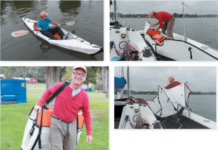
Folding Oru Opens Horizons
No space to store a dinghy or hard kayak? Remember folding paper boats as a kid? The Oru folding kayak neatly solves the first...
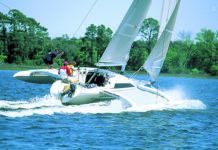
Multihull Capsize Risk Check
In recent years we’ve seen a surge in interest in multihulls. Thirty years ago, when my experience with cruising multihulls began, nearly all of...
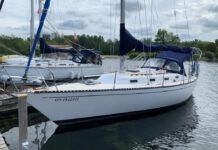
Tartan 33: Scheel Keel Pioneer
By the late 1970s, the old Tartan 34 had become very dated. The boat had been in production for a decade, and hundreds of...
Latest Logbook

Practical Sailor Logbook – September 2026
This month we tour the Hans Christian 48T — the offshore cruiser many sailors call the holy grail — walk the custom Antigua 60...
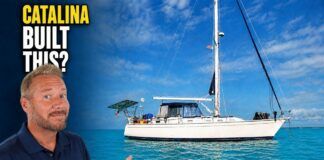
Video: Morgan 44 Review – The Catalina Cruiser Everyone Forgot
The 1989 Morgan 44 is a big center-cockpit cruising sailboat with Catalina DNA—but it may be one of the most overlooked boats of its...



Latest Sailboat Reviews
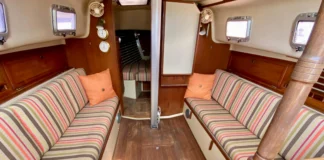
Bayfield 32 Used Boat Review
At first glance, the Bayfield 32 looks less like a fiberglass production boat from the 1980s and more like somebody shrank a traditional sailing...