

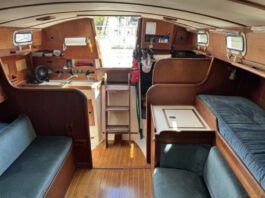

Allied Princess 36
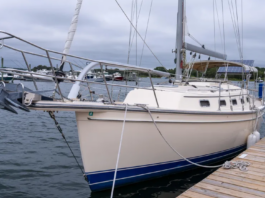
When you first see this boat, either in the water or on paper, the two things that immediately strike you are the sheer and bow. Edmunds put the low point of the sheer at the right place, about two-thirds of the distance aft from the bow. But the bow seems awfully high. In fact, when you walk forward along the sidedecks, you have the definite sensation of walking uphill. Too much, we think, though the look certainly sets the Princess apart from boats with flatter sheers (again, the Pearson 365 comes to mind).
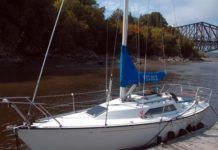
C&C 27 Boat Review
This fast and handsome cruiser/racer from the 1970s is an excellent example of what made C&C Yachts such a successful company. C&C stands for George Cuthbertson & George Cassian, the design team that, in 1969, joined in partnership with Belleville Marine Yard, Hinterhoeller Ltd. and Bruckmann Manufacturing to form C&C Yachts. The company had a tumultuous history, from growing to capture an estimated 20 percent of the U.S. market during the 1970s, to suffering a devastating fire in 1994 while owned by Hong Kong businessmen Anthony Koo and Frank Chow of Wa Kwang Shipping. Along the way, they built a tremendous number of boats, not only in the racer/cruiser genre that was their mtier, but also the Landfall cruiser line, and a few oddballs such as the 1977 Mega 30 with a retractable fin keel; the Mega 30 and a handful of others simply bombed.

The Evolution of the C&C 27 Cruiser-Racer
C&C Yachts produced four versions-and nearly 1,000 hulls-of its popular C&C 27 boat. Called the C&C 27 Mark I, Mark II, Mark III, and Mark IV, these boats differed in various ways, but the hulls were similar. A fifth design, the C&C 27 Mark V, was a totally different design. Heres a look at the various editions of the C&C 27, and how they differed from one another.
CS 36
The CS 36, despite its small, reverse counter transom, still looks fairly modern today, with its rakish bow, low-profile cabin and tall, singlespreader rig.
Bristol Channel Cutter, Morris 40, Alerion Sloop
The Alerion Sloop, Bristol Channel Cutter and Morris 40 cover the range from gentleman's daysailer to blue-water passagemaker. Each is of superior design and construction-it's nice to know you can still buy quality, but you'd better have deep pockets.
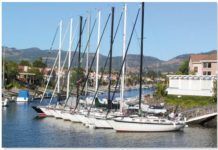
The Modern Classic Racer-Cruiser
The Islander 36 was built from 1971 to 1985, making it one of the longest-lived 36-footers ever on the U.S. market. More than 750 of the Alan Gurney-designed racer-cruiser sloops were built, with production spanning almost the entire history of Islander Yachts.
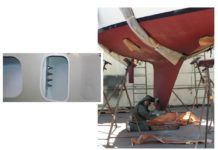
Age Calls for Close Inspection
The Islander 36 is a fairly light-displacement boat. The hand-laid hull is an uncored, single skin, with polyester resin and fiberglass furniture components adding rigidity. The hull and plywood-core deck are bolted together at close intervals through an aluminum toerail.
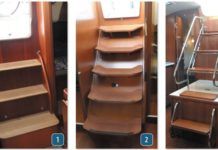
Tall-step Syndrome
Boat shows present a wonderful opportunity to not only explore boats well beyond your price range, but also to observe how designers answer the many compromises that each boat design requires. Some designs succeed, and some don't-and often the weak spot is a simple failure to understand the customer.

Getting a Grip on New Boat Designs
Catalina Yachts chief engineer and designer Gerry Douglas gives a popular talk at boat shows regarding the evolution of yacht design. One of the main points of his discussion is how various measurement systems for offshore racing influence boat design. Our boat reviews often allude to this influence, tracing a particular boat back to the Cruising Club of America era, the International Offshore Rule (IOR), or some other rule. Douglas is one of the few contemporary sailboat designers who has wisely resisted the urge to latch on to the more radical racing design trends and try incorporate them in a cruising boat.
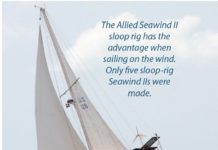
Capable Cruiser: The Seawind II
Allied Yachts secured its place in the boatbuilding pantheon with its original Seawind ketch, which was launched in 1962 and was the first fiberglass boat to circumnavigate, and the Luders 33, which was recognized as a classic design of the era preceding the fin-keel racer-cruiser. Unfortunately, while its products were heading for glory on the high seas, the company was headed for the boneyard, thanks to mediocre management, severe under-exposure, and the vagaries of the boat-buying public. But by the time Allied went out of business for the fifth and final time in 1981, they had developed a reputation for fashioning solidly built (if uninspiringly finished) boats, unabashedly oriented toward cruising.
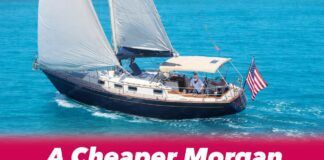
Morgan 382 – The $30K Boat Nobody Talks About
The Morgan 382 might be one of the most overlooked cruising sailboats ever built. Designed by legendary naval architect Ted Brewer and produced between...



Latest Sailboat Review

Jeanneau 55 Boat Review
This recent sailboat from Jeanneau may as well be a spaceship. They’ve taken all the time-honored designs of a monohull aft cockpit and turned...