
J/34c
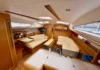
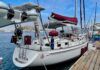
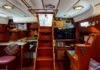
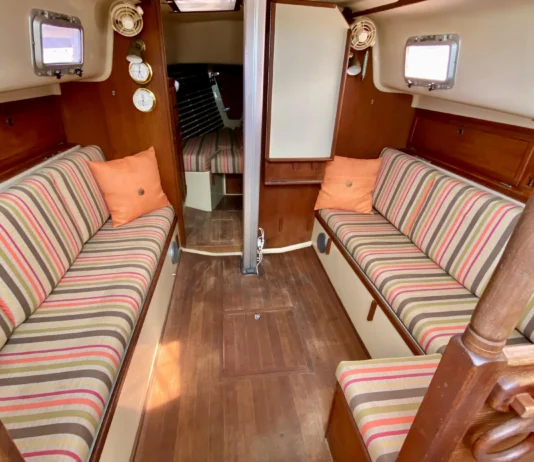
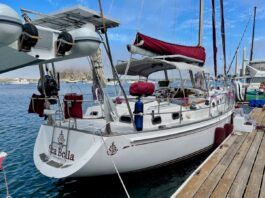
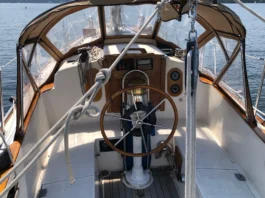
In appearance, the J/34c looks much like her sister J/cruisers. She has a fixed shoal draft keel, a straight sheer, and a slotted Goiot aluminum toerail. Her waterline, at 30', is long. It leaves her little overhang for appearance.
J/35
In design, the 35 looks like a typical Rod Johnstone boat, with short overhangs for a long waterline, relatively low and flat sheerline, a low cabin house, and a moderate well-balanced rig. Obviously, Johnstone knows something about the harmony between a boat's underbody and the water, but a large part of the boat's speed is also dependent on the light weight--10,500 pounds on a 30-foot waterline--as well as a good distribution of that weight.
Morgan 38/382
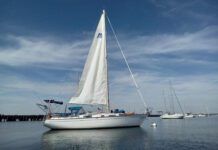
In 1977, the Morgan 382 was introduced, designed by Ted Brewer, Jack Corey and the Morgan Design Team. According to Brewer, the boat was loosely based on the Nelson/Marek-designed Morgan 36 IOR One Ton. The most obvious difference between the 38 and 382 was the elimination of the centerboard and the addition of a cruising fin keel (NACA 64 012 foil) with skeg-mounted rudder. They are two completely different designs from two different eras in yacht design.

Niagara 31/35
Best known for his big race boats, Argentinean designer German Frers drew the lines of the Niagara 31. The 35, as noted, was drawn by Mark Ellis, who also designed the Nonsuch line, and more recently, the Northeast 37 motorsailer. The 35 came first, in 1978, and about 300 were built before its run came to an end in 1995. The Niagara 31 was built between 1980 and 1984. A less popular 26-footer also was built, as well as a 42.
Nicholson 35
Just over 200 Nicholson 35s were built over more than a 10-year period, with production tailing off in the early 1980s. Most boats were sold in England, but a number were built for American owners, and still more found their way to the U.S. during the rampage of the dollar against foreign currencies in the mid 1980s. The Nicholson 35 is a cruising boat, plain and simple. Its proportions are about as common-sense and moderate as you can get. The boat is clean, almost austere in appearance, with very little exterior wood trim.
C&C 33
C&Cs have been known for good-looking moderate designs, a tradition started by the original partners and the company's chief designer Rob Ball. Some models--like the early Corvettes and C&C 35s--have become classics of production sailboats, and (except for the Mega, a one-design 30-footer of the late 70s) it's hard to think of any C&C which has been extreme or unattractive to the eye.
C&C 40
The C&C 40 entered production as a 1978 model, and was phased out in 1983, replaced by the higher-performance C&C 41. The 40 has good all-around performance upwind and downwind, in both light and heavy air. Despite a wide maximum beam, the boat's ends are fairly well balanced, and the rudder is deep enough to stay in the water in all but a flat-out broach.
Rob Roy 23
In 1983, the Rob-Roy 23 was the only trailerable canoe-stern yawl in town. Its appeal, however, goes beyond novelty. This is a boat with character: She looks salty; sails well with working sails alone; and she provides accommodations for two. Simplicity, from a space-saving centerboard to a "hardened" kick-up rudder, from an unstayed mizzen mast to a tabernacle-mounted mainmast, is a watchword. The Rob Roy can be launched at a ramp and is easily beached due to its 1' 7" draft with the board up. Owners have cruised her for weeks at a time and routinely cross the Gulf Stream and other formidable chunks of open water.
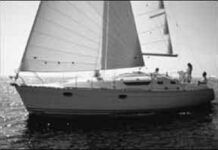
Jeanneau Sun Odyssey 36.2
Though designed as a performance cruiser, the designers clearly intended the Jeanneau Sun Odyssey 36.2 to be comfortable at anchor. The French Euro-style favors wide scoop transoms, which the marketing agencies highlight through ads showing bikini-clad girls sitting seductively on the steps, shower head in hand. The 36.2 fits this stereotype.
Express 37
The concept for the Express 37 was developed in 1984 by Schumacher and boatbuilder Terry Alsberg of Alsberg Brothers Boatworks in Santa Cruz. Schumacher's objective was to design a boat that would excel on long ocean races that emphasize performance on reaching and running legs, that would meet the TransPac Race minimum size entry requirements, and also would have at least 6' of standing headroom.
Latest Logbook

Practical Sailor Logbook – September 2026
This month we tour the Hans Christian 48T — the offshore cruiser many sailors call the holy grail — walk the custom Antigua 60...
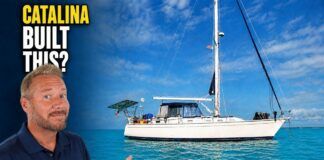
Video: Morgan 44 Review – The Catalina Cruiser Everyone Forgot
The 1989 Morgan 44 is a big center-cockpit cruising sailboat with Catalina DNA—but it may be one of the most overlooked boats of its...

Latest Sailboat Reviews
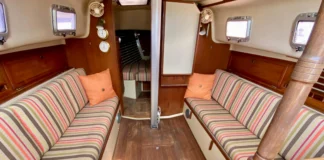
Bayfield 32 Used Boat Review
At first glance, the Bayfield 32 looks less like a fiberglass production boat from the 1980s and more like somebody shrank a traditional sailing...