

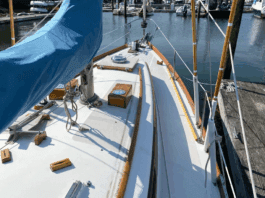

Catamarans and Trimarans – a Performance Multihull Report Looking at Speed, Style, and Value
The BMW Oracle teams recent win of the Americas Cup-along with a flood of e-mail from multihull fans-has given us good reason to revisit the performance multihull alternative. In this reader-requested sequel to our Need For Speed monohull report (September 2009), we focus on design features that make multihulls fast and fun to sail, and examine why many feel that two or three hulls are better than one. It quickly becomes obvious that todays boats diverge sharply from the iconic Hobie Cat 16. To really get excited about performance in sailing catamarans and trimarans, lightweight, lean hulls and sizable sail area are a must. In this review we look at five terrific performance multihulls: The Hobie Getaway, Weta Trimaran, Windrider Rave, Corsair Dash 750, and Telstar.
Mailport: February 2010
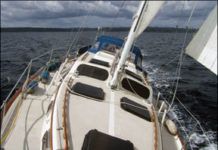
The February 2010 issue of Practical Sailor has letters on the following topics: requests for more used boat reviews, foggy electronics, hard varnishes, propane fridges and Iphone apps.
Five Rides that Push the Limits of High-performance Sailing
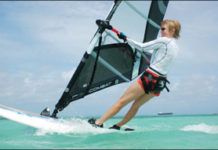
After sifting through the field of sailing sports cars on the market today, Practical Sailor identified five very different watercraft that met our speedster criteria. At the top end of our size and cost profile is yacht designer Bill Lees legacy, the Santa Cruz 37, a wolf in wolfs clothing that offers performance as priority one, two, and three. Next in line is the Andrews 28, a breakaway racer/cruiser that packs performance and a Spartan minimalists cruising package into a 25.7-foot waterline. Hard to miss is the Open 6.50, an out-an-out go-fast sportboat with room below for little more than a cooler and bevy of high-tech sails. For the diehard dinghy sailor, we highlight the quick-planing Stealth, a 14.5-footer that redefines reaching, and in true giant-slayer fashion, can fly by most 40-footers on a power reach. And if thats not action enough, we hop aboard a turbo-charged windsurfer, the Starboard Futura. Powered with a Neil Pryde sail, it runs away with the award for most speed and fun for our dollar.

DIY Topside Paint Test: Two-part Linear Polyurethanes Face Off
While our topside paint panel test (Practical Sailor August 2008) seeks out the most durable topside paint, this test was to determine which two-part LPU is the most user-friendly for the amateur painter and whether the project is manageable for the average do-it-yourselfer. We chose to use the roll-and-tip painting method, and selected two-part polyurethanes from manufacturers that historically have done well in Practical Sailors topside paint durability tests: Interlux and Epifanes. On the port side, we applied Epifanes Poly-urethane No. 800 white thinned with Epifanes poly-urethane thinner, and on its starboard side and transom, we painted Interluxs Perfection Mediterranean White and used 2333N brushing reducer.
A Look at the Latest Generation of Genoa Furlers
To get an idea of whats on the market and see how the newer products fare against the simpler, tried and true furling systems, Practical Sailor rounded up 11 new headsail furlers suited for 30- to 35-foot sailboats. This, the first of a two-part report on the evaluation, focuses on the seven products that use a head-swivel design and range in cost from $950 to $3,200. (The report of integral systems will follow in an upcoming issue.) The following furlers were reviewed: Facnor LX 130, Harken MkIV and Cruising 1, Profurl LCI32, Schaefer 2100, Furlex 200S (Selden Mast), and US Spars (Z-Spar) Z-780.
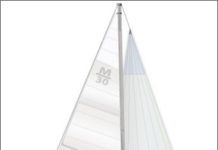
Used Sailboat Review: Morgan 30
On the water, the Morgan 30 is a fine boat to look at, with springy sheer and an attractive stern. Although the boat has a full 6-foot, 2-inch headroom, the freeboard is low. This graceful form predates World War II and can be found in late Cruising Club of America-era boats. Our sea trials aboard reader Ray Mummerys Morgan 30 Wavedancer in South Floridas Biscayne Bay, offered proof of the boats impeccable balance. In 12 knots of breeze, with a 130-percent genoa, Wavedancer easily steered herself to windward, even holding a course as deep as 120-degrees relative wind angle, with no attention to the helm. Compared to modern 30-footers with canoe underbodies and fin keels, the boat is far from nimble. What the boat lacks in thrills, she makes up for with a seakindly ride.
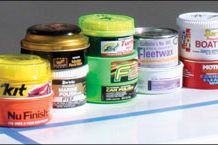
Paste Waxes Test Six-month Checkup
In February 2009, Practical Sailor tested a sampling of 10 paste waxes.After six months, two of these waxes clearly stood out for their continued ability to bead water and repel dirt. Collinite No. 885 Fleetwax and 3M Marine Ultra Performance Paste Wax retained the best gloss and water beading abilities. Mothers Cleaner and the Nu-Finish Paste performed well. Among the automative products that we included in the test, Turtle Wax F21, and Kit waxes stood out.
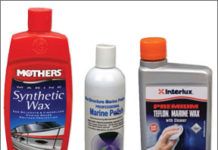
Practical Sailor Launches Long-term Liquid Boat Wax Test
With an ever-growing number of boat wax products on the market, Practical Sailor settles on 25 liquid wax products to test for application, initial gloss, and water beading. Marine wax manufacturers included Star brite, Cajun, Collinite, 3M, Mothers, Interlux, Rejex, Imar, Yacht Brite, West Marine, Turtle Wax, and Island Girl. In many ways the waxes all look, feel and smell the same and their differences may be in what the market application the manufacturers are seeking. Most of the two dozen waxes did a good job in the initial testing, and Practical Sailor will watch these for long-term protection. Waxes with a slightly oily wax finish formula showed better results at water beading in our initial tests, including two products by Star brite, and liquid waxes Island Girl, Zaino Brothers Z-3, Collinite Nos. 845/925, two carnauba wax products by Meguiars and Turtle Wax F-21.

Diesel Biocides Take On Contaminated Boat Fuel
Biological contamination of a fuel tank is a true challenge to any boater. Once the tank is infected with bacteria, an absolute cleansing of all contaminating organisms is necessary, or else the surviving organisms will repopulate the tank. Practical Sailor took a look at how fuel contamination occurs and tested six biocide fuel additives to combat a tank infected with microbial bacteria. Biobor JF, Racor, Stanadyne, Star brite, and ValvTect biocides were tested against diesel cultures shown to have a variety of bacterial and fungal species present. Similar to the effectiveness of antibiotics, the effectiveness of the biocides can varying depending on the type of infection they are fighting, testers found.
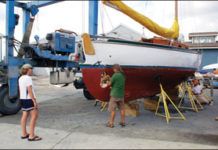
Do-It-Yourself Boatyards
The cost of buying and maintaining a sailboat has spiraled to an all-time high. There are a few steps sailors can take to help keep boating cost effective, including buying a sound older boat and finding a boatyard that is friendly to do-it-yourselfers. In an effort to support affordable boating, Practical Sailor has launched a reader survey on DIY yards, where boaters can rate their favorite boatyard on criteria such as protection from foul weather, boat hauling equipment, service quality and availability, Travelift operator skill, and yard ambiance. These are among the criteria PS Technical Editor Ralph Naranjo used to rate our sample DIY yard, Galesville Harbor Yacht Yard on Marylands western shore of the Chesapeake Bay. Our look at Galesville and some tips on choosing the best do-it-yourself yard offer valuable insight for the DIY boat owner looking for a place to haul out.
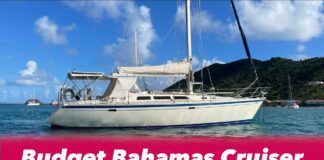
O’Day 40 – A Budget Cruiser for the Bahamas
The O’Day 40 (1986) is one of those cruising sailboats that somehow slipped through the cracks of sailing history. Built during the final years...



Latest Sailboat Review
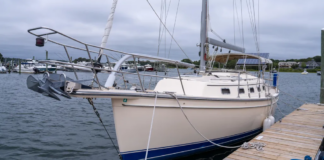
Island Packet Estero Used Boat Review
Florida-based Island Packet targets a relatively narrow niche, so the toughest competitors to its new boats are often older Island Packets. Introduced in 2010, the 36-foot, shoal-draft Estero is the company’s latest attempt to introduce a distinctive model that doesn’t stray too far from the company’s proven formula for success: moderate displacement, full-keel cruisers designed to be lived on, sailed far and in comfort, and endure the bumps, scrapes, and storms that cruising boats inevitably encounter. After sailing the Estero on Florida’s Sarasota Bay and inspecting its interior, construction, and systems, Practical Sailor testers noted that the shoal-water cruiser will appeal strongest to Island Packet fans who’ve been waiting for a shoal-draft, easy-to-sail boat that compares to the IP37 in terms of interior space. These strengths will be most apparent on intracoastal or riverine adventures like the Great Loop.