

Pearson Vanguard
The Vanguard, designed by Philip Rhodes in 1962, remained in production until 1967, totalling 404 hulls. It was preceded by the Invicta, Alberg 35, Bounty II, Ariel, Rhodes 41, and of course the Triton. This line of fiberglass cruisers and sometime racers gave Pearson a strong position in the market. The pedigree of the designers was odorless, and construction quality was good for that particular moment in the timetable of plastic boatbuilding technology.
Tartan Ten
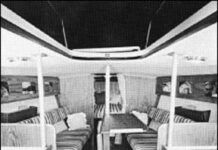
While we wouldn't consider the Tartan Ten to be one of the better-built racers, she doesn't have to be. Since she is primarily intended to race against her sisters, consistency between boats is perhaps more important than superior (and hence, more expensive) construction. The major construction criterion she must meet is to be sufficiently seaworthy to endure an occasional short offshore race. She meets this criterion, although, like too many production boats, she barely makes it.
Tartan 27
The Tartan 27 went into production in 1961 with fiberglass boatbuilding in its toddler stage; production ceased in 1980, after 19 years interrupted only by a fire in 1972 that resulted in no 27s being built that year. The greatest number of 27s built in one year is 85; the year was 1964. In all, 712 Tartan 27s were built, including a dozen boats under license in California. Remarkably few significant changes were made to the boat until near the end of the long production run, after hull #650.
Tartan 34
More than 500 Tartan 34s were built between 1968 and 1978. By 1978 the CCA rule was long gone, PHRF racing was beginning to surge, and the MHS (now IMS) was in its infancy. The Tartan 34 had passed from a racer/cruiser to a cruiser, not because the boat had changed, but because sailboat racing had changed. The Tartan 34 was succeeded by the larger, more modern Tartan 37, a boat of exactly the same concept.
Catalina 27
The Catalina 27 has been in production since 1971, and well over 6,000 of them have been built. This is undoubtedly the largest production run of any 27' sailboat in US history, and probably the biggest anywhere. The flip side of the coin is that Catalinas are known as cheaply built boats, with lots of corners cut in places they shouldn't be cut.
Latest Logbook

Practical Sailor Logbook – September 2026
In September we tour the Hans Christian 48T — the offshore cruiser many sailors call the holy grail — walk the custom Antigua 60...
Video: The 11.5 Knot Cruiser – Bavaria Match 42 Yacht Tour
Could this be the fastest family cruiser you’ve never heard of? The Bavaria Match 42 is a genuine performance sailboat hiding beneath the interior...

Latest Sailboat Reviews
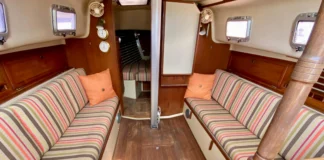
Bayfield 32 Used Boat Review
At first glance, the Bayfield 32 looks less like a fiberglass production boat from the 1980s and more like somebody shrank a traditional sailing...