

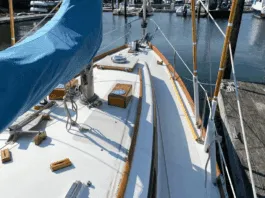
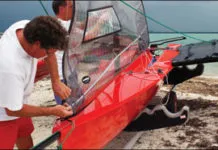
Compact Weta Trimaran Screeches Past the Big Boys on Biscayne Bay
When it comes to the pure love of sailing, its hard to beat a small, light efficient boat whose sole mission is to harness the wind. Designed in New Zealand, built in China, imported to the U.S. by Nor Banks Sailing of Duck, N.C., the 14-foot-6-inch, 220-pound Weta 4.4 trimaran with 158 square feet of sail was conceived in New Zealand by father-and-son team Roger and Chris Kitchen, and designed with collaborative help from a handful of experienced sailors. The challenge was creating a cost-effective boat with the strength-to-weight ratio needed for performance sailing. The boat uses carbon fiber on the framework, and on the mast and sprit while the light, stiff hull structure, daggerboard and rudder are built using less costly E-glass and Divinycell foam. The boomless mainsail, made by windsurfer sailmaker Gaastra, incorporates five full tubular battens that control draft and allow the mainsheet to be attached to a well-reinforced clew rather than a conventional boom. The high-tech Gaastra sail package, like the Harken hardware and carbon sprit and mast are all standards. The success of this pocket-sized trimaran is due in part to its triple threat sailplan of main, jib, and easy-handling, furling screacher. The screacher can add a virtual turbo boost. This 60- square-foot gennaker deploys like any roller furler but is trimmed via a single sheet led through both port and starboard leads. The ride is both exhilarating and responsive.

Boat Review: Buoyant Etap 28s Delivers Modern Form and Function
At first glance, the Etap 28s is an appealing, nicely finished, modern European-styled pocket-cruiser-but its what lies beneath the skin that sets it apart. This is one of the few boats with a ship-in-ship, double-hull structure with enough closed-cell polyurethane foam between the skins to provide floatation even if the hull is breached in multiple places. The foam has enough buoyancy to offset the weight of the keel and diesel engine and has been distributed so that a flooded boat would remain stable and be able to make way under sail. This feature can be a significant safety factor to any sailor, but is especially appealing to those sailing in colder waters. In addition to offering positive buoyancy, the Etap 28s sports a spacious cabin and a no-nonsense sail plan that makes it an easy boat to sail. With a compact head, a dedicated nav station, small galley and aft berth, the boat is set up well for family coastal cruising. Details like fiddles and grab rails also showcase its potential as an offshore cruiser.
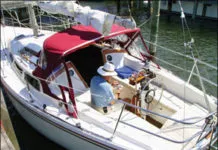
Used Sailboats from the 1970s: Practical Sailor Puts Plastic Classics Under the Microscope
Fiberglass boatbuilding really hit its stride in the 1970s, and a lot of big-time boatbuilders were pumping out a lot of good boats. Although boats 30-plus years old are a little long in the tooth, a 1970s fiberglass boat that has been well taken care of is an excellent starting point in a search for an affordable used boat. Those searching for a $10,000 to $20,000 sailboat would do well to search for a fiberglass cruiser from the 1970s. Practical Sailor examines nine models of 30-year-old 30-foot sailboats that are fun to sail, have sufficient accommodations for a family cruiser, and are plentiful on the open market. Among a field including the C&C 30, Cal 2-30, Hunter 30, Irwin Competition 30, Newport 30 PH-II, and the O’Day 30, the Pearson 30, Tartan 30, and Catalina 30 stand above the others. A close look at these three used boats—the Sparkman & Stephens-designed Tartan, the racer/cruiser Pearson, and the well-rounded family boat, the Catalina—offers an idea of what to look for and what to expect when you’re searching those used-boat classifieds.

Shannon 37 & 39 Vintage
Born as bluewater cruising boats, the Shannon 37 and Shannon 38 are a few of the designs that made Shannon Yachts a formidable semi-custom boatbuilder. Both boats, traditional designs by Walter Schultz, have relatively heavy displacements and long keels. This makes for comfortable offshore sailing, while their multiple sailplan options make short-handed voyaging possible. This Practical Sailor boat review includes a look at two Shannons: Hull No. 1 of the Shannon 38, owned by circumnavigators Bob Burns and Judi Nester, who completed a 14-year circumnavigation aboard their boat 30 years after it first splashed down in Narragansett Bay, R.I.; and a Shannon 37, Silk, owned by well-known bluewater voyagers Beth Leonard and Evans Starzinger, who finished a three-year circumnavigation aboard Silk. Testers found that the Shannons compare favorably to other full-bodied cruisers, including the Pacific Seacraft, the Cabo Rico 38, and Tayana 37.

Hanse 400 Boat Review
The Hanse 400 is a cruising boat for those who love to sail, and a club racer for those who enjoy a summer cruise. Its construction quality and price point qualify it as a cost-effective alternative in the 40-footer marketplace. In comparison to mainstream production cruising boats, the Hanse 400 is an absolute performance standout, not only in its ability under sail, but in its ease of operation. (Photos by Ralph Naranjo)
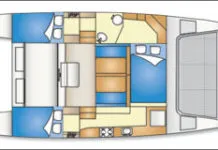
TomCat 9.7. – Practical Sailor New Boat Review: Quality Construction, Unique Engineering and Stability...
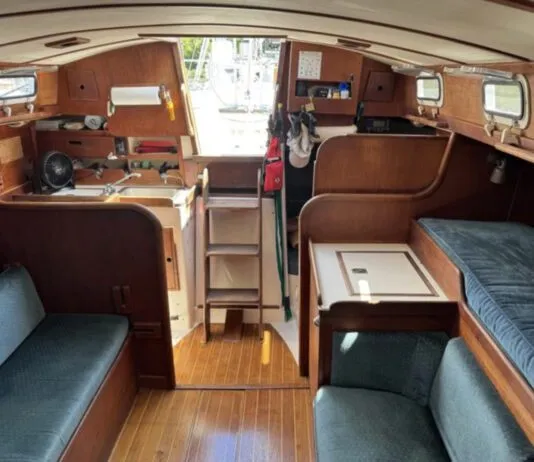
Being one of the smallest cruising catamarans on the market brands the TomCat 9.7 (www.tomcatboats.com) “entry level,” but we find that term misleading and unfair. There’s much more to the joy of a sailing catamaran than speedo numbers. The 9.7 might not out-drag most of its rivals, but it can, we think, deliver more of what sailors are after when they turn off the auxiliary. And, in many respects, it makes shoal-water sailing safer and more relaxing. If you’re looking at a Maine Cat 30 or a Gemini 105Mc from Performance Cruising, the TomCat also deserves a look.

Sydney Yachts 36CR
The Sydney 36CR reflects the agony and the ecstasy of modern handicap racing. Her designers aim was a durable, sexy, race-ready boat with hassle-free operation and cruiser accommodations. In Practical Sailor testers opinions, the 36CR addresses a very small niche market. Sailed hard and well, it can win races in most places and fleets. But thats not unique. It offers limited, yet realistic cruising, which expands its use. But how close to the top can you expect to get with a 12-year-old design optimized for Antipodean breezes? And is the 36CR enough of a cruiser to make it the dual-purpose boat of your dreams?
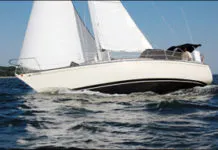
Pearson 32 Boat Review
With a clear understanding of coastal weather conditions, inshore estuaries, and the cruiser-club racer mindset of potential buyers, Bill Shaw designed boats that met the needs of local sailors. The Pearson 32 was no exception: The 32-footer’s shoal draft stats also come with an efficient foil shape and external lead ballast, providing enough lift and lateral plane to enhance sailing ability both on and off the wind. Add to the mix a respectable sail area-displacement ratio, and it’s clear that this Pearson is more than an oversized pocket cruiser. Envisioned originally as both a club racer and a family cruiser, the boat lives up to expectations.

Far Harbour 39, Container Yachts Tested
Take an International 110, stretch it out to 39 feet, give it a cambered deck, raised pilothouse, and the interior comforts of a couples cruising boat, and youll have a snapshot of what Container Yachts Far Harbour 39 looks-and in many respects-sails like. If you want a cruising boat that can be boxed and shipped, then the Far Harbour 39 box boat is worth considering. If youre not planning to use your boat this way, then save your $250,000 for a boat that has fewer compromises for the sake of shipping dimensions.
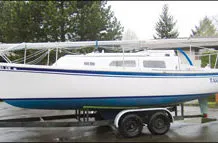
Balboa 26 Used Boat Test
As with all of Lyle Hess designs, the Balboa 26 statistics reveal the underpinnings of a seaworthy coastal cruiser. The Balboa's 3,600-pound displacement includes 1,200 pounds of ballast, by no means a lead mine, but the B26's 8-foot beam was carried well aft, and its reasonably full sections contributed form stability and helped make the little sloop a seakindly performer. With 293 square feet of working sail area, the B26 is close in potential performance to the Excalibur 26, Cal 25, and Columbia 26, all vaunted designs of the same era.

Lithium Batteries on Sailboats: The 3 Mistakes Everyone Makes
Lithium batteries are one of the most popular sailboat upgrades today—but they’re also one of the most misunderstood. In this Practical Sailor Saturday episode,...



Latest Sailboat Review
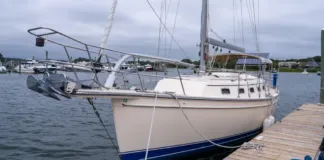
Island Packet Estero Used Boat Review
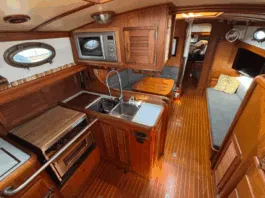
Florida-based Island Packet targets a relatively narrow niche, so the toughest competitors to its new boats are often older Island Packets. Introduced in 2010, the 36-foot, shoal-draft Estero is the company’s latest attempt to introduce a distinctive model that doesn’t stray too far from the company’s proven formula for success: moderate displacement, full-keel cruisers designed to be lived on, sailed far and in comfort, and endure the bumps, scrapes, and storms that cruising boats inevitably encounter. After sailing the Estero on Florida’s Sarasota Bay and inspecting its interior, construction, and systems, Practical Sailor testers noted that the shoal-water cruiser will appeal strongest to Island Packet fans who’ve been waiting for a shoal-draft, easy-to-sail boat that compares to the IP37 in terms of interior space. These strengths will be most apparent on intracoastal or riverine adventures like the Great Loop.