


Shockles Snubber Test
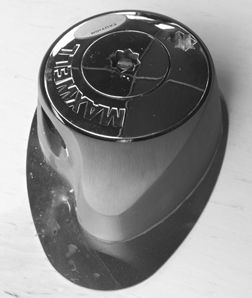
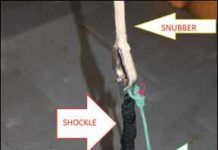
The string of anchor tests weve carried out in the last year presented a good opportunity for us to also test an anchor accessory: the Shockles anchor snubber. Makers claim it helps your anchor stay set by reducing the constant shock loads during strong winds or in rough seas. We did some real-world testing aboard a 6-ton Lightwave 38 catamaran in a range of conditions and anchorages, and we also bench-tested the snubber, using a load cell and chain winch.
Sealing Anchor Chain Spill Pipes
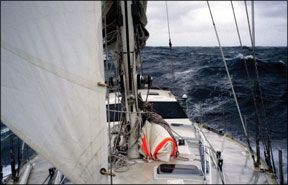
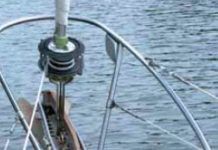
Anchor lockers are a convenience to coastal cruisers but no friend to offshore sailors. Passagemakers often forgo a deck-clearing locker for a belowdecks anchor-chain well. An angled spill pipe leads the anchor chain from the deck to the well, which often is under the forepeak and behind a watertight bulkhead. The setup not only eliminates the flooded-bow worries inherent with an on-deck locker, but it also moves the chain and anchors’ weight lower and further aft, where it should be to avoid hobby-horsing.
A Second Look at Anchor Tests
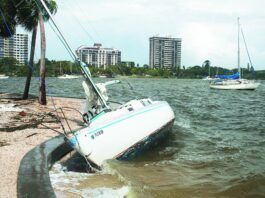
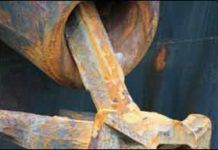
Anchor testing at Practical Sailor has always been a controversial enterprise, sure to fire up someone. As one reader commented in response our most recent anchor report (PS, March 2013): Anchors are a whole lot like religion. No matter what the tests show, each of us has a favorite that well defend to the death! This month, our report on anchor-shank strength approaches the topic from a different angle. Rather than singling out specific anchors for holding power or design, we take a closer look at the way anchors are evaluated and promoted.
Anchor Chain Advice
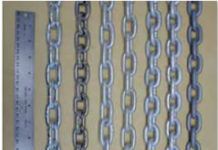
I sail an Areodyne 38 in New England, primarily on weekends and a two-week annual cruise. I use 25 feet of 5/8-inch chain with 200 feet of oversized braided rode and a 35-pound Bruce anchor. In 12 years of cruising this boat, the setup has dragged only once, yet I’m still unable to relax at anchor. I’m considering going to all-chain. Also, because my boat is pretty light with a fin keel and bulb, the rode wraps around the bulb when the current is stronger than the wind, requiring diving to free the mess. This is manageable in July, not so fun in October. Can you recommend a type, size, and length of chain given my criteria? My boat weighs in at 10,000 pounds, and I am the windlass.
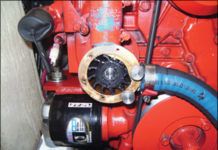
SpeedsealLife Puts a New Spin on Keeping Cool
Picture this: You fire up the iron jenny in preparation to exit a crowded anchorage. As the anchor slides onto the bow roller, the engine overtemp alarm shrieks a noisy reminder that youve skipped item number 2 on your pre-departure checklist-open the engine cooling water seacock. Your water-pump impeller typically would be toast at this point, but youve got an ace up your sleeve, SpeedsealLife. So you simply duck down below, open the seacock, verify the engine temp is good, and then continue on your way. At your destination, you check the impeller, verify that its fine, and life is good.
Windlass Test
Maxwell’s Freedom 500 speeds past all competitors in an under-$1,000 powerwinch pull-off. The Lewmar Horizon 600 is the top horizontal windlass.
Checking Rope Strength
We like nylon for docklines, anchor rode and chain snubbers because it stretches, absorbing jolts that would otherwise be transferred to the boat and...
Mailport: anchoring etiquette, stern-tied boats, and wind generators
I really appreciated the article Anchoring in Crowded Harbors (see Practical Sailor, June 2019). The difficult and critical part is always estimating distances, and the guides you gave (two-to-three mast heights, using fractions of a nautical mile, etc.) can be difficult to do accurately in a crowded harbor with the sun setting, with some of that information available only at the helm, and multiple boats moving to anchor. As a bow hunter, I am…
Reducing the Nylon Rode Sling-shot Effect
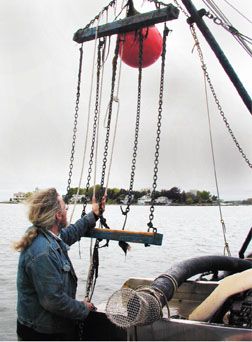
Again we speak heresy! Practical Sailor has published at least four articles explaining why stretchy nylon bridles and snubbers are vital. But if the rode is nylon instead of chain, this no longer applies. The rode provides all the impact absorption we need, perhaps more than we need. By analogy, a bridle should function like an anti-sway bar on an automobile, keeping the boat centered.
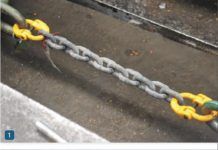
Regalvanizing G70 Chain
As high tensile G70 chain becomes more prevalent in the marine market, Practical Sailor has been busy testing the limits of this material, which has been used for many years in other industries. One question we have raised in the past is whether G70 chain can be safely regalvanized (see PS June 2014, Making Sense of Marine Chain Standards). Chain is expensive and regalvanizing helps to extend its life. If G70 chain can't be regalvanized, as we have suggested in the past, this needs to be factored into the initial cost.
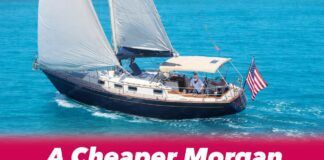
Morgan 382 – The $30K Boat Nobody Talks About
The Morgan 382 might be one of the most overlooked cruising sailboats ever built. Designed by legendary naval architect Ted Brewer and produced between...


Latest Sailboat Review

Jeanneau 55 Boat Review
This recent sailboat from Jeanneau may as well be a spaceship. They’ve taken all the time-honored designs of a monohull aft cockpit and turned...