

Collapsible Anchor Prototype Tested
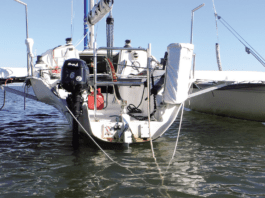
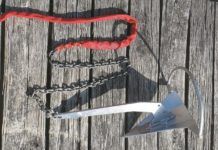
A big rollbar-style anchor on a bow roller is now synonymous with cruising. They are efficient in many types of bottoms and reliably rotate or reset when the wind and tide change. Unfortunately, they are shaped awkward and are difficult to stow anywhere other than a bow roller. Lacking this, many smaller boats, both sail and power, are forced to store the anchor in either a shallow bow locker, a snag-prone railing bracket, or in a lazarette.
Ground Tackle
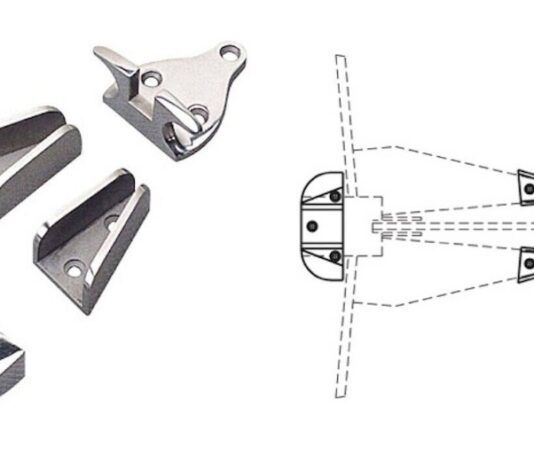
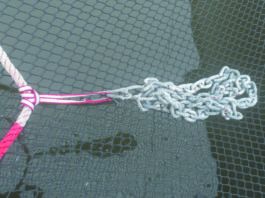
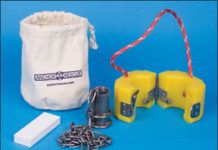
As Practical Sailor prepares for a new round of anchor tests, weve been on the hunt for new anchors, as well as new accessories. One of the most interesting devices to come our way is the Anchor Rescue developed by Richard Provonchee, a sailor and principal in Boxer Marine Inc., based in Cushing, Maine. The most common complaint about anchors is their lack of holding, but an anchor that refuses to budge-can also have serious consequences. The Anchor Rescue uses an innovative two-part system to free fouled anchors. The typical antidote to fouling is to attach a buoyed line to the anchor crown so that it can be hauled backward out of its snag. Most anchors have an eye at the crown for attaching a buoyed retrieval line. (Danforth-style anchors are an exception).
Windlasses: Maxwell, Lewmar Look Good; Lofrans Project 1500 Slips
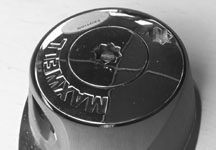
Among this clutch of mid-size vertical units, we like the Lofrans Project 1000, and Maxwell’s Freedom 800 performs solidly at the right price. Lewmar’s V3 scores well among higher-priced alternatives.
Pull it Until it Breaks
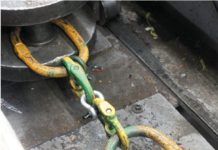
All testing was carried out at an approved test facility in Newcastle, Australia: J.L. Robertsons, which is adjacent to one of Australias large coal-mining areas. The test rig is used to certify lifting components for the local mining industry on a daily basis. The facility can test up to 95 tons, far more than we require. This is the same facility where we tested all of our anchor chains. (See PS June 2014, November 2014, January 2015, and March 2015 online.)

PS Advisor
Bruce vs. Claw. Keel Depth.
Tandem Anchoring
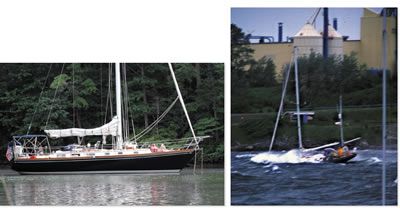
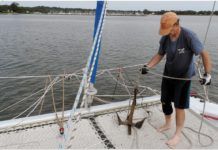
Recent tests on a miserable holding bottom in the Chesapeake Bay (see PS, February 2015 online) showed that conventionally sized anchors just don't hold in a soupy bottom. Those that can-pivoting fluke anchors-arent always the easiest to set, and security during wind shifts is much debated. Setting a second anchor is an option-one weve studied previously (see Tropical Storm Dos and Donts, PS November 2011 online)-but tandem rigs intrigued us. Could two anchors on a single rode provide more secure holding in tricky bottoms, and if so, what is the ideal arrangement? We were particularly interested in single-line tandem rigs (which Rocna designer Peter Smith referred to in his report) and V-tandem rigs (which several PS contributors have had success with).
Top 10 Products for 1999
Our annual selection of outstanding equipment, headlined this year by the Spade anchor, Nexus instruments and the Isotemp water heater.
What Chain Connector Will Fit My Gypsy?
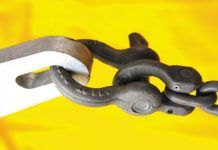
Regarding your recent article on joining chain segments, Ive been coastal cruising from Canada to Panama since 1983, and continuously since 2005. I have wondered about using a single 5/16-inch shackle, which will connect two lengths of 3/8-inch, G-43 chain. The Crosby top of the line 5/16-inch will go around the gypsy pretty well. I tried it, but I am reluctant to use it. Any thoughts?
Banish Junky Anchor Rode Markers
For the boat owner who thinks he has everything, there is yet still another bit of electronic wizardry…a widget that tells you how much...
Chafe Protection for Dock Lines
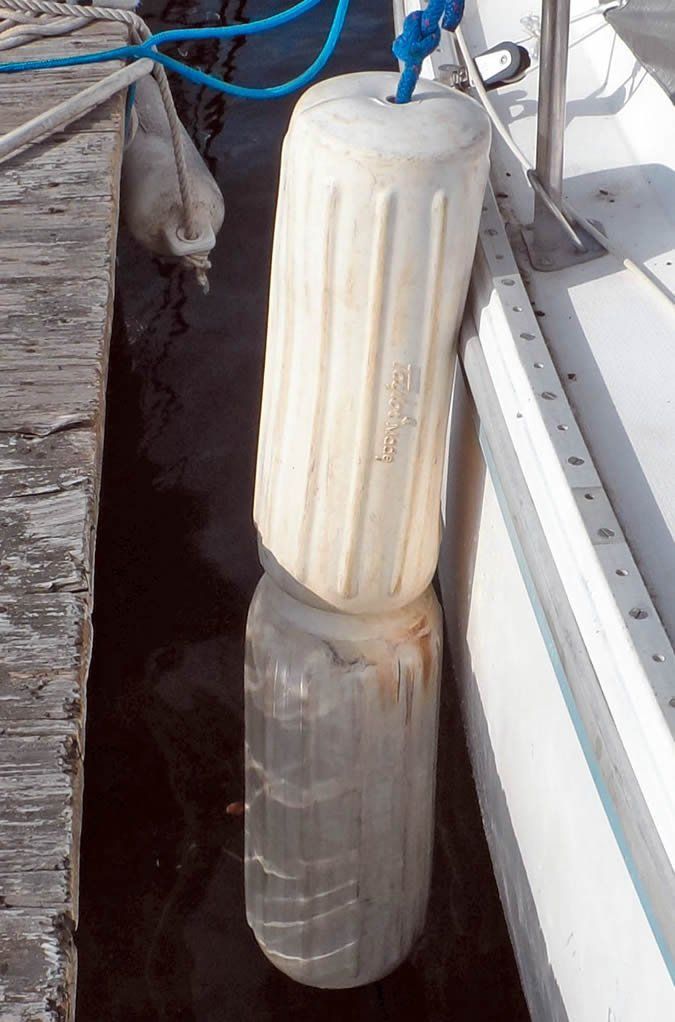
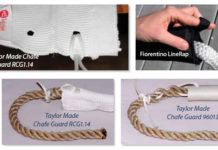
The best anti-chafe material to rely on in a storm is the one that resists abrasion, doesn’t cause heat build-up in the line, and can be easily installed—even if the line already has been deployed. Practical Sailor tested five commercially made products marketed as chafe protection for lines on boats: the Davis Secure, from marine accessories maker Davis Instruments; LineRap from Para-Anchor manufacturer Fiorentino; Chafe-Pro from the North Carolina-based Fjord Inc; and two sets of Chafe Guards by Taylor Made. Products ranged from single-skin webbing designs to tough Dacron double-layer designs, and the chafe gear’s attachment, or locking, methods were an integral part of the ratings. (The products don't work if they don't stay in place.) Chafe gear was put through a series of abrasion tests and was rated on price, ease of use, and performance.
Morgan 382 – The $30K Boat Nobody Talks About
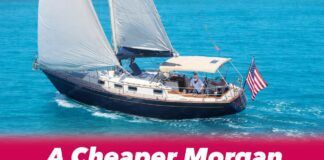
The Morgan 382 might be one of the most overlooked cruising sailboats ever built. Designed by legendary naval architect Ted Brewer and produced between...


Latest Sailboat Review

Jeanneau 55 Boat Review
This recent sailboat from Jeanneau may as well be a spaceship. They’ve taken all the time-honored designs of a monohull aft cockpit and turned...