



After-market Cordage Treatments
Practical Sailor treated used running rigging with Downey fabric softener, Granger’s 2-in-1 Cleaner and Waterproofer, and Nikwax Rope Proof to determine whether softeners or waterproofing treatments improve the performance of nylon and polyester double-braid lines on a boat. Can aftermarket treatments improve line handleability, reduce water-weight gain and strength loss, and prevent lines from freezing in colder climates—without damaging the lines? We also wondered whether any treatment would keep aging lines from squeaking as they run over blocks under high strain. Our tests found the definitive answer.

Field Testing Treatments
Practical Sailor followed manufacturer instructions for treating used lines, with one exception. Both the Granger’s and Rope Proof advise users to dry the treated ropes in a warm dryer after soaking them in the diluted solution and laundering them. As we’ve learned in past tests (PS, July 2011), most rope manufacturers caution against placing rope in a heated dryer, and cleaning them in a washing machine can be damaging (to the rope and the machine). So for this test, we opted to clean the test ropes by gently agitating them in a bucket by hand, rinsing them in a pillowcase on a shortened gentle cycle, and air drying them. (We did test one set of lines by air-drying and heat-setting, but there was no measurable difference.)
Is Titanium an Everyman Metal?
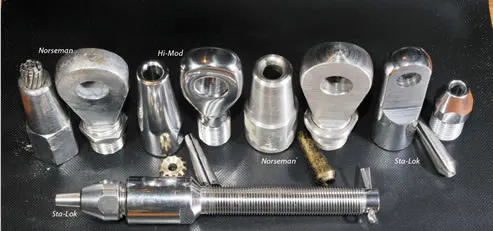
Titanium is of particular interest to sailors due to its resistance to galvanic corrosion. It has the highest strength-to-weight ratio of any metal and is non-magnetic. It is up to 20 times more scratch resistant than stainless steels. Practical Sailor contributor Patrick Childress takes an in-depth look at the metal and its use in the marine industry as his boat, a Valiant 40, is refitted with titanium chainplates and other rigging.
Titanium in the Marine Chandlery
Titanium’s high price is only one thing that is keeping in the realm of mega-yachts and Cup boats. Some of the essential roles that lightweight metals once played in deck hardware are now being taken by high tech fibers like Spectra or Vectran. Carbon fiber laminates are also taking the place of metal fittings, at a slightly lower cost. Nevertheless many manufacturers see a bright future for titanium. Here is some feedback we got from manufacturers on this topic.
Maintaining Stainless Steel
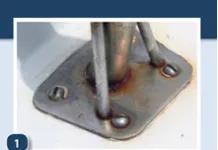
Stainless steel is exactly what the name says; the steel “stains less.” As PS’s February 2007 special report “Marine Metals Warning,” pointed out, stainless steel is not the maintenance free miracle material many boat owners imagine it to be. Some stainless steel is more stainless than others. With over 500 different grades of stainless steel, only a few meet the mark for use in the corrosive marine environment. Most marine stainless steel is grade 304 or 316. Stainless steels are made up of metals with a blend of iron, chromium, and nickel. Chromium resists corrosion, and nickel resists acids.

Practical Sailor’s 2011 Gear of the Year Picks
Each year, as the fall boat shows—and the deals that come with them—appear on the horizon, we pore over the numerous products we’ve reviewed in the previous 12 months to select the cream of the crop for our Editor’s Choice awards. We hope the list will help readers better navigate any boat-show or end-of-season shopping. This year, we picked from the Best Choice products evaluated in the September 2010 through August 2011 issues. The 2011 GOTY roster includes an electric outboard, some stout bullet blocks, electric marine toilets, bilge pumps, chafe gear, and marine maintenance products like bottom paint.
West Marine Issues Rocna Spec Notice
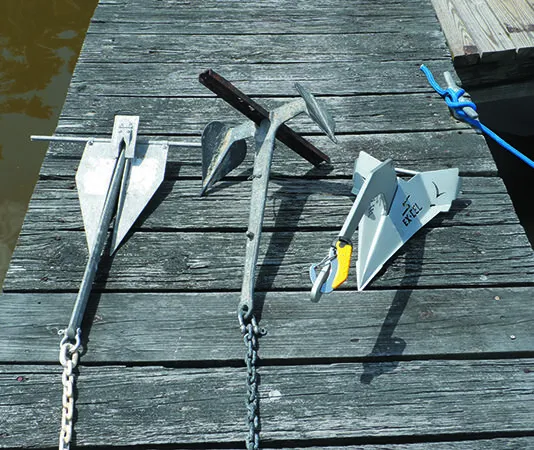
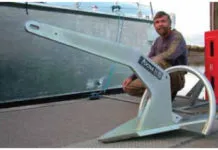
In the wake of questions about the tensile strength of steel used in the shafts of Rocna anchors, West Marine has issued “product specification notices” to customers who have purchased Rocna anchors since 2010 and recently posted the notice on its website (www.westmarine.com). West Marine is one of world’s largest distributors of the Rocna, a plow-style anchor sold in 34 different countries. The Rocna (www.rocna.com) earned a Recommended rating in our 2008 tests of heavyweight anchors, finishing behind the Manson Ray and the Manson Supreme (November 2008).
Anchor Chain Advice
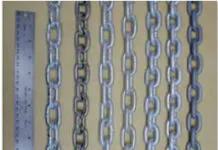
I sail an Areodyne 38 in New England, primarily on weekends and a two-week annual cruise. I use 25 feet of 5/8-inch chain with 200 feet of oversized braided rode and a 35-pound Bruce anchor. In 12 years of cruising this boat, the setup has dragged only once, yet I’m still unable to relax at anchor. I’m considering going to all-chain. Also, because my boat is pretty light with a fin keel and bulb, the rode wraps around the bulb when the current is stronger than the wind, requiring diving to free the mess. This is manageable in July, not so fun in October. Can you recommend a type, size, and length of chain given my criteria? My boat weighs in at 10,000 pounds, and I am the windlass.

Where Credit is Due: September 2011
Letters to Practical Sailor, September 2011. This month's letters cover subjects such as: Johnson Pumps, Raymarine, Edson and More!
Practical Sailor’s Reader-recommended Sailmakers
If you are looking for a sailmaker, here's a state-by-state list of those recommended by readers of Practical Sailor magazine, based on the magazine's 2010-2011 survey.
Lithium Batteries on Sailboats: The 3 Mistakes Everyone Makes
Lithium batteries are one of the most popular sailboat upgrades today—but they’re also one of the most misunderstood. In this Practical Sailor Saturday episode,...



Latest Sailboat Review
Island Packet Estero Used Boat Review
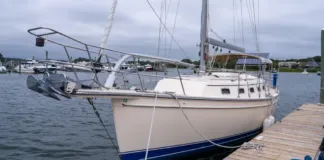
Florida-based Island Packet targets a relatively narrow niche, so the toughest competitors to its new boats are often older Island Packets. Introduced in 2010, the 36-foot, shoal-draft Estero is the company’s latest attempt to introduce a distinctive model that doesn’t stray too far from the company’s proven formula for success: moderate displacement, full-keel cruisers designed to be lived on, sailed far and in comfort, and endure the bumps, scrapes, and storms that cruising boats inevitably encounter. After sailing the Estero on Florida’s Sarasota Bay and inspecting its interior, construction, and systems, Practical Sailor testers noted that the shoal-water cruiser will appeal strongest to Island Packet fans who’ve been waiting for a shoal-draft, easy-to-sail boat that compares to the IP37 in terms of interior space. These strengths will be most apparent on intracoastal or riverine adventures like the Great Loop.