



Getting Rid of Mold and Mildew Onboard
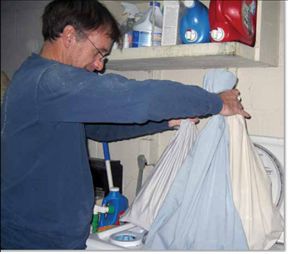
Among the marine maintenance products Practical Sailor evaluated recently were 14 pump-spray mildew cleaners to find out which one was the most effective at removing severe mildew stains. We tested chlorine bleach cleaners, chlorine-free cleaners, hydrogen peroxide cleaners, and ammonium chloride cleaners on a variety of materials, ranging from mildewed shower curtains to moldy vinyl seat cushions and moldy life jackets. We also used them to clean a mildewed sail and mildewed Sunbrella. All products were effective at removing the mold mildew from the shower curtain, but the cushions, life jacket, Dacron sail, and Sunbrella were more of a challenge. One product stood out as a more effective mildew cleaner: Klean-Strip Mildew Stain Remover. Klean-Strip is a highly concentrated product with 19 times more sodium hypochlorite than common bleach, and we do not recommend it for cleaning sails or fabrics. Other products tested include 3M mildew stain remover, Boat Armor mildew stain remover, Boatlife mildew remover, MaryKate mildew stain remover, MDR Amazons Amazing Mildew Stain Away, MDR Moldaway, Naturally Clean Mildew, Nautical Ease Mildew Stain Remover, household Spray Nine, Star brite Mildew Stain Remover, Sudbury Mildew Cleaner and Stain Remover, Thetford Mildew Stain Remover, and West Marine Mold and Mildew Cleaner.
Mailport: 01/09
In the December 2007 Practical Sailor Advisor, you requested feedback on Ultimate Sole, a product for coating cabin soles. Two years ago, I added a -inch teak-holly veneer plywood covering to my sole and used Ultimate Sole as the finish. I first put on a sealer and then two coats of Ultimate Sole. It went on very easily and performed better than I expected. It is a hard, glossy finish that truly does offer nonskid properties. You look at the finish and think you will slide all over the place, but you don't! It is a wonderful product, and I wouldnt use anything else.
Practical Sailors Heavyweight Anchors Test 2008
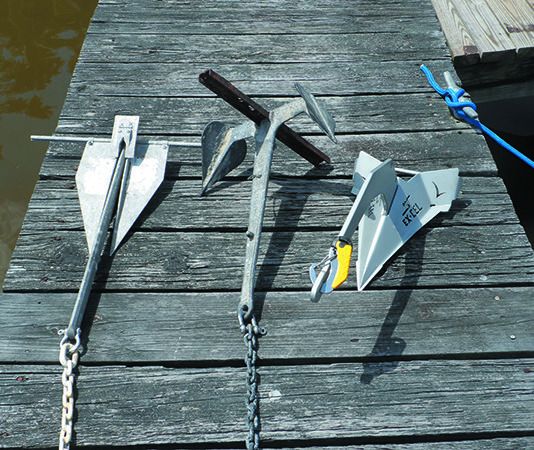
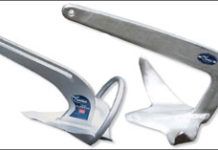
In a followup to the November 2008 shoreside testing of three large cruising anchors, this field report offers a glimpse of how the Manson Supreme, Manson Ray, and Rocna anchors perform in the real world. The test products, two roll-bar anchors (Rocna and Supreme) and one Bruce-style anchor (the Ray), are all acceptable as main cruising anchors. They are all good, but with distinctive strengths and weaknesses, so we tried them out, anchoring in dense kelp, soft mud, and hard rock bottoms, as well as in anchorages where short scope was required.
Practical Sailor Names 13 Products Best Gear of the Year
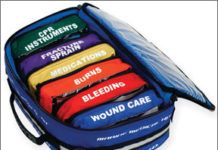
Practical Sailor’s annual wrap-up of the year’s best sailing equipment looks at our favorite top-rated products from November 2007 to November 2008, including the Facnor furler for light-air sails, Scad Solo external holding-tank sensor, Pelican Recoil LED flashlight, and Adventure Medical’s first-aid kit for coastal cruisers. In the boat maintenance category, Interlux’s Micron 66 bottom paint and Spray Nine’s waterline stain remover garnered Editors’ Choice picks. Foulie sets (jacket and bibs) by Gill and Helly Hansen were tapped as Practical Sailor Editor’s Choice in apparel, and a host of marine electronics made the list, including the Icom CommandMic III remote mic and Garmin GPSMap 545s 5-inch chartplotter sounder. Jeppesen was recognized for its top-notch electronic chart updating services. Other top gear picks were the Acco proof coil mooring chain and the Achilles HB315-LX fixed-transom inflatable dinghy.

Product Test: Heavyweight Cruising Anchors for Challenging Anchorages
One of a cruising anchors most important traits is its ability to set easily (and reset after a wind shift) in the widest possible variety of bottoms. For those who can carry extra large anchors, holding power, the normal parameter measured by anchor tests, is not as important as setting performance. Once set, an oversized anchor should easily have sufficient holding power. With that in mind, this comparison focuses not on ultimate holding power but the ability of the anchors to set quickly-even in difficult bottoms and with short scope-and to stay set when conditions change. Practical Sailor tested the rollbar-style Manson Supreme and the Rocna as well as the Bruce-inspired Manson Ray claw anchor. Testers looked at each anchors design and measurements, as well as its setting and veering performance on a frozen-sand beach covered with large rocks and on a sand/ mud beach. Practical Sailor encourages readers to weigh these results along with those of previous tests on more typical bottoms before selecting a primary anchor.

Best Boating Knives
David Boye, the Arizona knifemaker whose unique folding boat knife of cast dendritic cobalt won our June 2000 sailors knives bench test and was a reference standard for our March 2004 revisit, recently introduced a new model Basic 3 Cobalt knife. These knives doggedly retain a cutting edge when going through tough, blade-resistant materials like rope, cardboard, or even old rugs. Others give up long before the job is done. In our experience, Boyes cobalt knives last much longer-and when they finally do slow down, they can be resharpened with just a few strokes on a medium stone. The difference, we reason, is in the metallurgy. Boyes cobalt blades are "cast to shape and retain the pristine crystal network of highly dendritic (branching) bonded carbide throughout the blade, which aids in cutting and maintaining the structure of the cutting edge," according to the maker. Most knives are from steel that originally contained a similar crystal microstructure, but then underwent rolling, stamping, or forging to shape. This process breaks down the original carbide microstructure of the metal. The carbides at the edge are then no longer rooted into the overall microstructure. Complex heat treatment is then applied to develop properties such as hardness and toughness.

Water-Proofing Gear from Underwater Kinetics
There are those among us who tend to go through cell-phones and other small electronics like candy. Most anything not tied to the boat is at risk of being dropped overboard-keys, tools, handheld VHFs and GPSs-and more likely to die by drowning than old age. For us, keeping a drybox onboard or in the dinghy is well worth the investment. Its useful for storing important paperwork, other valuables, and electronics. There are several different brands of dryboxes on the market. We checked out the UK UltraBox 408, a submersible (to 30 feet), crushproof box that comes in a range of sizes and is made by Underwater Kinetics (the maker of one of our Recommended LED flashlights, PS December 2007). The box is made of bright yellow, high-impact plastic, so its easy to spot. It comes with a Lexan top that is rated to keep out water, dust, and "corrosive gases." The UK UltraBox 408 we reviewed passed ease-of-use, float, and submersion tests without a hitch. It is comparable to other high-quality boxes and comes with a limited lifetime warranty. We found it for $22 at www.leisurepro.com. A similar product is the Pelican 1120, which we found for $30 at www.diversdirect.com.
Alarming Trend Shows Minimal-duty Windlasses Becoming More Common on Cruising Sailboats
Although the day sailor or marina hopper may not need heavy-duty ground tackle or heavy-duty windlasses, it is alarming to see lightweight windlasses appearing more often on boats deemed long-range cruisers. It pays to confirm that your boat’s windlass was selected for ruggedness and reliability. Practical Sailor Technical Editor Ralph Naranjo examines what goes into the making of a windlass at Ideal Windlass in Rhode Island. Naranjo outlines windlass choices and examines windlass design, materials used to make the devices, and windlass repair. Windlass distributors and manufacturers spotlighted in the article include Ideal Windlass, IMTRA, Lewmar, and Maxwell.

Farewell to Skip Allan’s S/V Wildflower
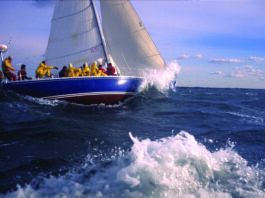
Anyone who has ever run before a gale knows how exhilarating it can be. On the right boat, in the right conditions, the adrenaline rush is as intense as any we’ll feel in this world. Bull riders, surfers, and skydivers get a few seconds of excitement. An ocean gale can last for days ... and that’s where the problem lies. With your senses completely in tune with the boat, wind, and sea, the experience of hurtling down an ocean wave stirs the soul. But as the hours pass and day turns to night, the thrill gives way to exhaustion. Mostly, you’re too busy to be afraid, but each mountain of green water that fills the cockpit brings doubt. How high will these waves get? How long can I last? Even with a drogue streaming off the stern to slow down the boat, running before storm-driven waves entails a great deal of risk. There’s danger enough aboard a fully crewed boat, as the rig, sails, and steering gear get pushed to the brink.
Farewell to Skip Allans S/V Wildflower
Anyone who has ever run before a gale knows how exhilarating it can be. On the right boat, in the right conditions, the adrenaline rush is as intense as any we’ll feel in this world. Bull riders, surfers, and skydivers get a few seconds of excitement. An ocean gale can last for days ... and that’s where the problem lies. With your senses completely in tune with the boat, wind, and sea, the experience of hurtling down an ocean wave stirs the soul. But as the hours pass and day turns to night, the thrill gives way to exhaustion. Mostly, you’re too busy to be afraid, but each mountain of green water that fills the cockpit brings doubt. How high will these waves get? How long can I last? Even with a drogue streaming off the stern to slow down the boat, running before storm-driven waves entails a great deal of risk. There’s danger enough aboard a fully crewed boat, as the rig, sails, and steering gear get pushed to the brink.

Small Boat, Big Keel Why This 27 Footer Works
What makes a small sailboat truly seaworthy? In this video, we take a deep dive into the Pacific Seacraft Orion 27, a rugged, long-keel...



Latest Sailboat Review
Island Packet Estero Used Boat Review
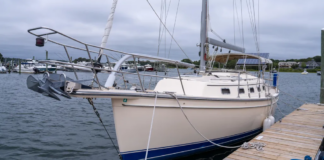
Florida-based Island Packet targets a relatively narrow niche, so the toughest competitors to its new boats are often older Island Packets. Introduced in 2010, the 36-foot, shoal-draft Estero is the company’s latest attempt to introduce a distinctive model that doesn’t stray too far from the company’s proven formula for success: moderate displacement, full-keel cruisers designed to be lived on, sailed far and in comfort, and endure the bumps, scrapes, and storms that cruising boats inevitably encounter. After sailing the Estero on Florida’s Sarasota Bay and inspecting its interior, construction, and systems, Practical Sailor testers noted that the shoal-water cruiser will appeal strongest to Island Packet fans who’ve been waiting for a shoal-draft, easy-to-sail boat that compares to the IP37 in terms of interior space. These strengths will be most apparent on intracoastal or riverine adventures like the Great Loop.