

Brokedown Palace
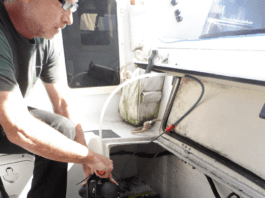
Always curious about the physical limits of sailing gear, Practical Sailor asks readers to send us their broken stuff to be studied. Interestingly, several products we received this year were made by some of our favorite manufacturers, companies with good reputations whose products Practical Sailor has recommended in the past. Digging through the "Gear Graveyard," this year reminded us why engineering a product for marine use continues to be a challenge-between the environment and the users, the odds are stacked against survival.Our electronics testing program is demanding, and the West Marine Garmin GPS 76CS Plus we recommended after our 2006 test (November 2006) had already been dunked, dropped, and sprayed multiple times before it went into service. After two more years of hard use, it failed to turn on. Corrosion at the battery compartment appears to be the cause. Although some marine electronics are rated to "water resistant" or "waterproof" standards, the standards don't cover salt water. In some respects, the designation is a bet that the user will take care of his gear.
PS Advisor: Sea Anchor Sizing
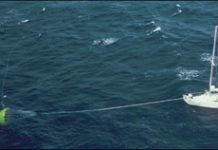
While most sea anchor manufacturers may use similar formulas for determining the right size sea anchor for a boat, other factors must be considered, including the weight of the material used in the anchor and a boat’s windage. Ultimately, what matters is that the anchor can displace enough water mass for your size boat. It’s a good idea to select a sea anchor, and then use that maker’s criteria to determine what size you need for your boat. If you have questions or concerns, contact the manufacturer for clarification. According to Don Whilldin, president of Para-Tech (maker of the Sea Anchor), the company figures Sea Anchor sizing based on a boat’s length, displacement, and type. If the result is on the line between two sizes, Para-Tech recommends going with the larger size.
Practical Sailor Tests the Alado Jib Furler
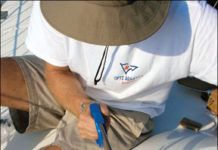
Practical Sailor finds the Alado Nautica headsail furler to be easy to install and a worthwhile sail-handling tool. One feature that sets the Alado apart from other jib or genoa furlers is its staggered slotting of five-foot foil sections that slide together and interlock over a conventional wire or rod headstay. This design allows the do-it-yourselfer to fit each foil section over an attached headstay, and simply push the formed furler up the wire or rod. Mainstream headsail furlers tend to be assembled on the ground and installed with the mast horizontal. The Alado furlers design uses integral halyards to place a compression load on the foil, eliminating the need for Loctite, set screws, and a top swivel. We tested the Alado over five months of coastal cruising and daysailing.
Heavy Weather Sailing Gear
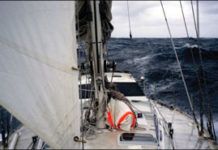
From sea anchors, drogues, and trysails to forereaching and heaving to, tactics and gear for surviving a storm at sea vary greatly. During a high-latitude circumnavigation, Evans Starzinger and Beth Leonard, aboard their 47-foot Van de Stadt sloop, had several opportunities to test heavy-weather sailing tactics. The couples main storm gear was a Galerider sea drogue, made by sailmakers Hathaway, Reiser and Raymond, is a webbing bowl with a wire hoop. Deploying the drogue involved a bridle of strong nylon lines connected to the Galerider rode via an oversized galvanized swivel. Starzinger and Leonard used the Galerider when running before the wind in gale-force conditions. The drogue helped slow the boat, kept it from surfing down the face of a wave, and provided directional stability, which allowed their autopilot to maintain control. Drogues and other storm-survival gear and tactics are particularly necessary for short-handed crews and boats that tend to surf in heavy weather. Other storm gear for sailboats that Practical Sailor looked at included the Jordan Series drogue and the Seabrake drogue.
Getting Rid of Mold and Mildew Onboard
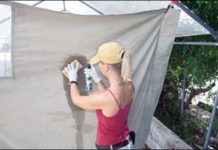
Among the marine maintenance products Practical Sailor evaluated recently were 14 pump-spray mildew cleaners to find out which one was the most effective at removing severe mildew stains. We tested chlorine bleach cleaners, chlorine-free cleaners, hydrogen peroxide cleaners, and ammonium chloride cleaners on a variety of materials, ranging from mildewed shower curtains to moldy vinyl seat cushions and moldy life jackets. We also used them to clean a mildewed sail and mildewed Sunbrella. All products were effective at removing the mold mildew from the shower curtain, but the cushions, life jacket, Dacron sail, and Sunbrella were more of a challenge. One product stood out as a more effective mildew cleaner: Klean-Strip Mildew Stain Remover. Klean-Strip is a highly concentrated product with 19 times more sodium hypochlorite than common bleach, and we do not recommend it for cleaning sails or fabrics. Other products tested include 3M mildew stain remover, Boat Armor mildew stain remover, Boatlife mildew remover, MaryKate mildew stain remover, MDR Amazons Amazing Mildew Stain Away, MDR Moldaway, Naturally Clean Mildew, Nautical Ease Mildew Stain Remover, household Spray Nine, Star brite Mildew Stain Remover, Sudbury Mildew Cleaner and Stain Remover, Thetford Mildew Stain Remover, and West Marine Mold and Mildew Cleaner.
Mailport: 01/09
In the December 2007 Practical Sailor Advisor, you requested feedback on Ultimate Sole, a product for coating cabin soles. Two years ago, I added a -inch teak-holly veneer plywood covering to my sole and used Ultimate Sole as the finish. I first put on a sealer and then two coats of Ultimate Sole. It went on very easily and performed better than I expected. It is a hard, glossy finish that truly does offer nonskid properties. You look at the finish and think you will slide all over the place, but you don't! It is a wonderful product, and I wouldnt use anything else.
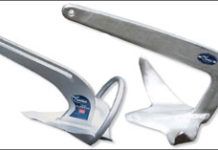
Practical Sailors Heavyweight Anchors Test 2008
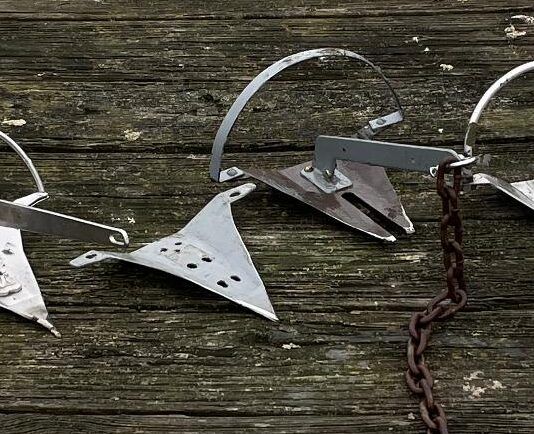
In a followup to the November 2008 shoreside testing of three large cruising anchors, this field report offers a glimpse of how the Manson Supreme, Manson Ray, and Rocna anchors perform in the real world. The test products, two roll-bar anchors (Rocna and Supreme) and one Bruce-style anchor (the Ray), are all acceptable as main cruising anchors. They are all good, but with distinctive strengths and weaknesses, so we tried them out, anchoring in dense kelp, soft mud, and hard rock bottoms, as well as in anchorages where short scope was required.
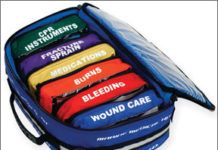
Practical Sailor Names 13 Products Best Gear of the Year
Practical Sailor’s annual wrap-up of the year’s best sailing equipment looks at our favorite top-rated products from November 2007 to November 2008, including the Facnor furler for light-air sails, Scad Solo external holding-tank sensor, Pelican Recoil LED flashlight, and Adventure Medical’s first-aid kit for coastal cruisers. In the boat maintenance category, Interlux’s Micron 66 bottom paint and Spray Nine’s waterline stain remover garnered Editors’ Choice picks. Foulie sets (jacket and bibs) by Gill and Helly Hansen were tapped as Practical Sailor Editor’s Choice in apparel, and a host of marine electronics made the list, including the Icom CommandMic III remote mic and Garmin GPSMap 545s 5-inch chartplotter sounder. Jeppesen was recognized for its top-notch electronic chart updating services. Other top gear picks were the Acco proof coil mooring chain and the Achilles HB315-LX fixed-transom inflatable dinghy.

Product Test: Heavyweight Cruising Anchors for Challenging Anchorages
One of a cruising anchors most important traits is its ability to set easily (and reset after a wind shift) in the widest possible variety of bottoms. For those who can carry extra large anchors, holding power, the normal parameter measured by anchor tests, is not as important as setting performance. Once set, an oversized anchor should easily have sufficient holding power. With that in mind, this comparison focuses not on ultimate holding power but the ability of the anchors to set quickly-even in difficult bottoms and with short scope-and to stay set when conditions change. Practical Sailor tested the rollbar-style Manson Supreme and the Rocna as well as the Bruce-inspired Manson Ray claw anchor. Testers looked at each anchors design and measurements, as well as its setting and veering performance on a frozen-sand beach covered with large rocks and on a sand/ mud beach. Practical Sailor encourages readers to weigh these results along with those of previous tests on more typical bottoms before selecting a primary anchor.
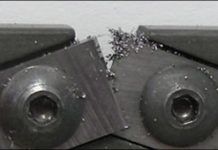
Best Boating Knives
David Boye, the Arizona knifemaker whose unique folding boat knife of cast dendritic cobalt won our June 2000 sailors knives bench test and was a reference standard for our March 2004 revisit, recently introduced a new model Basic 3 Cobalt knife. These knives doggedly retain a cutting edge when going through tough, blade-resistant materials like rope, cardboard, or even old rugs. Others give up long before the job is done. In our experience, Boyes cobalt knives last much longer-and when they finally do slow down, they can be resharpened with just a few strokes on a medium stone. The difference, we reason, is in the metallurgy. Boyes cobalt blades are "cast to shape and retain the pristine crystal network of highly dendritic (branching) bonded carbide throughout the blade, which aids in cutting and maintaining the structure of the cutting edge," according to the maker. Most knives are from steel that originally contained a similar crystal microstructure, but then underwent rolling, stamping, or forging to shape. This process breaks down the original carbide microstructure of the metal. The carbides at the edge are then no longer rooted into the overall microstructure. Complex heat treatment is then applied to develop properties such as hardness and toughness.
Latest Logbook

Practical Sailor Logbook – September 2026
In September we tour the Hans Christian 48T — the offshore cruiser many sailors call the holy grail — walk the custom Antigua 60...
Video: The BEST Sailboat You Can Buy for $35,000 – Catalina...
If you’re searching for a mid-30-foot sailboat, affordable cruising sailboat, liveaboard sailboat, first sailboat, or a capable used sailboat for coastal cruising, the Catalina...

Latest Sailboat Reviews
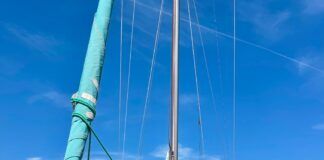
Learning by Doing on a $5,000 Catalina 30 Mk II
When Davis’s mother started talking about wanting to do something “big” for retirement, Davis and Gloria half-jokingly threw out an idea that seemed suitably...