




PS Advisor: Replacing Wire Rigging
Over the years, I’ve heard various timeframes for when to replace standing rigging, but I’ve never seen any empirical data to back up those recommendations. It would be very informative to know from a metallurgical/metal failure point of view estimated lifespans of the average wire used for standing rigging.

Mailport: 12/09
I have a Pearson Ensign 1962 now at a slip in New Rochelle, N.Y. This season marked the first time we had the luxury of keeping our boat at a slip. In order to maneuver through the marinas byways without worrying, I bought a 24-volt Minn Kota outboard (80 pounds of thrust) and two 12-volt batteries, which I hook up in series. Not only am I able to stop start, turn, etc., in the marina, but-to my surprise-in the calm sound water, I can nip along at about 3-4 mph with myself, two crew, and the 3,000-pound boat. The result is that Ive only used my 5-horsepower Mercury outboard once this year. My electric outboard doesn't stall; it has variable speed like no ones business; reverses with relative ease, and is less expensive-though more cluttered-than the self-contained electric outboards you recently reviewed. Am I part of a growing trend or just weird? If the former then it might be worthwhile testing electric outboards for boats my size (22.5 feet) and commenting on their applicability.

Mailport: 11/09
To keep from being pulled under in a collision between a tanker and my sailboat, I "pulled the ripcord" to release the snap shackle on my Standard West Marine Safety Tether . The tether release lanyard was outfitted with a series of balls. (See bottom photo at right.) I had rehearsed reaching for and feeling the release toggle many times so it would come naturally in an emergency. The balls have a distinct feel. There was nothing on my PFD or foul-weather jacket that resembled them. The replacement tether I bought from West Marine (ISAF Specification Safety Tether, No. 9553504) has a new toggle on the snap-shackle release lanyard that consists of an open triangle of plastic. This is dangerous, in my opinion! In my first few hours of using the new tether, in moderate sea conditions, I managed to snag the triangular loop on something and release the snap shackle. I am now replacing all triangular loop pulls with bead pulls that I have crafted myself.
PS Advisor: Replacing Lifelines
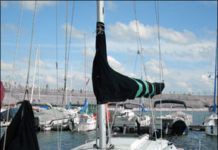
The International Sailing Federation (ISAF) and other regulatory bodies frown upon using PVC-coated 7x7 wire for lifelines. As you noted, this is because lifelines should be easily inspected for corrosion or other signs of possible failure. The corrosion that can take place under the coating is not just a saltwater issue. Air quality and other factors also can lead to corrosion. We suggest uncoated, 1x19 stainless-steel wire with swaged terminals—3/16-inch wire for upper lifeline and 1/8 inch for the lower. Uncoated 1x19 is easy to inspect, and even though the top wire is overkill from a tensile-strength perspective, it will be durable and almost as comfortable to lean against as the coated wire. It’s also more convenient to lash netting to than a smaller-diameter option.
Testers Take Tacktick and Nexus Wind Instruments for a Spin
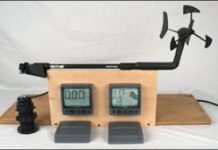
Practical Sailor testers compared Tackticks improved Race Master system to the Nexus Start Pack 3, a hybrid wired/wireless system. The Tacktick Micronet wireless wind instrument, a compact system featuring wireless display and a masthead sensor, has a strong following among racers. It has proven to be a good choice for those sailors serious about improving race performance as it has many options for tracking performance on the course in real time. Its ability to work with a 12-volt system makes it a good choice for small boats. The versatile, expandable Nexus hybrid has an impressive and intuitive interface and a graphic analog wind representation. It provides all of the basic functions a cruiser or racer uses most, and testers found the analog wind display appealing.
Practical Sailor Tests Lightweight Tether Aimed at Racing Sailors
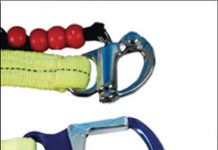
Theres a reason why we recommend safety tethers-the umbilical cords that connect the jacklines on our boats to the harnesses on our bodies-be 6 feet long or shorter. Getting dragged behind a boat, even at the sedate speed of 4 knots, can easily drown a person. Unless someone is on hand to haul you on board, survival relies on a superhuman burst of adrenaline. Though rare, there have been some highly publicized deaths involving harnesses. The story of Harvey Shalsky, a sailor in the 1999 Double-handed Farallones Race, is familiar to most racers. Shalsky, racing with longtime partner Mark Van Selst, drowned while tethered to his J/29 White Lightning. Van Selst was unable to slow the boat or haul his partner in, and eventually cut loose Shalsky (who was by then unconscious) so that following boats could recover him. The hazards associated with a tether that cannot be easily released under load prompted the International Sailing Federation (ISAF, the council responsible for regulating offshore sailing races) to recommend this feature in tether designs. It is not a requirement, only a recommendation, and ISAF does not stipulate what method should be used for the release.
Headsail Furlers Sans Swivels Face-Off
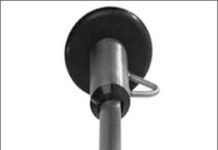
A follow-up to our evaluation of jib furlers with head swivels, Practical Sailor reviews roller furlers that use no swivel. For many years, the Flexible Furler from Cruising Design Inc. (CDI) was the most prominent player in this category, but some new products and innovative designs are offering more options for sailors looking for easy-to-install furling. Along with the CDI furler, we look at four roller-reefing systems: Alado A-2, Spin-Tec Triumph 2000, and Reefurl. Having no upper halyard swivel, these furling systems put the foil sections in compression and use an external halyard system to attach the head of the jib to a built-in halyard or a fitting at the top of the foil system. Although PS regards conventional roller-bearing furlers with top swivels (tested in August 2009) as the most sensible choice for serious offshore cruisers, these alternative jib furlers offer a cost-effective, easy-to-install option.
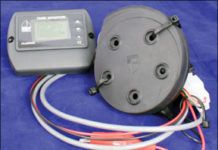
Practical Sailors Gear of the Year 2009
Practical Sailor editors pored over the dozens of products reviewed in the previous months to find the best of the best sailing gear, products that are worthy of the designation Gear of the Year. This years editors choice list includes a rugged rope clutch (Spinlock), a grippy ratchet block (Ronstan), feature-filled VHF handheld radios (Standard Horizon and Cobra), high-quality nesting cookware (Magma), a proven paste wax (Collinite), an ocean-ready first-aid kit (Adventure Medical Kits), a reliable LED bulb for cabin lighting (Imtra), an economical ice box conversion kit (Frigoboat), an innovative ultrasonic tank sensor (BEP Marine), cold-weather gloves (Gill), and an easy-to-install Wi-Fi booster (5mileWiFi).
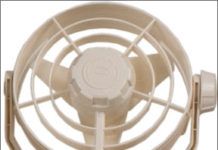
Cabin Fan Test Returns
In April 2008, Practical Sailor evaluated 11 cabin fans from seven manufacturers. Since that test, Caframo has gone back to the drawing board and redesigned its 748 Bora. The company also introduced a new weatherproof version of its Kona. Testers were pleased to see that the new fans clearly addressed complaints raised in our last test: The Bora radically changed its blade design to pump more air, and the Konas corrosion-prone metal grill was replaced with a plastic grill that will hold up better in salt air. Based on the new data, the Bora has climbed up into the recommended rankings. Stay tuned for this years Fan Death Match.
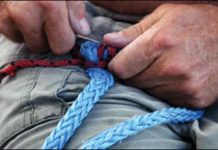
Gripping Hitches for Loaded Lines
Testers evaluated five different knots to determine which would be the ideal for holding a tensioned line. Testers considered ease of tying and untying, ease of learning and recall, and holding power with various types of line. The old standard rolling hitch was pitted against the modified rolling hitch, icicle hitch, gripper hitch, and sailors hitch.
Latest Logbook

Practical Sailor Logbook – September 2026
In September we tour the Hans Christian 48T — the offshore cruiser many sailors call the holy grail — walk the custom Antigua 60...

Video: The BEST Sailboat You Can Buy for $35,000 – Catalina...
If you’re searching for a mid-30-foot sailboat, affordable cruising sailboat, liveaboard sailboat, first sailboat, or a capable used sailboat for coastal cruising, the Catalina...



Latest Sailboat Reviews

Learning by Doing on a $5,000 Catalina 30 Mk II
When Davis’s mother started talking about wanting to do something “big” for retirement, Davis and Gloria half-jokingly threw out an idea that seemed suitably...