



Farewell to Skip Allans S/V Wildflower
Anyone who has ever run before a gale knows how exhilarating it can be. On the right boat, in the right conditions, the adrenaline rush is as intense as any we’ll feel in this world. Bull riders, surfers, and skydivers get a few seconds of excitement. An ocean gale can last for days ... and that’s where the problem lies. With your senses completely in tune with the boat, wind, and sea, the experience of hurtling down an ocean wave stirs the soul. But as the hours pass and day turns to night, the thrill gives way to exhaustion. Mostly, you’re too busy to be afraid, but each mountain of green water that fills the cockpit brings doubt. How high will these waves get? How long can I last? Even with a drogue streaming off the stern to slow down the boat, running before storm-driven waves entails a great deal of risk. There’s danger enough aboard a fully crewed boat, as the rig, sails, and steering gear get pushed to the brink.
Snatch Block Test Update
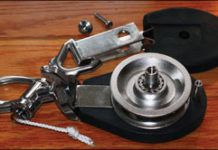
Practical Sailor evaluated six snatch blocks in August 2007, with the Harken 1609 receiving the nod as the best all-around snatch block. As a follow-up, Practical Sailor compared two Ronstan snatch blocks, the Ronstan 6831 and the Ronstan 6751, to the Harken block. The Ronstan RF-6751 sports an investment-cast stainless-steel sheave, a heavy-duty latch, and side plates covered with thick, thermoplastic rubber cheeks. The block’s ruggedness and user-friendly latching function make it ideal for heavy duty applications on a cruising boat. Ronstan’s RF-6831 has a stainless-steel frame and tough PVC cheeks. It is representative of Ronstan’s alloy-sheave blocks with its high-quality construction, mid-range cost and working load. Although Practical Sailor prefers the Harken for everyday use, both Ronstan blocks are well-suited for cruising sailors.
A Tale of Two Trysails
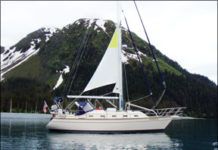
Storm trysails rarely get the close look they deserve. Designed to replace the mainsail in a severe storm, it spends most of its life in the sail locker. Trysails should be cut flat, and the center of effort located to optimize stability and helm balance. Generally, the trysail’s clew should be just above the boom, its tack just above the furled mainsail’s head and its head near the mid-point of the mast. It is best to work closely with a sailmaker or a boat’s designer to get the right size and shape trysail. When inspecting or commissioning a trysail, pay close attention to detail at the head, clew, tack, leech, and luff.
Small-Boat Refit: Practical Sailor’s Catalina 22 Gets a Keel Overhaul
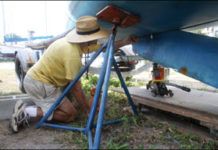
Practical Sailor testers’ summer boat to-do list included removing, repairing, and replacing the swing-keel pivot assembly of the Catalina 22, Jelly. The swing-keel hanger assembly supporting Jelly’s keel required a moderate amount of time, skill, and expense to repair. Staff members gleaned ideas for the repairs from fellow Catalina 22 owners through the Catalina 22 National Sailing Owners Association www.catalina22.org.
Small-Boat Refit: Practical Sailors Catalina 22 Gets a Keel Overhaul
Practical Sailor testers’ summer boat to-do list included removing, repairing, and replacing the swing-keel pivot assembly of the Catalina 22, Jelly. The swing-keel hanger assembly supporting Jelly’s keel required a moderate amount of time, skill, and expense to repair. Staff members gleaned ideas for the repairs from fellow Catalina 22 owners through the Catalina 22 National Sailing Owners Association www.catalina22.org.
The Hull-Keel Connection
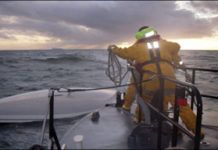
Whats happening here? In June, the Cynthia Woods, a Cape Fear 38, lost its keel while racing in the Gulf of Mexico. One of the crew members, Roger Stone, died while helping his crewmates evacuate. That same month, a J/80 lost its keel during a race on Long Island Sound. Thankfully, no one was hurt in that incident. Both accidents are still being investigated. The fate of the Cynthia Woods recalls other accidents involving lost keels. Hooligan V (pictured above), a Max Fun 35, lost its keel off the coast of England while racing in May 2007. In 2005, a Bavaria Match 42 lost its keel while racing in the Med. In each case, one of the crewmembers died.
Nearing the End of Our Chain – Mooring Chains Tested
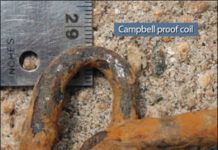
Practical Sailor dropped seven different lengths of 5/16 mooring chain in Long Island Sound 2 1/2 years ago. We reported on the initial inspection and the one-year inspection. After a quick look at the chains at the two-year mark, we left them in the drink for another six months and then pulled them. During the test, all chains had the upper parts exposed to air twice a day and were subjected to constant wear from waves and tidal changes. When we retrieved the chains for the final time, we found the greatest loss of material just below the halfway points in the 5-foot lengths. Chains we tested were Acco, Campbell, Chinese, and Suncor. Chains tested were galvanized, zinc-plated, and stainless steel.
Inflatable Boat Fenders Test
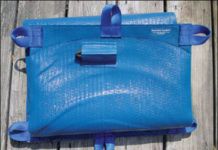
When youre tight on storage space but still want to be prepared to protect your hull when docked in a blow, consider inflatable fenders. They often offer the same protection as conventional fenders without the storage headaches. Practical Sailor inflatable boat bumpers from three manufacturers: StowAway Boat Fenders from DACA Innovations; Aere fenders from Pratek; and Easystow Fenders from Seoladair. All were subject to abrasion tests and compression test. Long-term testing is under way to determine resistance to UV, chemical, and biological deterioration. Stay tuned to see which of these docking aids is the toughest inflatable fender.
Gear for Battening Down Ahead of Storms
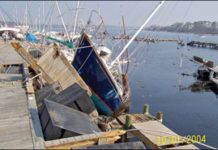
Practical Sailor offers an overview of products designed to help secure a boat for a major storm or hurricane. Well ahead of storm season, each boat owner should devise a hurricane preparation plan and should inspect the marina, dock, mooring, or hurricane hole where he intends to ride out the storm. One of the most important aspects of storm readiness is being sure you have the right gear and ground tackle to handle the loads of high winds and rising seas. In this overview, Practical Sailor takes a look at line choice and chafe gear for storm mooring. More line is obviously better, but more of what type and size? Editors discuss Fiorentinos RodeRap and LineRap, Davis Secure Chafe Guard, and the Chafe Guard from Taylor Made. We also consider docking aids including snubbers such as Shockles, Bungy Shock, and Synergy Marines braided poly dock lines; shock absorbers; and tidal-surge protectors including Tideminders, TideSlide, and the Slide-Moor.
Extending the Bow: Are Add-on Sprit Kits Worth It?
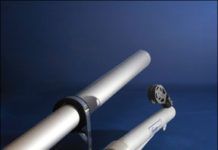
Easy-to-handle, lightweight sails continue to gain in popularity with performance-oriented cruisers. Setting a large, light-air sail a couple of feet ahead of the boats stem improves performance and sail-handling characteristics but presents challenges and risks. Practical Sailor reviews four aftermarket bowsprit kits and examines whether adding a spar to the front of your boat is safe, effective, and worth the added cost and effort. Aftermarket sprit kits by Forespar (Banana Sprit), Forte, Selden and Sparcraft are reviewed.
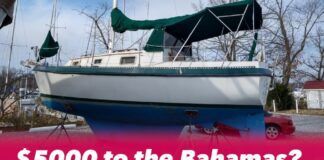
Bahamas for $5000? The Watkins 27 foot Sailboat
Is the Watkins 27 the ultimate small cruising sailboat? In this video, we take a deep dive into the Watkins 27 — a classic...



Latest Sailboat Review
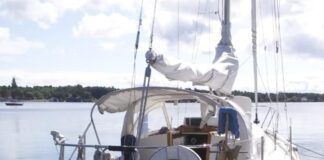
Tartan 30: An Affordable Classic
The early 1970s was the heyday of the Tartan 30' racer/cruiser. In all, no less than two dozen boats of a similar size and type were introduced in just three years, many of them to become highly successful among sailors eager for the performance and amenities of big boats at a modest price. Among the most noteworthy and enduring of the 30-footers from this era has been the Tartan 30.