

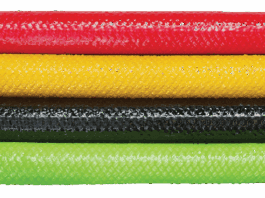
Top Whipping Twines
The term whipping twine is somewhat misleading, suggesting a single purpose for a product with seemingly endless uses. These are the thin-woven strands that all hand-sewing projects depend upon, and in the process of exploring various stitching projects, weve gone through spools and spools of it.

Higher Loads Call for Careful Installation
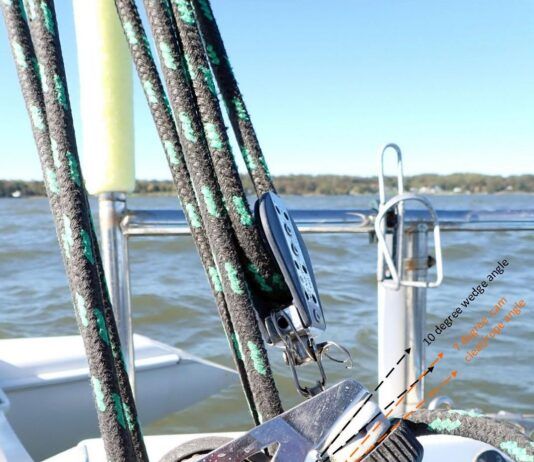
Rope clutches are a great innovation that can help sailors better control the lines that lead aft to the cockpit and those that cluster around the mast base. But as with many good things, there is the risk of over-doing the benefit.
Break and Break Again
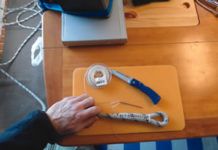
All lines were broken once to determine approximate breaking strength without a stitched eye. A simple chain fall and load cell provided a means of pulling test samples up to 5,000-pound loads. The samples were then sewn or knotted into dog bones 6 to 8 inches long with an eye on each end, and the load was again applied until failure. This allowed the testers to compare breaking strengths with and without a stitched eye or knot. The test was broken into two parts, laboratory and field testing.
Other Stitching Techniques that Work Well
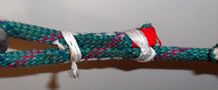
We principally looked at three means of seizing an eye without splicing-basting, round-stitching, and seizing-used alone and in combination. Round stitching is described in the accompanying main article. Here are some of the other stitching patterns we tested.

Mainsail Halyard Shackles
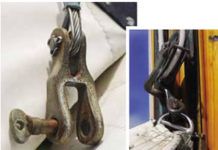
A mainsail halyard shackle needs to be as reliable as an on/off switch on a table saw. Its a one-act pony thats counted on to perform perfectly each and every time. These essential shackles fly under the radar and have become so much a part of every sailors routine that they are simply taken for granted. They terminate mainsail, mizzen, and foresail halyards aboard sailboats ranging from dinghies to mega yachts. We become so familiar with the hardware, that idiosyncrasies like a slightly bent clevis pins, damaged threads, or a misshapen stamped fork opening are tolerated.
A Look at Silicon Bronze Versus Stainless Steel
Brass is a pretty poor marine metal. An amalgam of copper and the much less costly and corrosion-prone zinc, brass reign afloat, at least in load bearing hardware, was short lived. But when copper is alloyed with less corrosion-prone metals, the result can be quite different. And although brass and bronze sound confusingly similar, their attributes tell very different stories.

Tylaska Tops in Snap Shackles
Snap shackles have become as familiar to sailors as pots and pans are to a harried chef. From dinghies to mega yachts, the function of these ubiquitous bits of hardware remains consistent. Each affords a quick and reliable means of making that all-important halyard-to-sail junction. The absolute minimalist might say that a bowline can do the same, afterall, isn't it the favored means of attaching sheets to the clew of a sail? The knots-for-snap shackles debate loses out, however, when it comes to hasty halyard swaps, not to mention the release of a loaded spinnaker guy. And even if youre not quite ready to label these shackles as essential hardware, they certainly do make life on the foredeck a whole lot easier.
Testers Compare Swivels, Look for Pin Creep
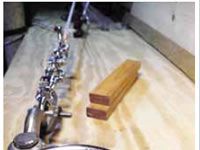
For this evaluation, each shackle was visually inspected, component parts were measured, and stainless-steel alloys were noted. During this initial inspection, we tested how easy each snap shackle could be closed with one hand; we also repeatedly measured how easily the un-clipping process could be executed using a simple tension spring-test on the piston-pin versions and by using a height scale on the Tylaska push-to-release latching model. We recognize the importance of pin security under load and felt that the reluctance of a shackle pin to be easily pulled under load was, in many cases, an attribute.
Stainless Steel: Advantages and Ailments
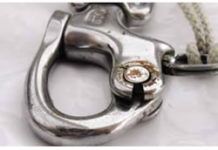
When it comes to stainless steel, nothing seems more baffling than the latest array of alloys that have migrated into the marine market. Not so long ago, stainless steel was referred to as 302, 304, and 316. These differing grades of stainless varied according to chrome and nickel content and the corrosion resistance they afforded.
DIY Rigging Hacks
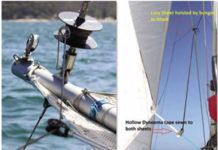
Over the years weve owned Josepheline, our 38-foot Lightwave catamaran, weve figured out a few simple fixes to some niggling onboard problems-some boat hacks, if you will-and we thought wed share a few in the hopes that other boat owners may benefit. If you have any little fixes of your own that youd like to share, email your story to [email protected].
Latest Logbook

Practical Sailor Logbook – October 2026
This month leans into used-boat value and hands-on maintenance: Tim Labute tours the traditional, shoal-draft Bayfield 32, Nick Nicholson revisits the much-requested Morgan 38/382,...

Video: The Problem with the Island Packet 459
Is the Island Packet 459 the right bluewater sailboat for crossing oceans and sailing around the world? Built in Florida, USA, the new Island...



Latest Sailboat Reviews
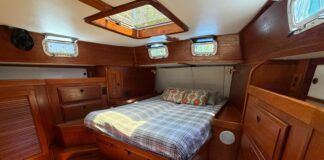
Endeavour 42: Used Boat Review
Just as the Caribbean cruising dream was at its peak in the American consciousness, Endeavour yachts brought in Americas Cup designer Johan Valentijn to create a new breed of Endeavours to compete with an already crowded field of center-cockpit cruisers, most of them bound for the Caribbean charter trade. The end result was a boat that managed to maintain a surprisingly tolerable aesthetic, unlike the typical wedding-cake center cockpit cruiser. The combination of teak trim, bootstripe, and balanced proportions camouflages what is essentially a floating condo.