

Fine Tuning Cam Cleat Angles

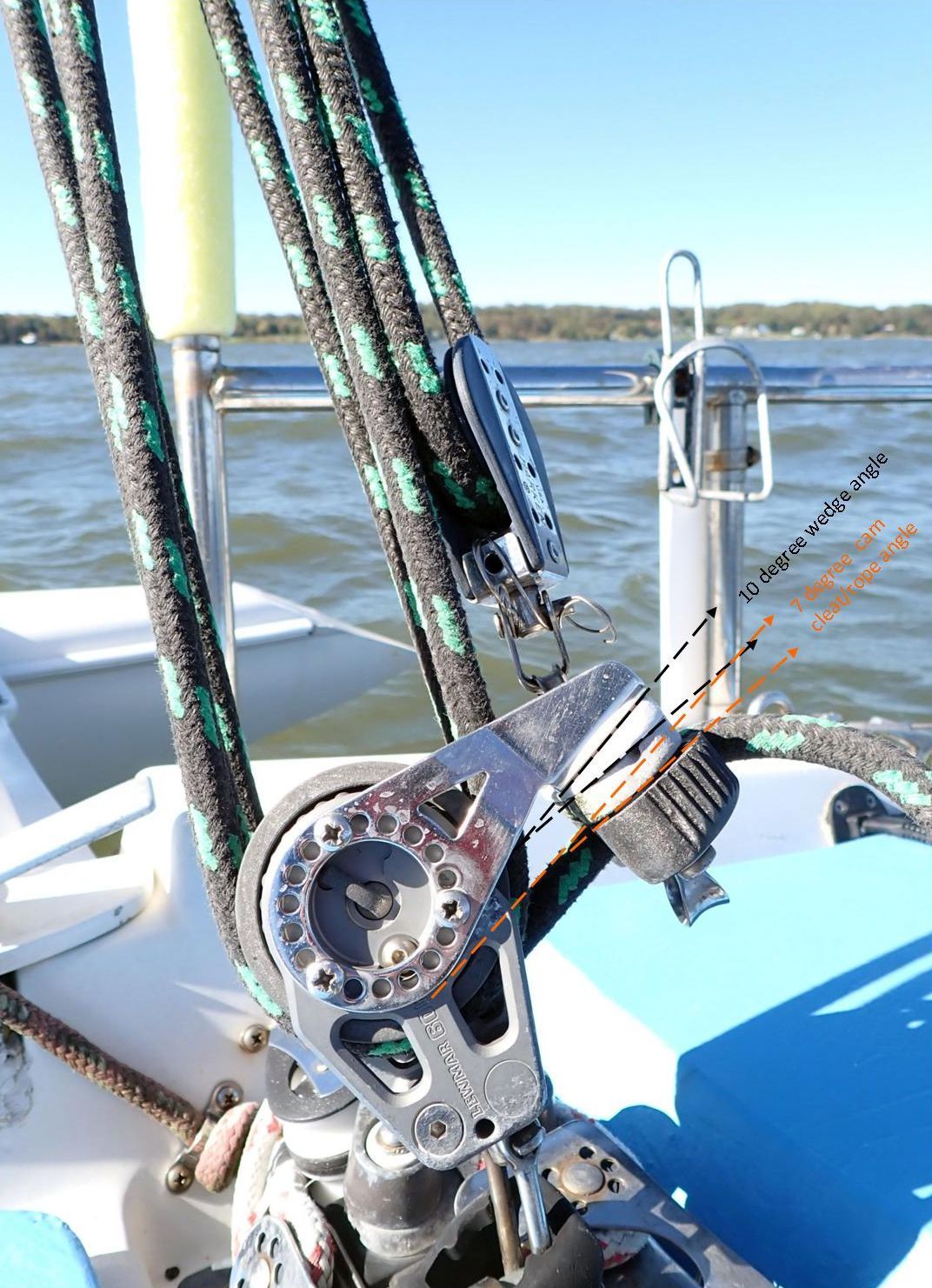
A small change in cam cleat angle makes a big difference when it’s time to dump the mainsheet.

0
Cam cleat on mainsheet with 10 degree wedge. The black dotted lines indicate 10-degree wedge angle. The orange dotted lines indicate 7-degree cam cleat/rope angle. A 10 degree wedge under the cam cleat creates a 7 degree entry angle. This is just enough to ease release under the highest load.(Image/ Drew Frye)

Fall on the Chesapeake Bay brings the finest sailing of the year, combining warm water, consistent breezes and moderate air temperatures. There is no sweltering and no praying for wind. But while the speed can be thrilling, sailing a 24-foot trimaran full blast requires both full attention to gusts and a mainsheet that can be released from bar-tight in an instant, without loss of control. Cam cleats are marvels, but as well as they hold, they can be stubborn to release when highly loaded.

To continue reading this article or issue you must be a paid member.

Join Practical Sailor

Get full access to Practical-Sailor.com – more than 4,000 articles – for just $34.
Join today and save 42% off our full price.

Already a member?
| Forgot your password? | Activate Web Access
Drew Frye
Drew Frye, Practical Sailor’s technical editor, has used his background in chemistry and engineering to help guide Practical Sailor toward some of the most important topics covered during the past 10 years. His in-depth reporting on everything from anchors to safety tethers to fuel additives have netted multiple awards from Boating Writers International. With more than three decades of experience as a refinery engineer and a sailor, he has a knack for discovering money-saving “home-brew” products or “hacks” that make boating affordable for almost anyone. He has conducted dozens of tests for Practical Sailor and published over 200 articles on sailing equipment. His rigorous testing has prompted the improvement and introduction of several marine products that might not exist without his input. His book “Rigging Modern Anchors” has won wide praise for introducing the use of modern materials and novel techniques to solve an array of anchoring challenges.