





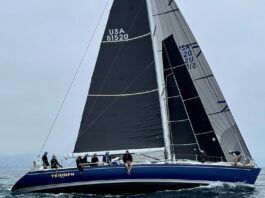
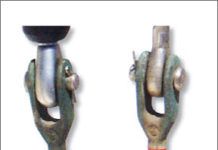
Practical Sailor Test Boat Gets Half a Refit With Powerlite PBO Rigging
Although stainless steel wire and rod rigging are still the traditional, most popular, and economical material of choice for mast rigging, metal is rapidly giving way to a new generation of synthetic rigging material. There are a handful of companies that manufacture standing rigging using ultra lightweight high-modulus synthetic fibers such as Kevlar, PBO (polybenzoxazole), and carbon.There are many advantages of synthetic rigging. Weight savings aloft is the primary benefit, and high-modulus fiber can be up to 50 percent stronger than similar diameter rod or wire rigging, and up to 90 percent lighter. Another touted benefit is greater fatigue resistance. For the average racer-cruiser, there are three big drawbacks to PBO: It is four times as expensive as stainless steel wire, although roughly on par with rod rigging; should its cover fail, it drastically loses strength in direct sunlight; visual inspection and DIY repair is currently impossible. Until recently, the technology for high-modulus, synthetic fiber rigging was only available to deep-pocketed mega-yacht owners. As development advances and competitive pricing is sparked, this type of rigging may one day be an option for average sailors. Under the current state of technology, we can only recommend this product for the serious racer with very deep pockets.
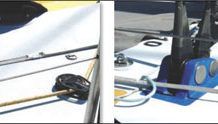
Sailboat Jackline Test
Whatever jackline system is used, it should be supplemented with fixed clip-in points in the cockpit, at the helm, and around the mast-wherever crew members work for extended periods. International Sailing Federation recommendations require that two-thirds of the crew be able to be simultaneously clipped on without depending on jacklines. Our top choice is a low-stretch Dyneema or Spectra jackline custom made by a professional with loops bartacked in place. For those on a budget, low-stretch polyester jacklines like those made by one of our recommended suppliers will suffice. In either case, routine inspection for wear and UV damage is imperative.

Facelift for Saggy Liner
What kind of glue do you use when that faux leather or woven liner starts falling off the cabin top? The best solution may be no glue at all.
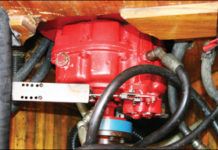
The Cruising Sailor’s Drivetrain
When a cruising sailor starts thinking about exploring fjords and glaciers, he starts putting a little more thought into his boat’s diesel engine and drivetrain components. High-latitude cruising sailor Andy O’Grady writes about several parts that has served him well in extreme conditions: the Kiwiprop, the Manecraft dripless prop shaft seal, the PRM150 transmission, and the K&N reusable air filter.
The Cruising Sailors Drivetrain
When a cruising sailor starts thinking about exploring fjords and glaciers, he starts putting a little more thought into his boat’s diesel engine and drivetrain components. High-latitude cruising sailor Andy O’Grady writes about several parts that has served him well in extreme conditions: the Kiwiprop, the Manecraft dripless prop shaft seal, the PRM150 transmission, and the K&N reusable air filter.
Mailport: 12/06
MARINE INSURANCE REDUXI have been reading with much interest your articles about marine insurance this year (April and May 2006).

Riding the ‘A’-train
Prices, advice vary greatly when it comes to asymmetrical sails.
Riding the A-train
Prices, advice vary greatly when it comes to asymmetrical sails.
A Fistful of Splicing Fids
The stainless set from Selma combines elegant design with durability.
Seven Muscular Winches
Powerful and efficient, Andersen is our top pick.
Video: Sailboat Maintenance for Beginners – 10 Jobs You Can’t Ignore
Sailboat Maintenance for Beginners doesn’t have to be complicated. In this video, we cover 10 sailboat maintenance jobs every new owner should know, including...



Latest Sailboat Reviews

Jeanneau Sun Odyssey 42 DS Used Boat Review
This boat is dangerous for one simple reason—it looks like the answer. It’s big enough, pretty enough, modern enough, and suddenly, somehow, almost affordable...