


Marine Inverter-Chargers Test Part 2
The Practical Sailor February 2010 issue launched our test of marine inverter-chargers with a look at the inverter capabilities of units from six manufacturers. This report compares the battery charger functions of the inverter-chargers from Charles Industries, Magnum Energy, Mastervolt, ProMariner, Tripp Lite, and Xantrex. Our recommendations differ based on an owners needs. One unit is excellent for sailboat owners with larger AGM or gel-cell batteries who plan to expand their systems down the road, while another is better suited for those who have no expansion plans, offering a combination of lower price, features, and sophistication.
Which is the Best Marine Inverter-charger for Your Boat?
To decide which marine inverter-charger best meets your onboard power demands, first consider how it will used, how and where it will be mounted and what is required to fit with your electrical system. After testing multiple marine inverter-chargers, Practical Sailor offers this report on the units’ inverter capabilities and a follow-up review will report on the units’ charger functions. There are two classes of marine DC inverters: true sine wave (TSW) and modified sine wave (MSW). Each uses a different method to produce AC voltage. Practical Sailor evaluated modified sine wave units from Charles Industries, Magnum Energy, ProMariner, and Tripp Lite, and true sine wave units from Magnum, Mastervolt, ProMariner, and Xantrex.
Practical Sailor Tests 4-horsepower Electric Outboard
As we did with the Torqeedo electric outboard and Minn Kota trolling motor in past tests, Practical Sailor put the Solid Nav Traveler to work in sea trials on a Cape Dory Typhoon to determine whether it was a viable replacement for a small boats gas-powered outboard. The four-horsepower Traveler electric motor is marketed by Solid Nav and manufactured by Suzhou Parsun Power Machine Co., Chinas largest outboard exporter. Using a brushless 48-volt DC motor made by Mars Electrical Co. of Milwaukee, Wis., the Traveler combines a familiar drive train and an innovative solid magnet electric motor. At first glance, it looks like a small conventional outboard. Available in both long-shaft (20 inches) and short-shaft (15 inches) models, the Traveler is a gasoline outboard alternative best suited for a pocket cruiser (like a Cal 25) or similarly sized weekend cruiser where electric propulsion is desired. However, its required battery entourage limits its portability and affordability, and charging needs limit its practical use on smaller boats.

PS Advisor: Safe Mounting for Radar
I am looking at antenna mounting options for my 2.2-kilowatt radar. I like the idea of keeping the antenna out of the foretriangle and its sail and rigging, but am a little concerned about crew exposure by mounting the antenna aft on a pole or lower on the backstay. The manufacturer (Furuno) mentions nothing about exposure hazards in its installation manual. Does a hazard exist in this configuration?
Shore-Power Boat Fire Protection
With the increased demand to have all the electrically powered comforts of home onboard, it should come as no surprise to boaters that the majority of AC-related electrical fires involve overheated shore-power plugs and receptacles. Prime Technology, aims to change all that with the introduction of its Shore Power Inlet Protector (ShIP for short), a monitoring and alarm device that automatically disconnects AC shore power when excessive heat is detected at the power inlet connector. We reviewed the ShIP 110 designed for use with a 110-volt, 30-amp system. The company also offers a similar unit (the ShIP 220) for use with 220-volt, 50-amp service. Charred plugs and receptacles are the result of resistance build-up (due to loose or corroded connections), which generates heat and the potential for fire, a problem especially prevalent among vessels that continually run high energy loads such as water heaters and air-conditioning units. In addition to monitoring the temperature of your vessels shore-power inlet plug and its wiring, the ShIP system automatically disconnects AC shore power when an unsafe temperature is detected, providing visual and audible alarms. (The audible alarm shuts down after five minutes to avoid prolonged disturbance to surrounding boats.)
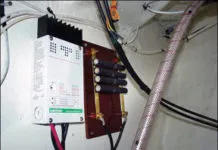
New Air Breeze Wind Generator Field Tested
As sailors, wind energy is at the forefront of our lives. The Practical Sailor wind generator test in March 2007 included a prototype of the Air Breeze from Southwest Windpower. Last year, the company debuted the Air Breeze in the alternative energy market for recreational boaters; it is distributed through retail giant West Marine. Using the same criteria as our 2007 test, Practical Sailor tested the Air Breeze for several months under a variety of conditions, using it to charge the ships batteries aboard a Union 36. The wind generators body is cast aluminum, and its blades are made of glass-filled polypropylene. Testers found it quiet, easy to mount, and reasonably priced at $900.

Marine Refrigeration: Traditional Thermostats vs. Digital Thermostats
Modern galley refrigeration moved far beyond simple holding-plate refrigeration systems, and now competes with the more easily installed evaporative refrigeration systems. One key to efficiency in any refrigeration system is an accurate thermostat. Practical Sailor compares a more expensive digital thermostat to a traditional, less expensive mechanical capillary thermostat. Refrigerator and freezer tests pitted the Grunert Marine Air Systems mechanical capillary refrigeration thermostats against the Scad Technologies SensiStat digital thermostat. Mechanical thermostats are valued for their simplicity and reliability, but a digital thermostat may outperform mechanical thermostats when it comes to maximizing marine refrigeration performance.

Practical Sailor LED Lightbulb Test
In this LED cabin light test, Practical Sailor looks at 17 light bulbs from seven manufacturers. The LEDs were tested to see which was the most worthy replacement for a 20-watt xenon bulb in a bulkhead-mounted reading light. Testers measure LED beam angles and intensity, LED power consumption, LED color temperature, LED radio frequency interference, and LED reading and cabin illumination. The LED lights tested include: Alpenglow TR LED complete brass fixture; three lights from Cruising Solutions; three lights from Doctor LED; four from Imtra; two from Opto Technology, two from Daniel R. Smith & Associates (DRSA) manufactured by Mast Products; two of Scad Technologies (Sailors Solutions) Sensibulbs; and one LED light from West Marine.
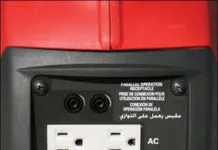
Practical Sailor Sea-trials 1,000-watt Honda Gas Generator
Bluewater voyagers and Practical Sailor contributors Evans Starzinger and Beth Leonard put the Honda EU1001 gas-powered generator, Hondas smallest super quiet four-stroke generator, through its paces during an extended cruise of Southern Chile. They report that the 1,000-watt generator is well engineered and essentially maintenance free. Wanting to go months without running the engine and unable to depend on wind and solar power in Chiles Beagle Channel, the couple chose the lightweight generator to feed their onboard battery-charging needs. The Honda will run for approximately eight hours on less than a gallon of gas, and its noise level was measured at a mere 59 decibels, quieter than normal conversation.

Wanted: A DC-DC Converter
Ive created a 24-volt system by connecting two 200-amp-hour 12-volt batteries in series to drive an electric outboard as auxiliary power for our 25-foot sailboat. The 24-volt bank will be charged using a 24-volt charger on shore power and by a 24-volt series of solar panels when mooring. I would like to eliminate the 12-volt batteries. I bought a 24- to 12-volt converter to stand in place of the 12-volt batteries, but I learned that the converter is not compatible with driving any kind of motor due to the back-voltage created by the collapsing field when the motor stops. I have a freshwater pump and a motorized outboard-motor bracket, so this particular converter is out of the question. Do you have any suggestions? Must I maintain a 12-volt battery for all the 12-volt equipment or is there a step-down technique?

Morgan 382 – The $30K Boat Nobody Talks About
The Morgan 382 might be one of the most overlooked cruising sailboats ever built. Designed by legendary naval architect Ted Brewer and produced between...


Latest Sailboat Review

Jeanneau 55 Boat Review
This recent sailboat from Jeanneau may as well be a spaceship. They’ve taken all the time-honored designs of a monohull aft cockpit and turned...