

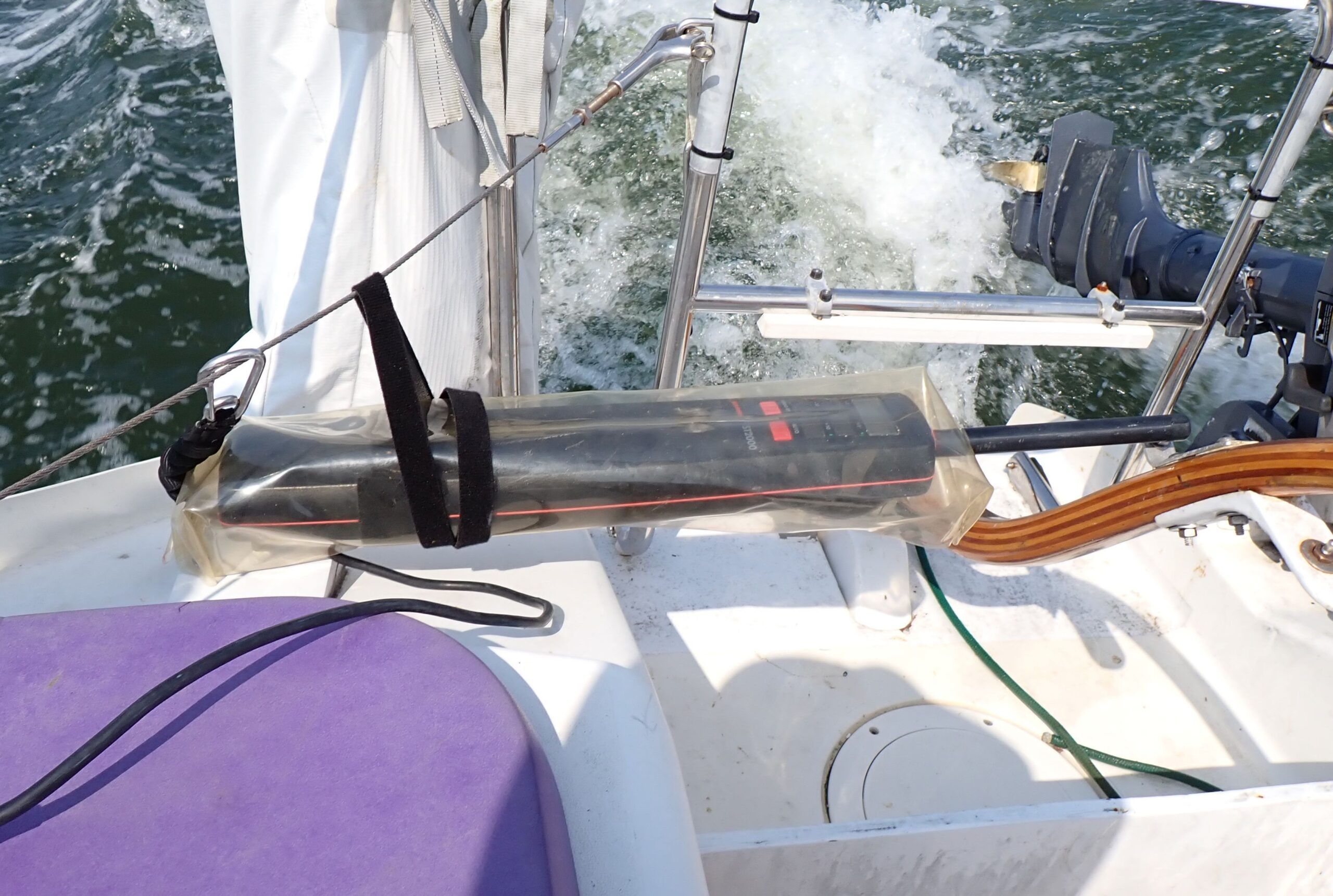
Although they are rated waterproof, the most common cause of death for tiller pilots is water intrusion. I’ve had one die from this. Like most electronics, they pull a vacuum inside when a summer thunderstorm hits them and lowers the temperature of the enclosure from as high as 130 F to just 70 F in a few minutes. They leak either through the case seal or the piston seal. I’m sure the O-ring could be serviced, but that involves cracking the case seal, which will then probably leak. I had one die several years after I opened it to repair a faulty gear—it spun on the shaft—I didn’t get the sealing O-ring into perfect position and it was pinched, just a bit, in one spot.
We’ve also received a few reports from tropical sailors of the electronics suffering heat stroke, just like a smart phone left lying in the sun. A break in the shade or even a wet towel can apparently restore operation, but avoidance is better.
To improve water resistance, make sure to silicon grease the piston. Clean it, apply a thin film, retract, extend, and finally wipe off lightly. The purpose is to lube the O-ring and to make the shaft water repellant and lube the o-ring.
Purchasing Tiller Pilot Covers
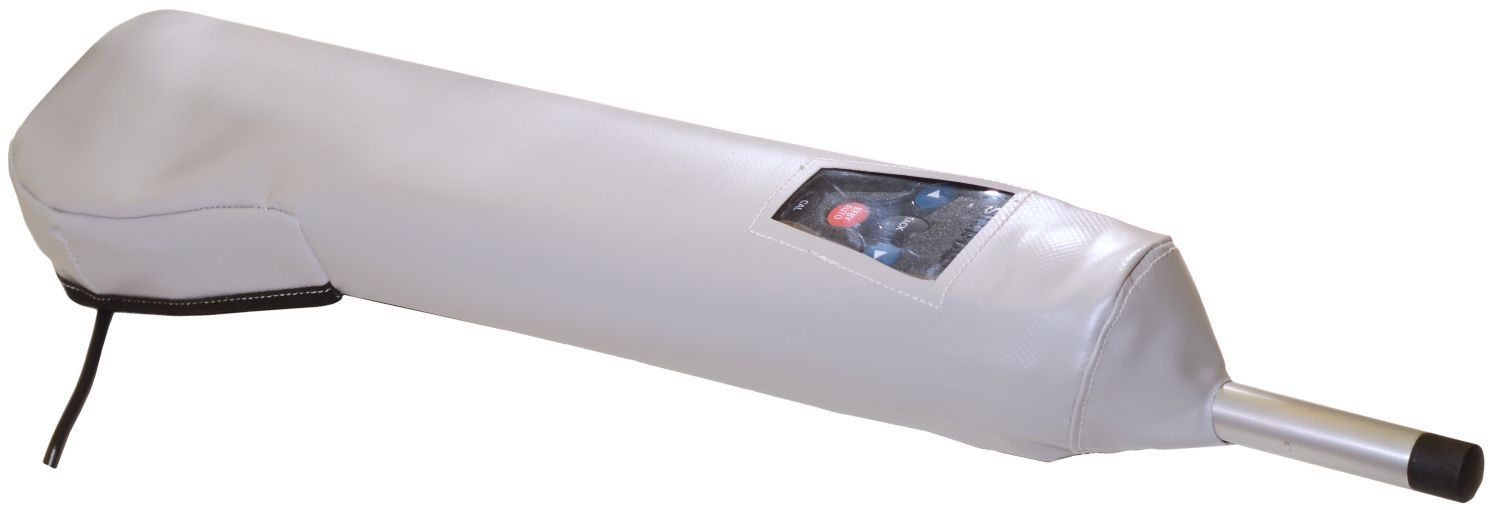
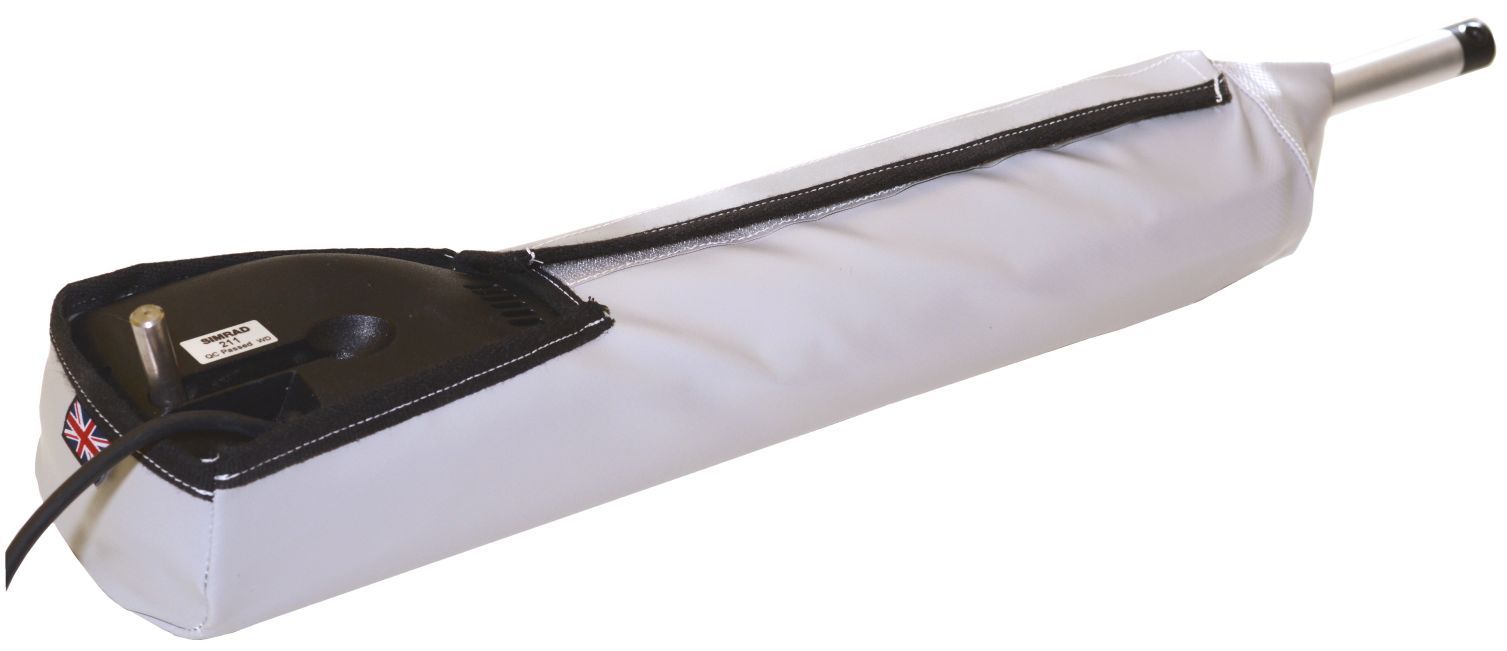
Covers seem fairly common in the UK (rains a lot) but not here in the U.S. If you know of a source, please let us know in the comments. I could sew my own, but I’d also like to look at more designs; most don’t cover the piston, and that feels like a mistake. Those that are available are about $60 with shipping and taxes, which seems a bit much. There aren’t any U.S. suppliers of the UK versions that I know of.
Cover Color
The tiller pilot case is black, which is the color chosen for most exposed plastics because carbon black is the best UV protection. However, for the cover choose a light cover fabric to reduce solar heating. Heating varies with latitude, time of day, and over cast. In the case of a black tiller pilot, the result is about 80-120 BTU/hour. If we were to paint the unit white or use a white cover, this drops to about 15 BTU/hour. Standard calculations and temperature rise over time.
Heating During Operation
What about heating from operation? There is a motor inside, driving the tiller from side to side. We’ve measured power draw on tiller pilots on a variety of boats in a variety of weather and find the 15 minute averages (peak draw fighting a wave doesn’t matter for heating) range from 0.2-1.5 amps, or about 8-60 BTU/hr, with the average being about 20 BTU/hr.
Field Testing
We monitored the Raymarine TP2000 on our F-24 test boat with an IR thermometer on a blistering day in the July sun. In use, the temperature on the top was 160 F and the temperature on the bottom was 110 F (ambient temperature, 97 F). Turned off it was 155 F and 106 F respectively. A few standard calculations based on solar heat rates and estimates of convective losses confirmed that the unit was receiving and dissipating about 95 BTU/hr.
We then operated the pilot in light chop and light winds, and the temperatures were 6 and 2 degrees higher, respectively. The F-24 is exceptionally well balanced on most point of sail and has a very light helm. The average current was less than 0.5 amps, or less than 20 BTU, so it is unsurprising that there was little difference.
In stronger winds the internal heating increases, but so does cooling. We did not measure the internal temperature directly, but standard engineering calculations on convective cooling suggest that it ranged from 115 to 135 F inside, depending on the exact location inside the enclosure. The electronics are near the piston end and the motor is near the butt end. There is a small vent on the underside of the butt end.
Will a Cover Make the Tiller Pilot Run Hotter in the Sun?
No commercial covers were available in the U.S. for testing, so we wrapped the upper half in white Sunbrella and measured a lower half skin temperature increase about 8 F above ambient, suggesting that the internal rise was slightly less than that of the naked unit (13 F), something like wearing a hat.
Some of the covers completely surround the pilot, while others leave the bottom open; we think leaving it open for cooling makes more sense. In fact, it is not our intention to leave the cover installed other than when it is raining, so all we really wanted was reassurance that we wouldn’t cook the pilot on an overcast day if we left it on after the rain stopped. No worries.
DIY Tiller Cover Steps
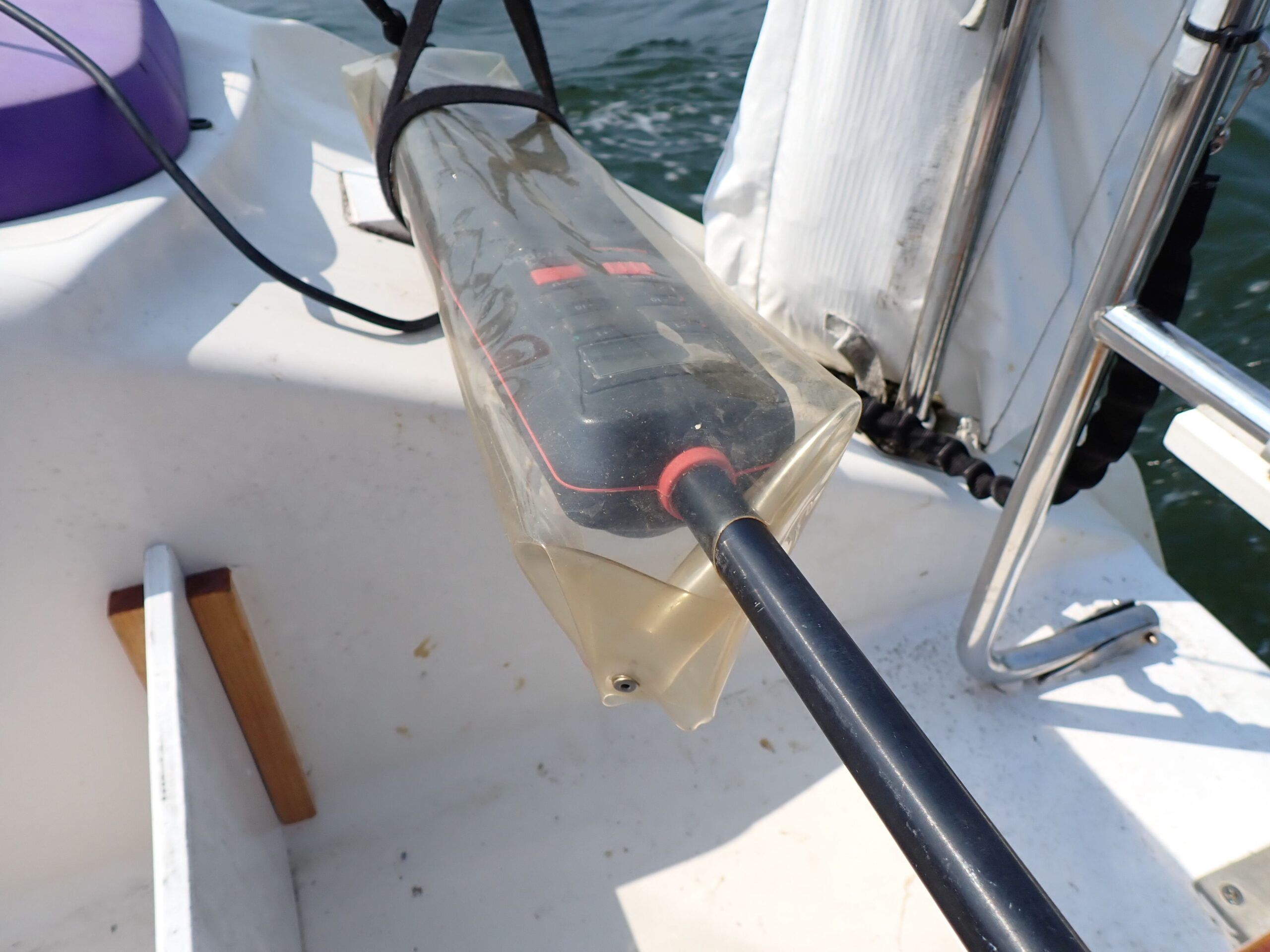
Out of necessity, we decided to make our own. We tested vinyl window materials from 10 to 40 gauge, settling on 10 gauge is as a good balance between durability and flexibility needed to work the keypad.
We wanted a no-sewing design, since that makes it more accessible to our readers. The bottom is open because of heating and to reduce humidity build-up.
- Tailoring was as simple as cutting out a rectangle about 8 inches larger than the tiller pilot in both directions.
- The corners were simply folded over like gift wrap and secured with a single aluminum pop rivet with washer in each corner, like the rivets on at the corners of the pockets of your jeans.
- A close-fitting hole for the piston was cut using a cork borer.
- We secure the butt end with the same OneWrap safety strap that encircles the pilot and prevents loss overboard.
- A second wrap secures it next to the control pad.
This was a 10-minute project, and while a bit crude, after a year’s use it has proven completely functional.
DIY Case Performance
We measure the temperature of the case with and without the cover. It is never more than 5 F above ambient. Bear in mind, however, that we never actually use the cover unless it is raining, overcast and threatening to, or blowing hard enough to pelt us with spray—none of these are overheating conditions. We sailed in the rain a few times. The tiller pilot stayed dry.
If the only goal is to reduce heating, you could just paint the tiller pilot white with three coats of Krylon Fusion. It might last a little longer.
Conclusion
My first tiller pilot, 30 years ago, had its life shortened by water intrusion—the result of many days in the rain. I’m now far more comfortable knowing my helmsman has his foul weather gear on. The clear cover is not going to reduce heating as a white cover would, but it was dead simple to make and we never leave it on in the sun anyway.
Resources:







I bought the UK cover on EBay and have been happy with it. It must have been redesigned because the bottom is open (so no greenhouse effect). initially I balked at the high price and (with shipping from the UK) partly because the best (light) colors where out of stock. Once the version in white became available I ordered, having experienced the “heat stroke” problem. Now I have a new problem: my ST2000 is making noises and operating more slowly than in the past. I fear some internal gears are wearing or need grease. I’m a little hesitant to crack the case open, but nor do I want my four-year-old pilot to die an early death. Any tips on types of grease to use on the gears?
Cracking the case is not a big deal. There is a thin gasket around the perimeter; be careful to get it back in position just so when closing it back up. A little light grease will help it stay in place and help it seal by repelling water.
Any waterproof synthetic grease will be fine. Green Grease (yes, that is a brand) and Superlube Synthetic Grease are good choices. Not too much. A very little grease on the piston shaft as well; wipe off all of the excess.
My pilot is 15 years old. I have opened it and greased it once. It gets regular use, but it is a very light boat.