

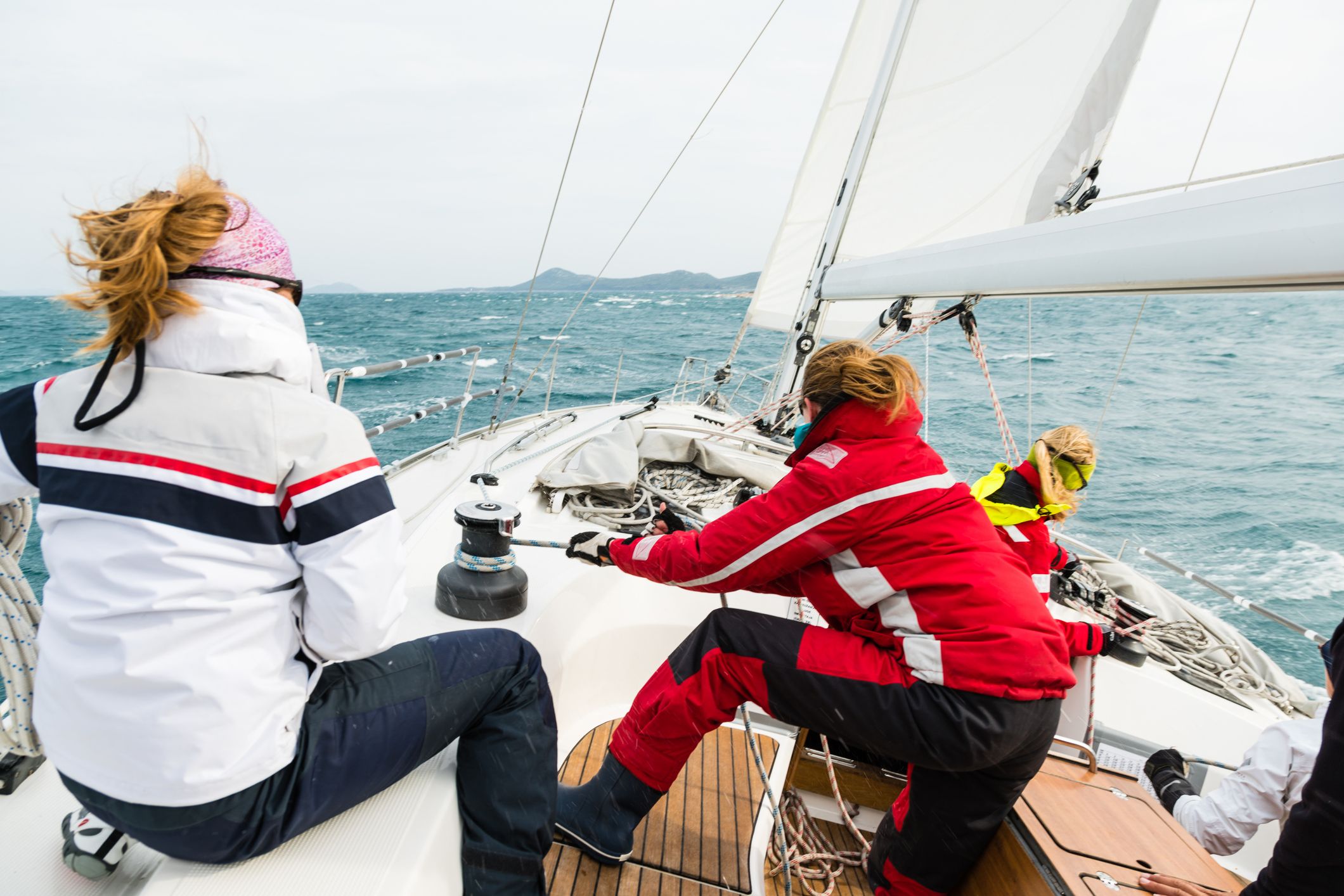
Manufacturers will recommend returning damaged foul weather gear for evaluation, and in some cases there may be remedies under warranty. On the other hand, the gear may be well used, the damage your own darn fault, or you’re cruising and need a fix right now. We’ve long stretched gear to the limit, and these are some things that have worked for us.
Sail Repair Tape
Tape patches are best for clean tears and chafe spots on non‑stretchy areas such as hoods, pockets, and lower legs. Avoid using them across highly loaded seams or elastic cuffs; those areas flex too much and the edges will start to peel. In our experience, once the edges begin to lift or collect lint, it is time to peel the tape off and move on to a stitched or glued patch.
Sail repair tape can work surprisingly well, at least for a while. Get it dry. Round the patch corners to ½-in. radius. Secure one side with any old tape to line up the edges and hold it flat and wrinkle free. Apply the first patch and rub down lightly. Remove the holding tape, apply a matching patch to the other side, and rub the patches down hard with a seam rubber. Covering the patches with the release paper while rubbing will keep them from wrinkling or lifting. Focus on the edges, working from the center outwards.
Sewing works, but it will leak. Best reserved for seam areas when extra strength is needed.
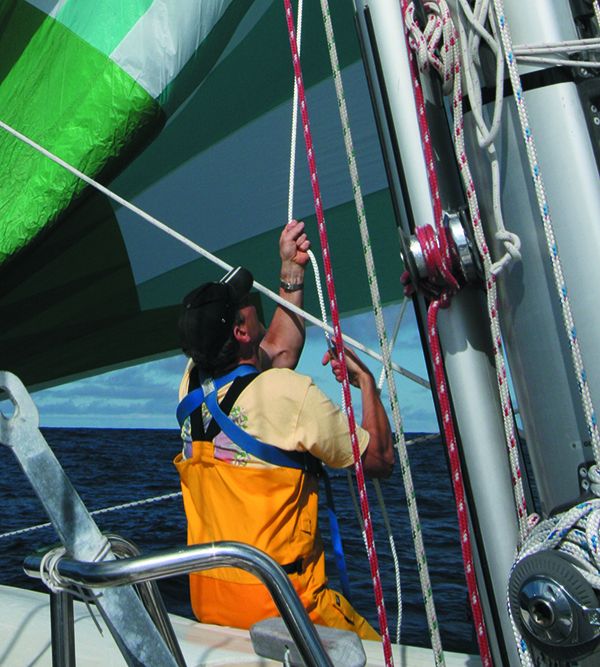
Adhesives
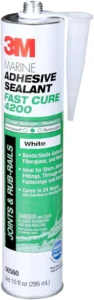
First, pull the edges together with tape from the outside. This way the adhesive residue won’t interfere with the internal patch. Scrub with detergent or wipe hard with solvent to remove all the durable water-repellent treatment (DWR). Like wax, glue won’t stick to it either.
Polyurethane adhesives work in damp conditions (water is the curing agent), but the fabric cannot be soaking wet and they cure slowly. Wipe and pad the fabric with dry towels until not overly damp.
The patch should extend at least 5/8-in. beyond the damage in all directions, and the corners of the patch should be rounded to a ½-in. radius. Coat the repair area with a thin layer, just enough to cover the texture of the fabric. Coat the patch with a slightly thicker layer and rub it down firmly, working outwards from the center. Used Sunbrella is our favorite patch material; it is tough and bonds well. New fabric will resist bonding due to the water-repellent coating.
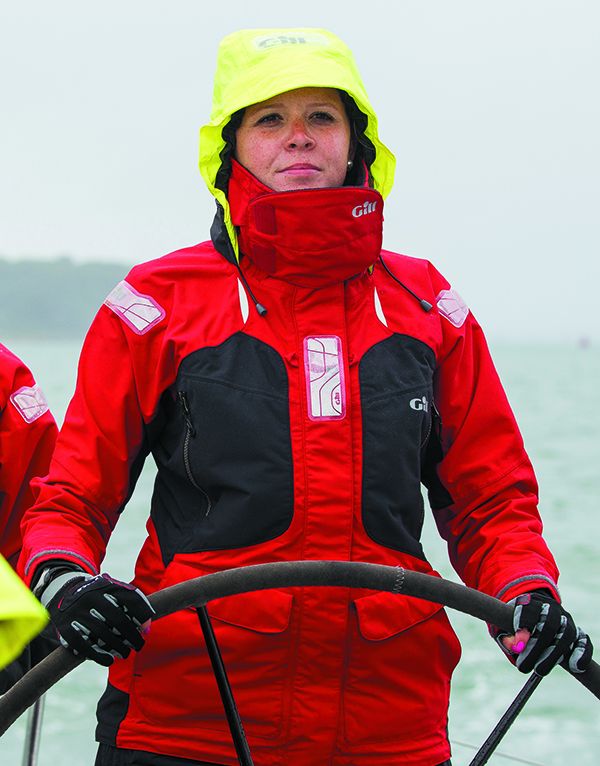
Patch Strength
Adhesive patches can be stronger than a sewn repair, because they do not depend on the integrity of old worn cloth. I’ve run these patches through the laundry countless times on all sorts of work clothes; they outlast the garment, every time. But even in warm weather, several days must be allowed for curing, depending on the product. 3M 4200 Fast Cure and Sika 291 fast cure to a usable state in 24 hours, while 3M 5200 and Loctite PL S40 take several days. Full strength takes about three times longer in all cases. Higher temperatures help.
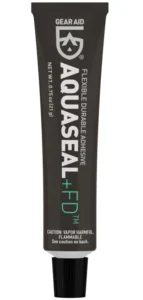
Aquaseal FD, recommended by Patagonia and Marmut, is another polyurethane, but thinner and faster curing. The accelerator reduces cure time to two hours. Good if you are in a hurry.
All of these products are permanent once cured, and most cannot be removed without damaging the fabric, so keep them well away from zippers, storm cuffs, reflective tape, and latex seals. For those areas, stick with tape or purpose‑made seam sealer instead.
Bottom Line
Sail repair tape buys you fast, temporary dry time; carefully bonded fabric patches provide a tougher, longer‑term fix if you can spare the curing time. Take care with surface prep, give adhesives time to cure, and your repairs will generally outlast the rest of the garment—at which point your “good” foulies can retire to deck‑scrubbing duty.








The most common source of leaks is seam tape failure (or improper installation around complex joints). See “Re-sealing the Seams on Waterproof Fabrics” for more details. Often, all you need is a warm iron to re-melt the adhesive, sticking down the existing tape.
The most common cause of seam tape failure, other than (combined with?) age, is wash-in waterproofing products. They can act like paint remover for tape with aging adhesive. Based on many bad experiences, we do NOT recommend wash-in treatments for rain gear more than a few years old. Really, we recommend skipping it entirely.