


When I received a message about surveying a 1989 Freedom 45CC, I knew there was something unique about this sailboat, but I couldn’t remember what it was. A quick search reminded me. The infamous freestanding carbon fiber mast—how can I forget. As I approached the mooring, she looked stunning. I circled her a few times in the dinghy to admire her sleek lines. It was strange to see a mast without rigging, odd with an unfinished look. I rarely get excited about surveying a boat these days, but this was different, something that I had never seen, sailed or surveyed.
History
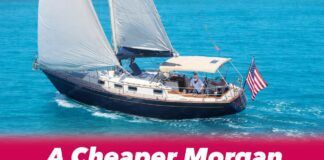
The Freedom 45 Center Cockpit was built with an intent to combine offshore capabilities with an easy to handle sailboat. It was meant to be the best of both worlds: roomy, well laid-out protected accommodations with a freestanding carbon fiber mast reducing deck clutter and shoal wing keel.
Tillotson Pearson Inc. (TPI) was founded in the U.S. in 1968 by Everett Pearson and Neil Tillotson. They were contracted by many other companies to build boats, including J-Boats, Alden Yachts, Alerion Express and Freedom. All Freedom sailboats with unstayed carbon fiber masts were built by TPI including the Freedom 45 CC, which was built from 1987 until 1992. Gary Mull, who had designed the 1986 Freedom 36 Cat Ketch was also contracted to design the Freedom 45. Gary’s resume of sailboats he designed is lengthy and includes boats for Newport, Ranger, Santana and Triton to only name a few.
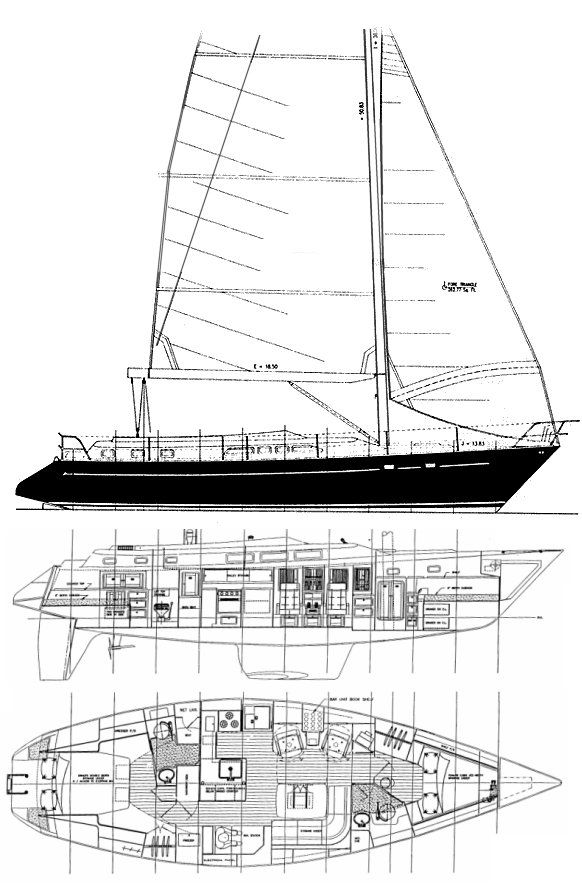
Sailboat Specifications Courtesy of Sailboatdata.com
Hull Type: Wing Keel
Rigging Type: Frac. Sloop (Free standing)
LOA: 45.00 ft / 13.72 m
LWL: 34.40 ft / 10.49 m
S.A. (reported): 731.00 ft² / 67.91 m²
Beam: 13.50 ft / 4.11 m
Displacement: 22,992.00 lb / 10,429 kg
Ballast: 9,500.00 lb / 4,309 kg
Max Draft: 4.92 ft / 1.50 m
Construction: FG
First Built: 1987
Builder: Tillotson Pearson Inc, (USA)
Designer: Gary Mull
Make: Yanmar
Model: 4JH HTBE
Type: Diesel
HP: 66
S.A. / Displ.: 14.52
Bal. / Displ.: 41.32
Disp: / Len: 252.15
Comfort Ratio: 29.54
Capsize Screening Formula: 1.90
S#: 1.91
Hull Speed: 7.86 kn
Pounds/Inch Immersion: 1,659.35 pounds/inch
I: 38.40 ft / 11.70 m
J: 13.85 ft / 4.22 m
P: 50.33 ft / 15.34 m
E: 18.50 ft / 5.64 m
S.A. Fore: 265.92 ft² / 24.70 m²
S.A. Main: 465.55 ft² / 43.25 m²
S.A. Total (100% Fore + Main Triangles): 731.47 ft² / 67.96 m²
S.A./Displ. (calc.): 14.53
Est. Forestay Length: 40.82 ft / 12.44 m
Gary Mull’s design philosophy was to prioritize simplicity, safety and single-handed or short-handed capability. Its key feature is a freestanding carbon fiber mast, which eliminates the standing rigging and the many deck fittings and turnbuckles that require routine inspection and maintenance. Without shrouds and stays, the mast can be thicker and shaped to carry a larger, efficient mainsail.
With a displacement of 22,992 lb., she sails briskly at her hull speed of 7.86 knots. She has a bolted-on wing keel or the optional long keel and a skeg-hung rudder. The cockpit and interior are both very roomy. The interior in particular has a very cozy feeling to it. An aluminum toe rail surrounds the clutter-free deck. When the sails are put away, she moves forward with a powerful Yanmar 66-hp diesel engine.
Deck

The Freedom 45 CC emphasized clear decks from bow to stern. The factory nonskid deck is large and wide with five opening ports. Plus, the rigging-less mast makes walking around safer. On the foredeck is an aluminum bowsprit with a Furlex roller furler and a very large anchor locker. Inside the locker, the Lewmar electric windlass is protected from the elements. The two Barient 28 winches, traveler and primary controls are positioned so the sails can be managed from a central, protected location.
The center cockpit provides a dry, protected helm area that is comfortably sized for two to four people and offers clear visibility forward and aft. Cockpit coamings are deep, which keeps occupants secure while heeling. A comfortable pedestal, SS wheel with instrument console makes helming a treat. The cockpit is designed for sociability as well as function with a fold down table and shelter from spray and sun when combined with a dodger and bimini. A large propane tank locker is located on the port side stern and there’s a same-size storage locker to starboard. A big drawback, however, is that the wing keeled model didn’t offer cockpit lockers.
Interior

The center cockpit creates the traditional Freedom liveaboard plan: a spacious aft cabin with a queen size bed, a private head with shower, generous sink and plenty of stowage. The owner’s stateroom is a selling point with its roomy layout and abundance of opening ports and large hatch. Forward is the galley, saloon and navigation station. The navigation table is large enough to unroll a map to properly plot a course, but a newer chartplotter was added to this particular boat.

Galley
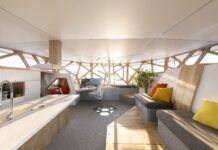
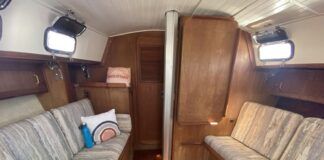
The galley is a decent size with a gimbaled stove/oven, large sink and deep chest fridge/freezer. There is a lot of stowage for spices, dishes, pots and pans. The saloon layout is pleasing and works well. From its inviting thick cushioned settees, to its large expandable wooden dining table, your guests will feel at home surrounded in a well-lit and pleasantly decorated light cherry wood saloon. Forward is the V-berth with its private head, stowage and opening ports and hatch allowing a constant breeze.
Head
An interesting note about the head. The toilets are flushed with fresh water from the water tanks as opposed to using sea water. This helps eliminate odors. The flushed contents are stored in a GRP holding tank located under the sleeping areas. The holding tanks can then be pumped out or discarded overboard via a pump. This is an excellent system and was in working condition.
Finishings
It was 36 degrees Celsius (97 F) on the humid tropical island the day that I surveyed this boat. I took several short breaks to drink some water and cool down near a fan. Each time I looked around I was struck by the craftsmanship and beautiful woodwork and the different shades of wood it offered. With the arch doorway, the inlaid wooden carving, the louvered cabinet doors, and the 6 ft. 6 in. headroom, this vessel is near perfect. It has a warm and comfortable homey feeling. Also, the Freedom isn’t without creature comforts—heating, central air conditioning, and pressurized hot and cold water make your passage even more pleasant.
Performance
Under Sail
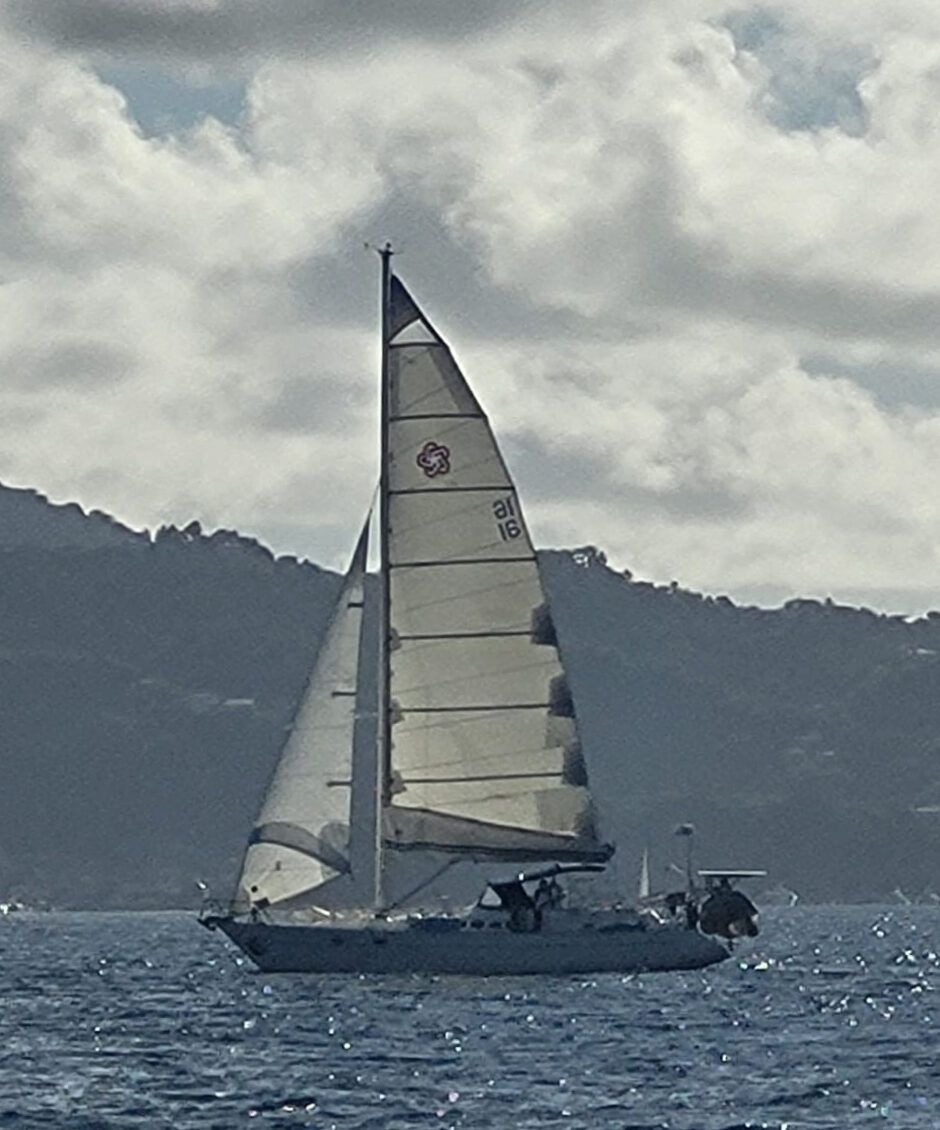
Sailing a Freedom 45 CC is a different experience compared to conventional stayed-rig yachts of similar size. The freestanding carbon fiber mast and relatively large mainsail make the main the primary driver—the boat accelerates on main power and responds to sail trim differently than a traditional sloop with big overlapping genoas. Reefing early and often is suggested. Reducing sail in gusty conditions keeps heel comfortable, preserves rig integrity and generally gives better overall speed if the boat is balanced.
She typically points reasonably well for a cruiser. The wing keel version trades a touch of pointing for accessibility; deep-draft versions will be stiffer and point higher. The boat’s weight and hull form provide a comfortable motion in waves, and the center cockpit reduces cockpit motion and water on deck.
Under Power
Motoring a Freedom 45 is comfortable—the Yanmar 4JH-HTBE diesel engine provides good cruising speed at 7 knots and is reliable. The relatively large displacement and fine entry in the bow make for steady progress. A suitable pitched 3 blade propeller and the well-matched engine return efficient cruise speeds and maintain maneuverability in harbor.
Handling and Helm Feel
The helm with properly trimmed sails on the Freedom 45 is responsive and straightforward. Without standing rigging to trim and tension, the helmsperson focuses on balance and sail trim rather than rig tune. The center cockpit offers excellent sightlines, making close quarter maneuvering easier.
Offshore Capability
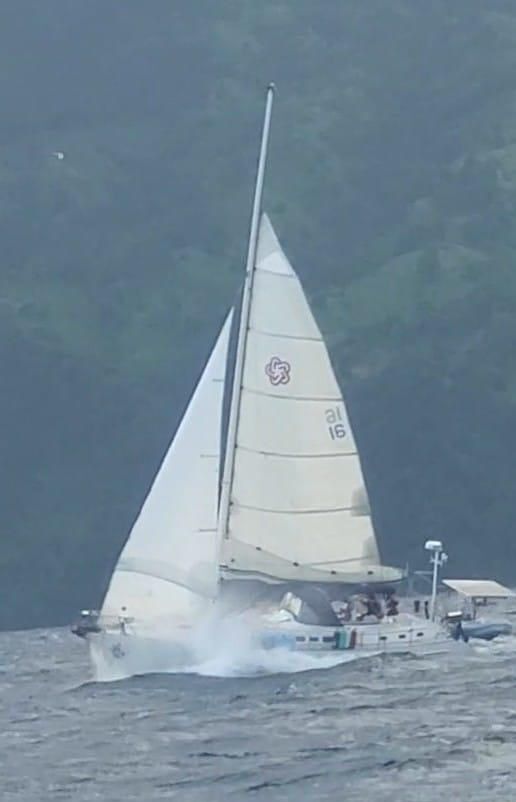
For bluewater cruising, the Freedom 45 CC is a serious candidate. Its protected cockpit, robust accommodations, simplified rigging and capsize screening formula of 1.90 makes it attractive for couples. A capsize ratio is a formula that calculates the boat’s beam in feet by the cube root of its displacement in pounds, divided by 64. A lower result lessens the risk of capsizing, and a value lower than 2.0 is considered safe to sail offshore. Because the rig behaves differently than a stayed rig, practice heavy weather sail plans in safe waters first. The biggest mistake beginners make is not reefing the 465 square foot mainsail early enough. Awareness of the boat’s strengths (and limitations) are critical.
Engine
The 66-hp Yanmar 4JH-HTBE inboard stern is usually paired with a Hurth transmission. Engine access is easy—there’s four entry points to the small engine space located under the cockpit. The sixty-gallon aluminum diesel tank is located in the main salon, mid-ship under the floorboards. The battery bank is also located under the floorboards to starboard just forward of the engine room.
Construction
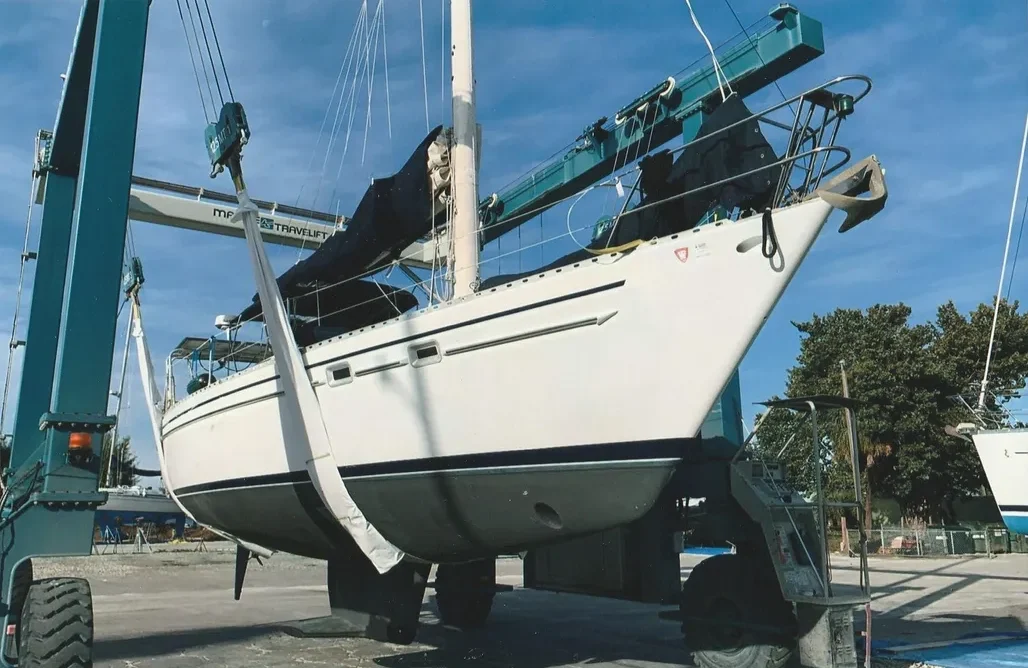
A solid fiberglass hull provides strength and durability. It was hand-laid using isophthalic resin, known for its superior resistance to water penetration and osmotic blistering. The 9,500 lb. lead keel is attached with eight SS bolts. The deck is balsa core, encapsulated with fiberglass and reinforced using unidirectional E-Glass and bolted to the hull in the common ocean-going vessel method; fiberglass composite overlapping hull-to-deck joint using through-bolts.
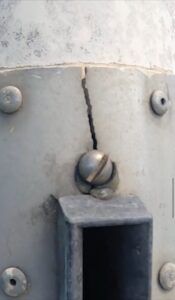
The freestanding carbon fiber mast is a major construction element. Carbon fiber masts have obvious advantages—strength-to-weight, reduced weight aloft, and the lack of standing rigging. But they also demand specialist knowledge for inspection and repair. Many owners report cosmetic surface crazing or micro-cracking in older carbon spars; while often not structurally critical, these features require evaluation by a rigging or spar specialist. In the case of the Freedom 45CC that I inspected, a crack was found in the aluminum plate, located halfway up, that holds the jib box assembly. It was recommended to find a new plate and a new jib box. The mast would need to be removed, and the damage plate sent to a machine shop to have a new one made. A new jib box would either have to be sourced out or fabricated.
Conclusion
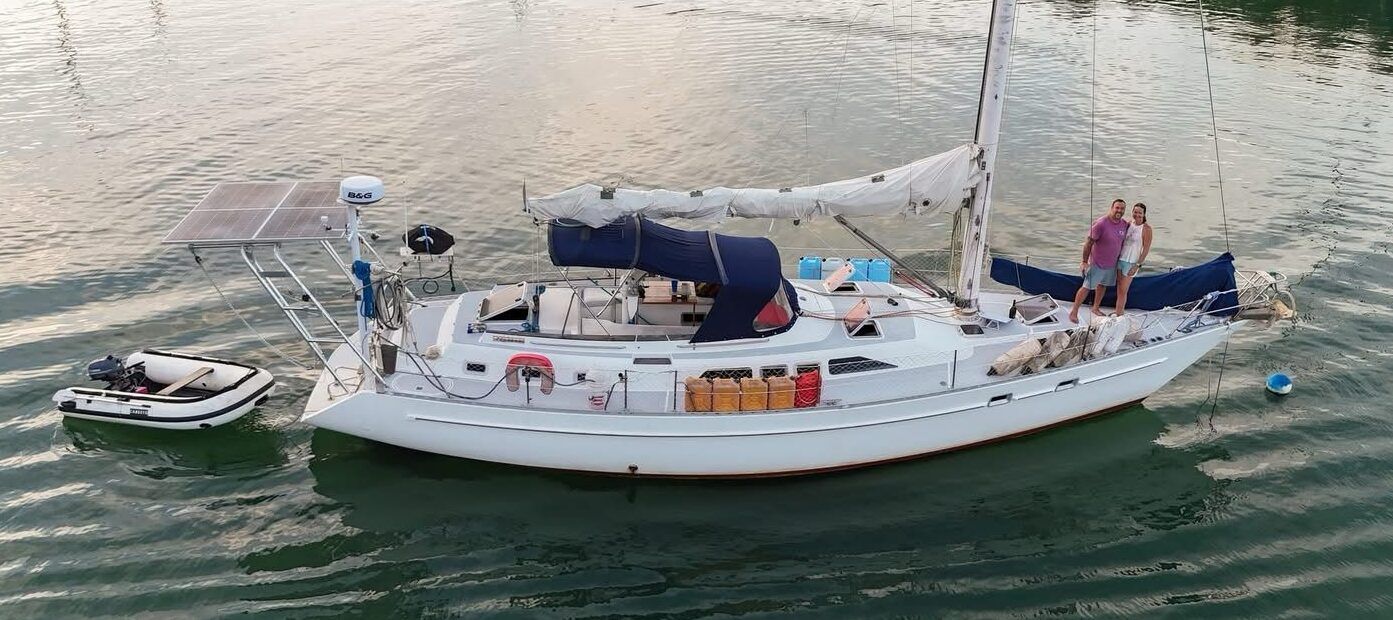
The Freedom 45 CC is a thoughtful cruising yacht with a strong identity: it privileges comfortable, secure living and simplified handling over racing performance. For sailors who value those attributes and who are willing to engage with the unique technical aspects of the design, it can be a deeply rewarding platform for extended cruising and memorable passages.
Strengths:
- Comfortable, private aft cabin and roomy saloon—great for extended cruising and liveaboard life.
- Protected center cockpit that improves safety and comfort underway.
- Simplified rigging and deck arrangement thanks to the freestanding carbon fiber mast—fewer fittings and reduced standing rigging maintenance.
- Good motion comfort and seaworthiness for moderate offshore passages.
Limitations and things to watch:
- Carbon fiber masts require specialist inspection and occasional specialist upkeep; older masts may have surface cracking that needs evaluation.
- Wing keel variants trade some windward performance and recovery ease in groundings for reduced draft.
- As with any older production boat, deck core condition, keel attachment, rudder bearings and underlying systems require careful survey inspection.
- Availability of parts or the scale of specialist repairs can add cost compared with more conventional designs.

Market Scan Contact
1992 Freedom 45 CJ Yacht Sales
$139,900 USD 850-783-1143
Saint Petersburg, Florida Yacht World
1994 Freedom 45 BVI Yacht Sales LTD
$89,000 USD 941-344-3916
Cruising, Sint Maarten (Dutch part) Yacht World
1990 Freedom 45 Windswept Yacht Sales
$89,900 USD 941-202-5456
Longboat Key, Florida Yacht World



It’s an incommplete survey report that repeatedly stresses the importance of early reefing but omits a description and assessment of the ease of use for the reefing methods used.
Either I’m blind or that “ceramic” sink is made of stainless steel …
Freedom 45 has been on my very short list back in 2018 when I was looking for a serious center cockpit offshore cruiser. Many of the described elements here were on my pros, the clean lines, quality construction and ease of handling were major as well as the outstanding interior setup.
Have seen three identical models, have spoken with owners all over the world, but eventually and very sadly declined…(for a Contest 43 CC)
– With the flexible mast, it is impossible to have a furled head-sail and no way to have a genoa… – A furlex has been mentioned in the review here but can’t see it in the pictures which shows the standard hank on with a kind of a self tacking wishbone boom for the very small headsail. Clearly, the main sail is the well proven powerhouse downwind, however, this lady isn’t doing so well upwind.
– Have also found it challenging to reef the huge main and upgrading to an in-boom furling would add around $30K to the cost…
— Yet, whenever I see a Freedom 45 (or 38, 40…) my heart it jumping a bit 🙂
Freedoms are generally old enough now to not necessarily have their original equipment. Mine had the self-tacking jib boom replaced with a Profurl 2.5V2 code zero furler before I bought it. This allows for a greater range of headsail options and negates the fact that the boat doesn’t point like a racer. With the furler and the right sail, you don’t need to point high. The boat moves along “quite smartly” with this configuration. This config was used extensively offshore (although not by me). Reefing is single-line slab, two reefs, led to the cockpit. I love this boat. It is very comfortable in every respect, forgiving, and so beautiful. People actually point, stop to stare, and take photos of it.