To provide the best experiences, we use technologies like cookies to store and/or access device information. Consenting to these technologies will allow us to process data such as browsing behavior or unique IDs on this site. Not consenting or withdrawing consent, may adversely affect certain features and functions.
The technical storage or access is strictly necessary for the legitimate purpose of enabling the use of a specific service explicitly requested by the subscriber or user, or for the sole purpose of carrying out the transmission of a communication over an electronic communications network.
The technical storage or access is necessary for the legitimate purpose of storing preferences that are not requested by the subscriber or user.
The technical storage or access that is used exclusively for statistical purposes.
The technical storage or access that is used exclusively for anonymous statistical purposes. Without a subpoena, voluntary compliance on the part of your Internet Service Provider, or additional records from a third party, information stored or retrieved for this purpose alone cannot usually be used to identify you.
The technical storage or access is required to create user profiles to send advertising, or to track the user on a website or across several websites for similar marketing purposes.


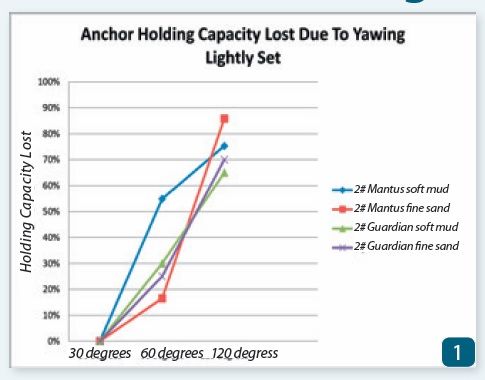
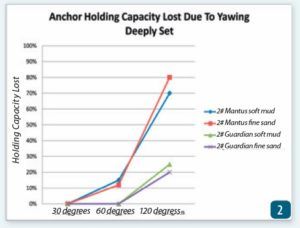
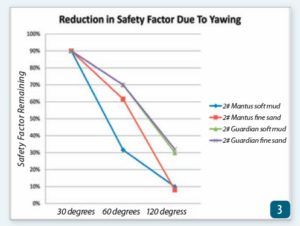







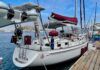
I learned what you studied from (too many) practical experiences. The remedy, IMHO, is to set a second anchor at a good angle off the bow (60 to 90 degrees) in shifty winds. With this rig, we have weathered a strong Meltemi gusting from different angles when coming around a peak, while in the Aegean, as well as a full gale/small storm while hiding in an cove in Hanish Island in the Red Sea. I have renamed this rig “The Captain Gets To Sleep At Night” rig, as otherwise I was up every 30 minutes checking my GPS track.
Any mention of using two anchors is bound to start a vigorous water cooler debate. Many believe that one large anchor is the right answer all the time. It is simpler, and with modern anchors, they’re right 95% of the time, depending on the location. But there are circumstances where two anchors can really calm things down, and they should not be hard to set or recover, with the right technique and practice. Please read “Doubling Up,” September 2016.