A vessel’s drive train is typically defined as the components between the engine transmission coupling and the bitter end of the propeller shaft. For traditional drive trains, this includes the propeller, shaft, cutlass bearing and packing gland, although the list could also be expanded to encompass ancillary items such as the rudder, engine mounts, and engine bedworks. Here’s a look at two major drive train components you should know and what to look for when inspecting each.
Propeller
Start your drive train inspection where the metal meets the water—your propeller. Look for nicks, dings, cracks, and corrosion, while also keeping an eye out for rolled tips or bent blades. Blades that are distorted or even slightly out of true due to soft damage (a result of running through silt or sand for example) can decrease performance and cause vibration. Worse still, as blade damage in such cases is rarely uniform, imbalance vibrations can cause additional damage to engines, drives and transmissions. Props with worn blades can also allow an engine to accelerate beyond recommended RPM, possibly causing engine damage.
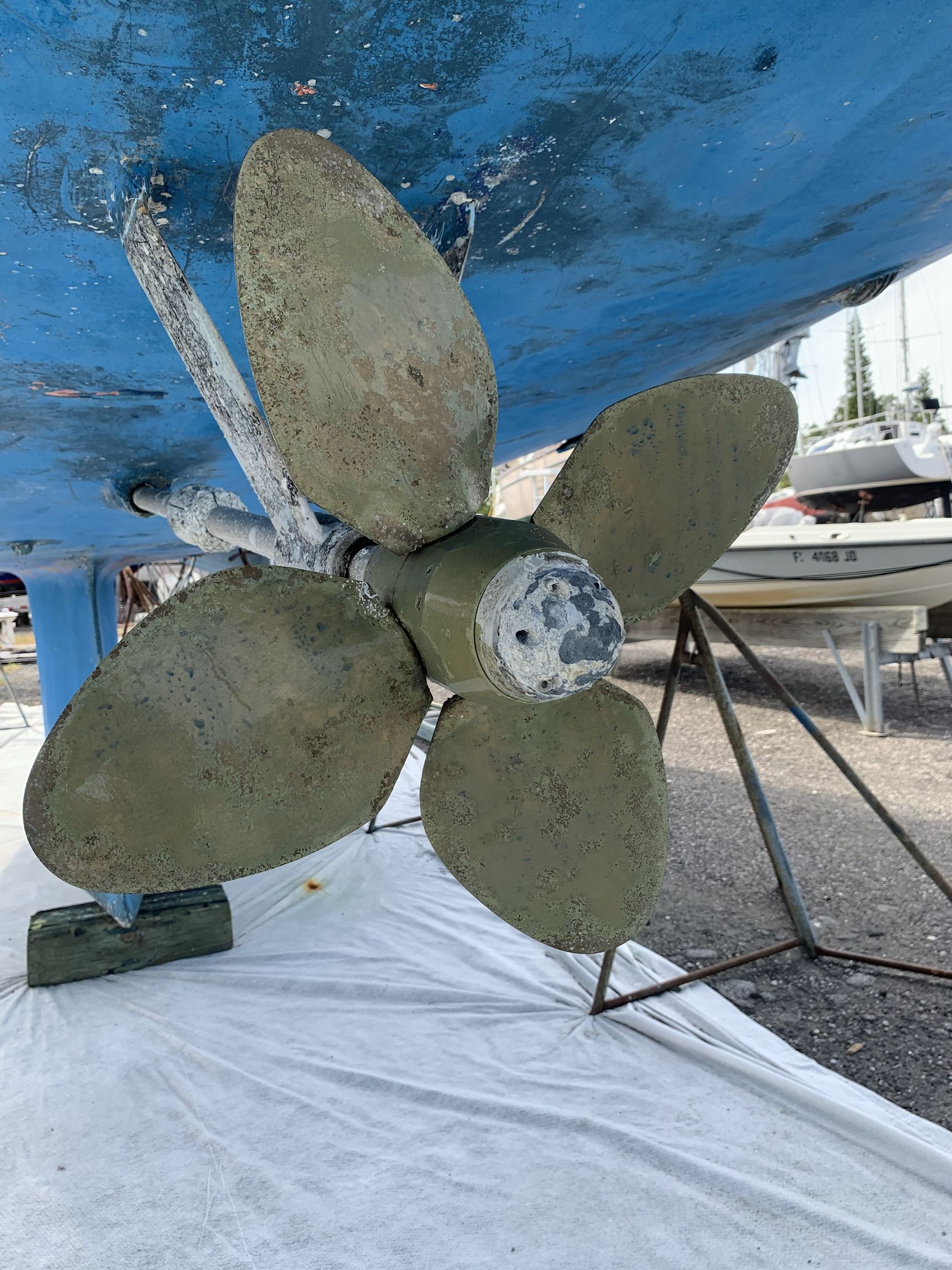
The good news is that damaged propellers can often be repaired (many times in place while hauled) or pulled for reconditioning by a prop shop, often for a lot less than the cost of a new prop.
Minor nicks and dings on the blade edges can be carefully tapped back into shape using a small hammer and steel backing block (those sold for auto body fender repairs work well for this). Repaired edges can then be smoothed by carefully using a fine grade hand file.
Small cracks and damage along the outer edge of the blades can typically be welded or repaired, but propellers missing more than a third of a blade or showing cracks at the root or base of the propeller are likely candidates for replacement. The same is true for those suffering from severe corrosion.
Cutless Bearing
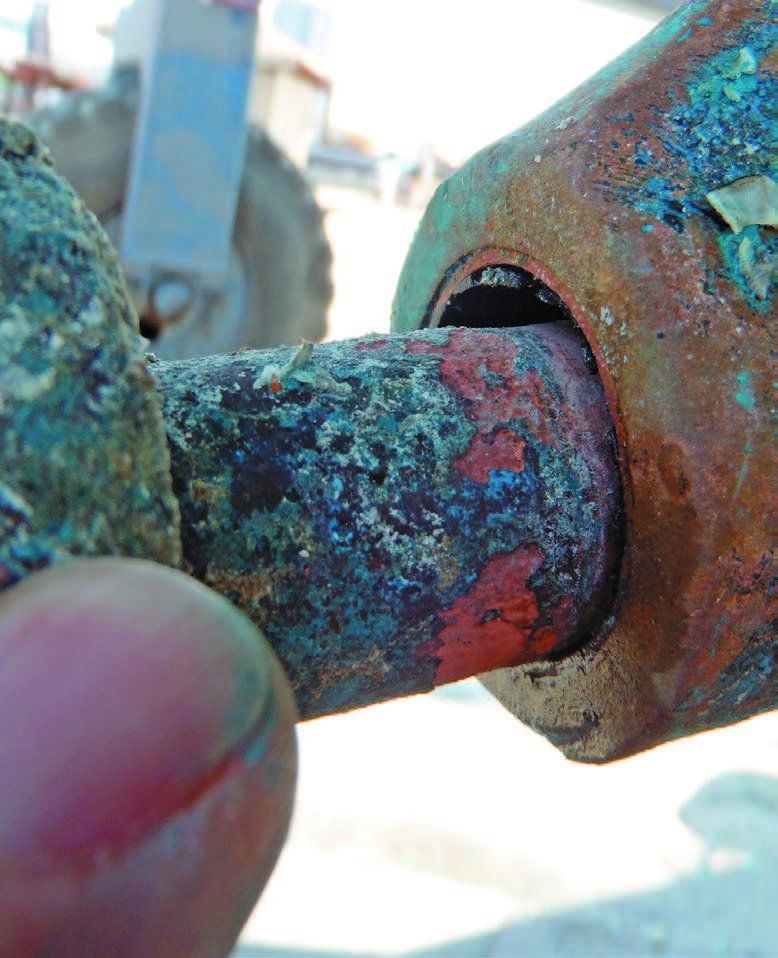
The cutless bearing supports the propeller shaft of your vessel while allowing it to turn freely without damage. Cutless bearings are typically made of brass with an interior rubber lining, which contains grooves running the length of the bearing. These grooves allow water to enter the cutless bearing to keep everything cool and lubricated while the shaft rotates within. Problems occur when the bearing lining (and grooves) wear down, which both reduces the flow of cooling water and introduces looseness or play in the bearing.
To determine if your cutless bearing needs replacing, look for signs of wear or deterioration at both ends of the bearing. Rapid or unusual wear patterns (i.e. top wear on one end of the bearing, bottom wear on the other) are indications of significant shaft misalignment issues and should be addressed immediately.
Next, simply grab the prop or shaft and give it a couple of good, firm shakes to detect shaft looseness within the bearing. Slight movement (say 1/16 or so) is borderline, but if you can produce visible shaft wiggle or an audible thunk when shaking the prop, the bearing is definitely due for replacement.
Capt. Frank Lanier is an accredited marine surveyor with over 30 years of experience in the marine industry. His website is www.captfklanier.com.
This article was first published on 18 December 2018 and has been updated.