

In the series of articles “Lithium Batteries for Small Boats,” “Lithium Batteries for Small Boats: Install Guide” and “Lithium Batteries for Small Boats: Troubleshooting” we concluded that a practical configuration for the typical sailboat is to retain lead acid on the start side and upgrade to LiFePO4 technology on the house (or leisure) side. This article builds on that by exploring what to look for in selecting such a LiFePO4 battery.
The Lithium-ion Market Is a Zoo
The LiFePO4 market has become very competitive. In addition to a handful of established U.S. and European brands, we have multiple Chinese companies selling directly into Western markets. Some of them clearly have the intention of building a long-term presence with the appropriate infrastructure, while others seem to periodically change their brand name. Somewhere in between, we have Western companies that manufacture in China with varying degrees of control over specifications and quality.
On top of this we have political sensitivities. To illustrate just one of the challenges, according to SNE Research, the largest manufacturer (and by some accounts the technology leader) of energy storage batteries, with 37.9 percent of the global market in 2024, is CATL (Contemporary Amperex Technology Co.), a Chinese company. In 2023, their batteries were ordered to be disconnected from a U.S. Marine Corps base, referencing security issues. Perhaps unsurprisingly, I did not come across any CATL-branded batteries in preparing this battery guide.
Category one Category one Category three
With heating & bluetooth With Bluetooth, No Heating No heating, no bluetooth
1 2 3 4 5 6 7 8 9 10 11
Sterling Power Abyss Abyss Eco-Worthy Dakota Xantrex Relion, Victron Relion, Li Time Goldenmate
Model No. LH12300 AB-12V350-BT AB-12V150-BT None 21179726 883-0240-12 RB300 BAT512120705 RB200 B0BYH8J176 B0CZRQK3CG
Voltage 13V 12V 12V 12V 12V 12V 12V 12V 12V 12V 12V
Capacity 300ah 350ah 150ah 280ah 320ah 240ah 300ah 200ah 200ah 230ah 300ah
Max charge 1c (310A) 0.5c (175A) 0.5c (75A) 0.6c (160A) 0.3c (107A) 0.6c (150A) 0.33c (100A) 0.35c (70A) 0.5c (100A) 0.8c (200A) 0.5c (150A)
Max Discharge (peak) Not Claimed 300ms: 2.3c (800A) 1,200A Not Claimed 2 Second: 3.3c (1,000A) 3 second 1.25c (300A) 0.67c (200A) 0.5c (100A) 1c (200A) 1 Second: 4c (1,000A) 5 Second: 1.3c (400A)
10 Second: 1c (300A) 5 Second: 3c (600A)
Max Discharge (continuos) 1c (310A) 0.67c (200A) 1c (150A) 0.8c (200A) 0.67c (200A) 0.6c (150A) 0.33C (100A) 0.35c (70A) 0.5C (100A) 0.8c (200A) 0.67c (200A)
Dimensions 470 x 190 x 240 mm 527 x 283 x 250 mm 331 x 173 x 240 mm 453 x 238 x 221 mm 330 x 173 x 240 mm 500 x 180 x 260 mm 522 x 267 x 220 mm 520 x 269 x 208 mm 521 x 267 x 220 mm 6.7"D x 19"W x 9.5"H 523 × 269 × 218 mm
Heating 100W No No No No No No No No No No
Blue Tooth Yes Yes Yes Yes No No No No No No No
Price $681.20 $3,499.99 $1,599.99 $499.99 $2,399.99 $1,849.99 $1,224.98 $1,198.48 $860.98 $499.99 $322.99
(Includes charger)
The market can therefore be described, at best, as competitive and might better be described as cutthroat. The fight for market share is driving falling prices and, of direct concern to us, exaggerated specification claims (the same is also true of solar panels).
Exaggerated Specifications
We explored one such example in the article “Lithium Batteries for Small Boats,” where we noted that some battery manufacturers routinely abuse the term Cold Cranking Amps (CCA), which by definition is 30 seconds of current at 0 degrees F (minus 18 degrees C). Claims, therefore, of 800 or 1,000 CCA for a few milliseconds or seconds are illogical—a heavy diesel on a cold start needs some time to crank (hence the 30-second standard).
Moreover, for the safe operation of LiFePO4—no matter how brief the duration—the battery would require both individual cells and the BMS to safely manage such high currents. Other manufacturers exercise some caution, therefore, and only quote a continuous maximum discharge rate. In general, therefore, be cautious of how the term CCA is used and with claims that the maximum discharge capability can exceed “1 C” (e.g. max 100 amps from a 100 ah battery). Note also that the ABYC E-13 Standard leans away from starting loads for LiFePO4, favoring lead acid for such short, high load service—for very good reasons.
As a general rule, it is helpful to compare more conservative numbers with the more aggressive claims and ask which number is more credible. As an example, Victron recommends a maximum charge rate of 0.35 C, whereas other claim higher rates. Ask yourself—does this reflect a difference in chemistry or a difference in marketing strategy?
Why Bluetooth?
Bluetooth is a useful feature not found on less expensive batteries. You will need to dig into specifications to learn precisely what communications are possible, however. The most obvious use is to connect to a dedicated app that enables basic battery monitoring.
Another useful feature is the ability to communicate with an external BMS, which is desirable if your installation includes multiple batteries in series or in parallel. Additionally, the new ABYC E-13 Standard references the need for the battery to externally communicate, but their priority focus was on having the means to warn an operator that a full BMS shutdown was about to occur, e.g. a safety issue.
It is therefore well worth asking what functionality a given Bluetooth capability offers.
Sizing and Configurations
As a general rule, it will always be preferable to buy a single larger battery of the appropriate voltage level, rather than to assemble a set of batteries in series or in parallel. To give just one reason—the popular YouTube Channel, Sailing Uma, concluded that for their next install, they need an external BMS, with the communications to match, whereas their previous installation relied on individual BMSs. This setup often failed (presumably due to imbalances between batteries), requiring a full system reboot.
A further reason for going with a single larger battery is that they learned that AYBC—13 demands that each battery has its own Class T fuse, which are expensive and require space to accommodate.
Battery Selection
To try and make sense of this world, I concluded that it would be best to examine what the large retailers are willing to put their names behind, on the assumption that they are better placed to question suppliers. West Marine stock Relion, Dakota, Abyss and Xantrex. Amazon.com offers a wide range of brands but only Eco-Worthy, Li Time and Goldenmate achieve a rating higher than 4.6, over more than 100 sales. In Europe, SVB offers Eco-Worthy, Liontron and Victron. These brands are therefore the basis of the comparison table. I also included Sterling Power, as we suggested their converter in a previous article.
Factors to Consider
The following comparison table is laid out to compare eight key metrics.
I did not evaluate weight, even though it is often marketed, as I am not convinced a lighter battery is a plus. Alternatively, some manufacturers have taken the approach of protecting their battery in a steel case, making them less vulnerable to puncture and therefore safer.
Electrically, the key factors considered are charge and discharge limits.
I have included prices, somewhat reluctantly, as sales and discounts are ongoing all the time and you may find significantly better (or possibly worse) pricing than I show here. As a footnote on pricing, these are USD prices, mostly found on U.S. websites before any delivery or sales tax (or, if from a European website, less VAT and converted to USD).
Finally, I should add that all lithium-ion batteries, including LiFePO4, are subject to Class 9 HAZMAT shipping instructions. These regulations make airfreight shipments extremely difficult. Sea freight shipments are possible but with restrictions and even road freight has its own restrictions. Consequently, while it’s theoretically possible for you to buy and ship a single battery from another country, you may find that you are restricted to the batteries available in your own domestic market.
1. Sterling Power LH12300
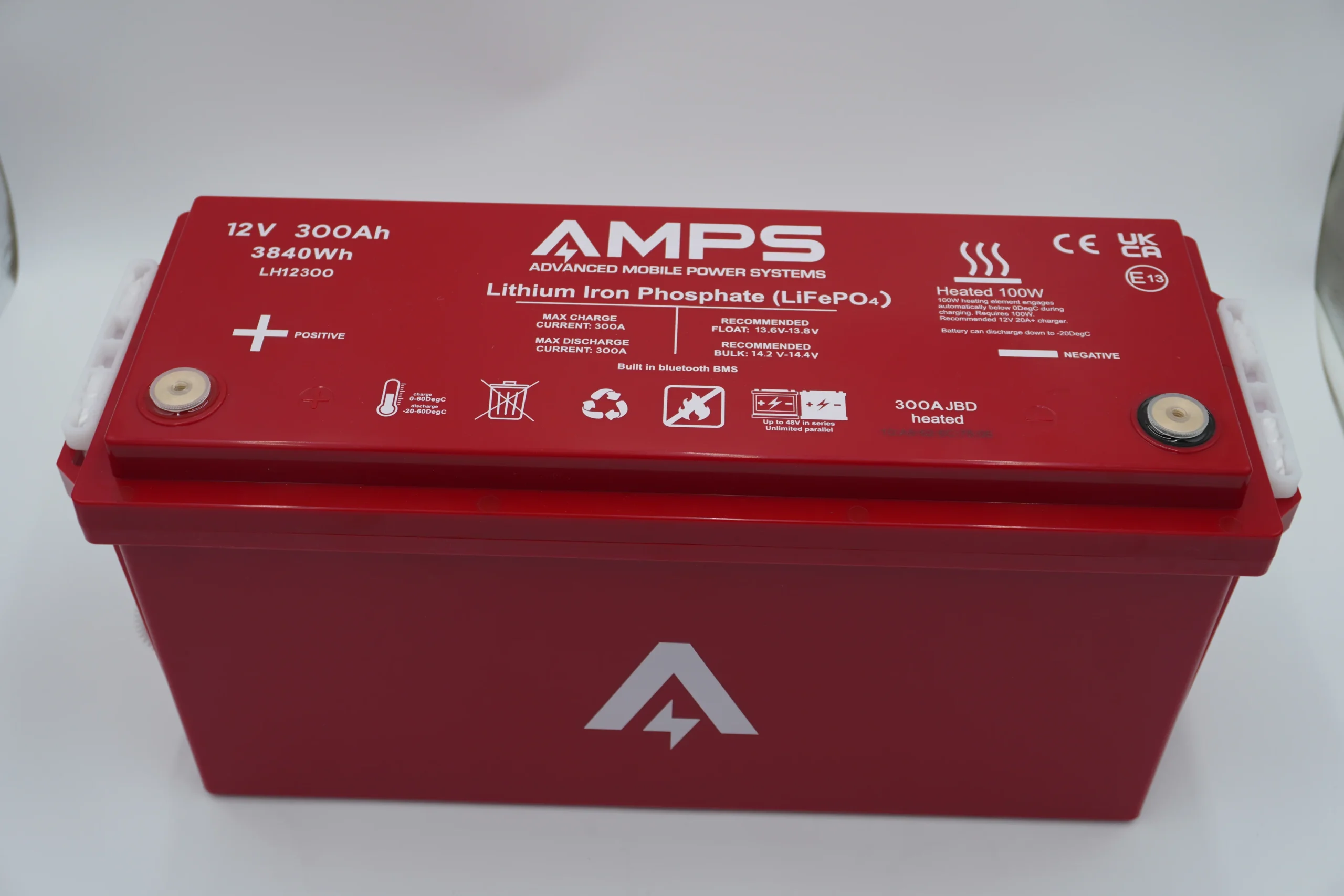
Description: Sterling Power is a U.K. company, with support operations in the U.S. Their focus is broad, from off-grid installations to RVs and marine. Their product range includes DC-to-DC converters, inverters, solar controllers etc., as well as a wide range of LiFePO4 batteries. Their LH12300—a 12 V, 300 ah battery—is the only battery in our summary with both internal heating and Bluetooth connectivity. Note: The author can personally confirm that Sterling has excellent technical support.
Voltage: 13 V
Capacity: 300 ah
Max charge: 1 C (310 A)
Max discharge (peak): Not claimed
Max discharge (continuous): 1 C (310 A)
Dimensions: 470 x 190 x 240 mm
Heating: 100 W
Bluetooth: Yes
Price: $681.20
2. Abyss AB-12V350-BT
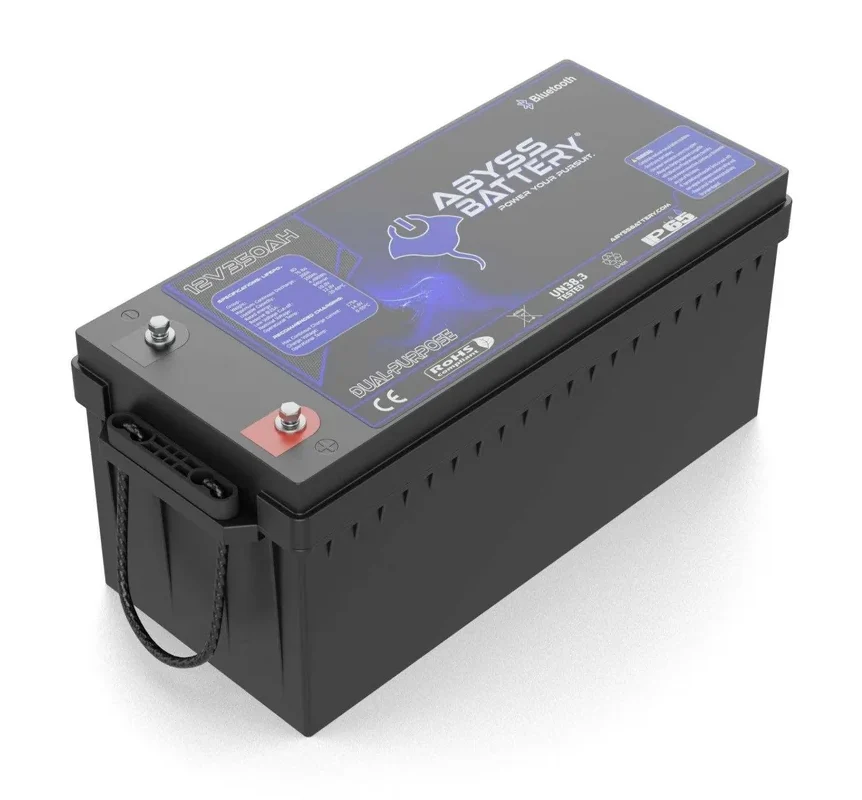
Description: Abyss is a U.S.-based company, and they state that their batteries are manufactured in the U.S. Their focus is on the marine market, with a particular emphasis on saltwater sports fishing and their products are sold by West Marine. They describe the AB-12V350-BT as “dual purpose,” intending it to be used for both energy storage and starting large outboard or diesel motors. This model includes an “Emergency Power Reserve Button” to enable engines start, when voltage is low.
Voltage: 12 V
Capacity: 350 ah
Max charge: 0.5 C (175 A)
Max discharge (peak): 300 ms: 2.3 C (800 A)
Max discharge (continuous): 0.67 C (200 A)
Dimensions: 527 x 283 x 250 mm
Heating: No
Bluetooth: Yes
Price: $3,499.99
3. Abyss AB-12V150-BT
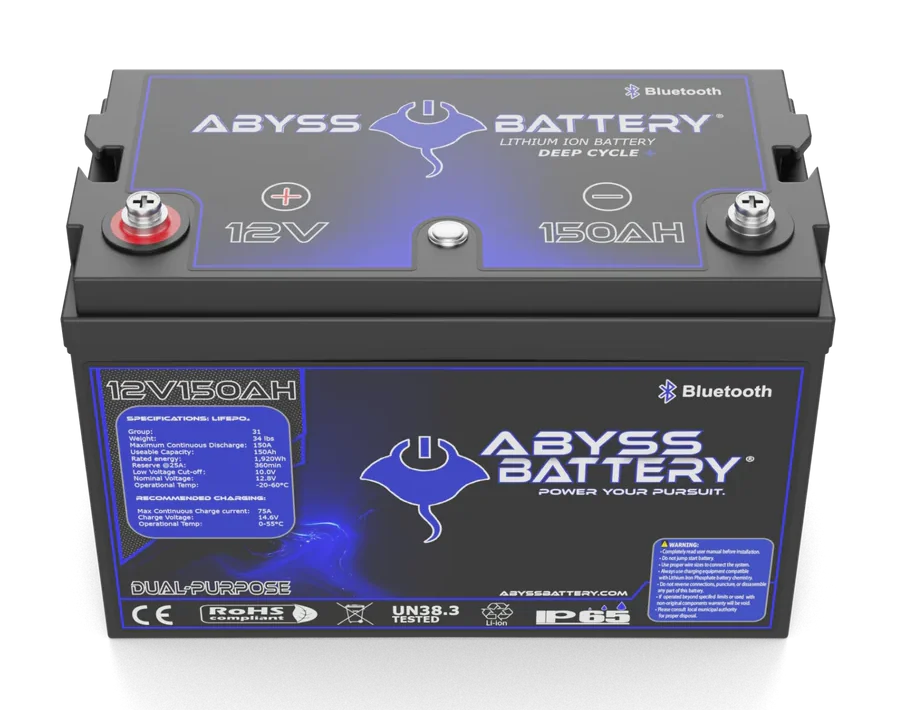
Description: This is another Abyss battery, also sold by West Marine and a smaller, 150 ah version of the “dual purpose” battery we just reviewed. It also includes the “Emergency Power Button” facility for engine start under low voltage conditions.
Voltage: 12 V
Capacity: 150 ah
Max charge: 0.5 C (75 A)
Max discharge (peak): 1,200 A
Max discharge (continuous): 1 C (150 A)
Dimensions: 331 x 173 x 240 mm
Heating: No
Bluetooth: Yes
Price: $1,599.99
4. Eco-Worthy
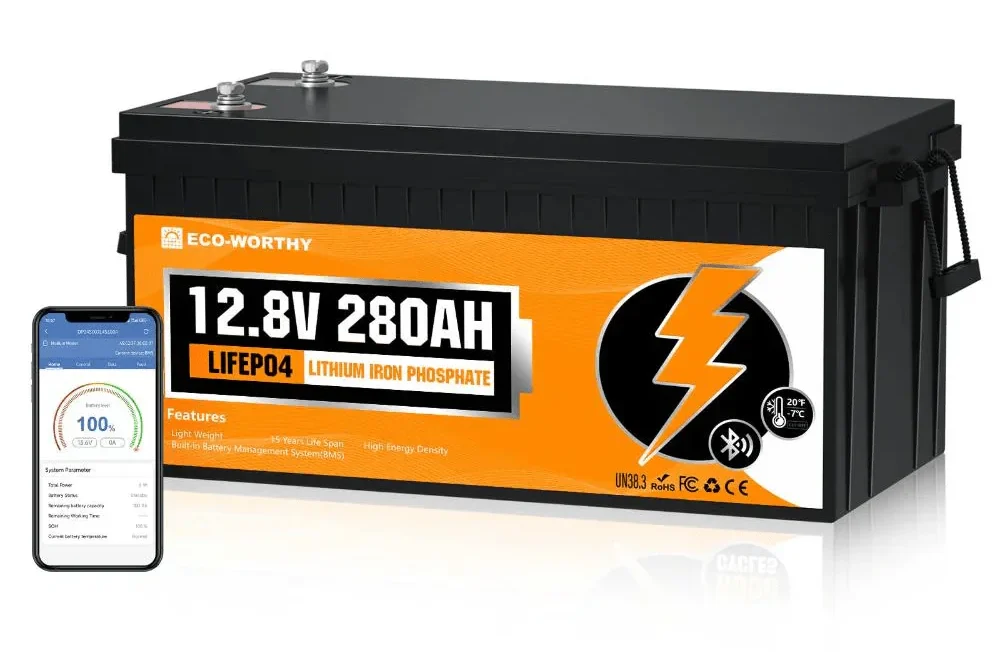
Description: Eco-Worthy is a Chinese company that has offices and technical support in both the U.S. and U.K. They sell directly—through Amazon in the U.S. and U.K., and through SVB in continental Europe. They are, therefore, one of the more international brands, which also includes inverters and solar panels. Their focus is broad, including energy storage, RVs etc. as well as the marine market. Their battery specifications are some of the more conservative, with no peak discharge current claimed. Note: The author purchased one of these in Panama, and it is working well. When there was a question, the technical support team were fully responsive.
Voltage: 12 V
Capacity: 280 ah
Max charge: 0.6 C (160 A)
Max discharge (peak): Not claimed
Max discharge (continuous): 0.8 C (200 A)
Dimensions: 453 x 238 x 221 mm
Heating: No
Bluetooth: Yes
Price: $499.99
5. Dakota 21179726
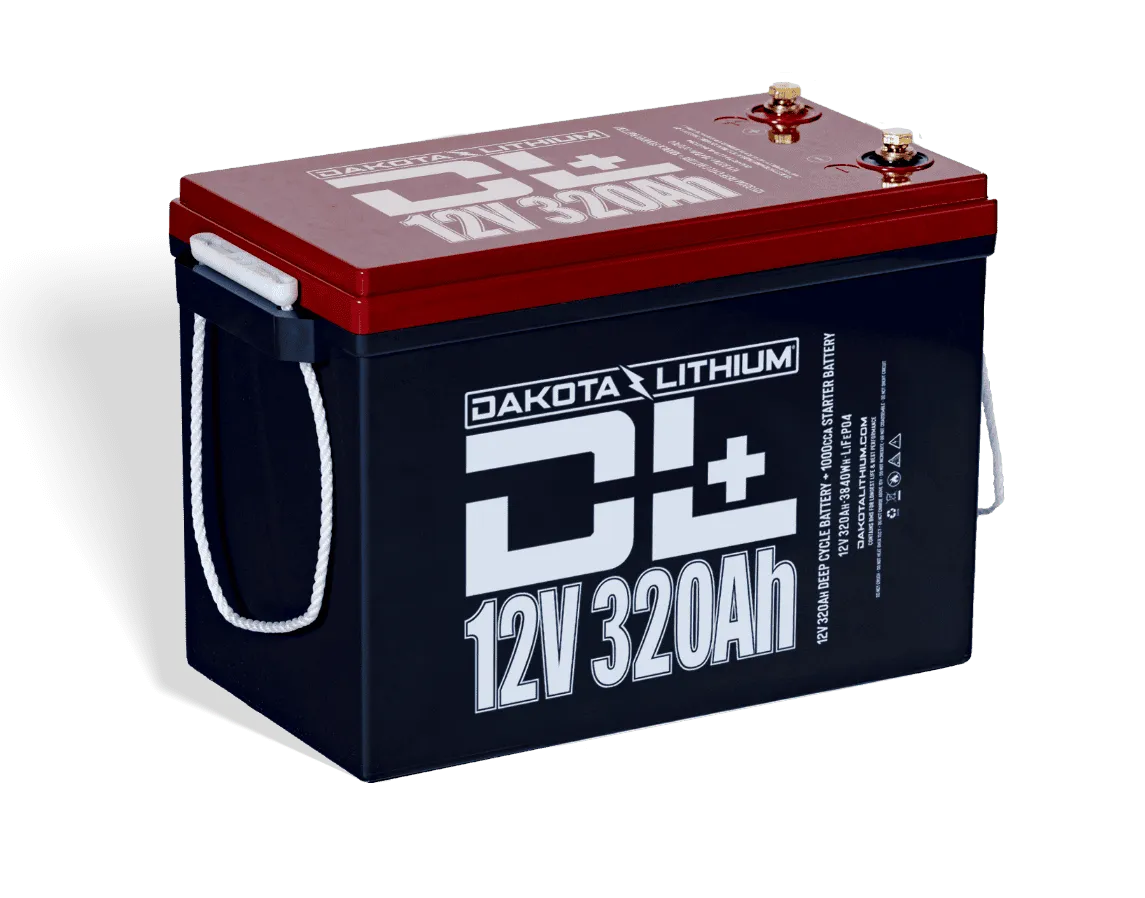
Description: Dakota Lithium was one of the original U.S. producers, although it is now not clear where their batteries are made. Their website now makes no claims as to origin and some users have said that their recent purchases have come with a “made in China” sticker. Both West Marine and Amazon sell their batteries and their focus is broad, including off-grid, golf cart batteries, RVs and marine. They claim the 320 ah battery to be “dual purpose,” thereby being suitable for both energy storage applications and the starting of engines.
Voltage: 12 V
Capacity: 320 ah
Max charge: 0.3 C (107 A)
Max discharge (peak): 2 second: 3.3 C (1,000 A); 10 second: 1 C (300 A)
Max discharge (continuous): 0.67 C (200 A)
Dimensions: 330 x 173 x 240 mm
Heating: No
Bluetooth: No
Price: $2,399.99 (includes charger)
6. Xantrex 883-0240-12
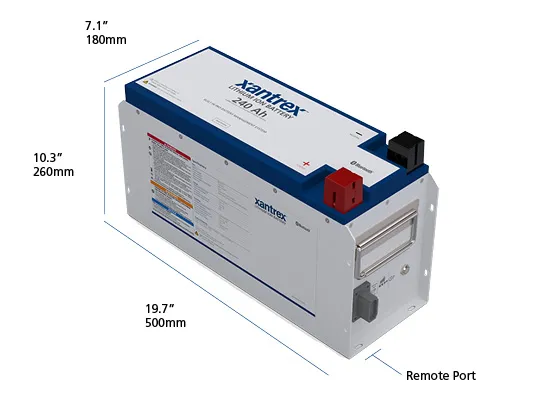
Description: Xantrex is a Canadian company that makes a range of inverters, battery chargers, solar products, etc., and LiFePO4 batteries, also focused across a broad range of industries. Their website makes no statement as to where their batteries are produced and their products are sold by West Marine.
Voltage: 12 V
Capacity: 240 ah
Max charge: 0.6 C (150 A)
Max discharge (peak): 3 second: 1.25 C (300 A)
Max discharge (continuous): 0.6 C (150 A)
Dimensions: 500 x 180 x 260 mm
Heating: No
Bluetooth: No
Price: $1,849.99
7. Relion RB300
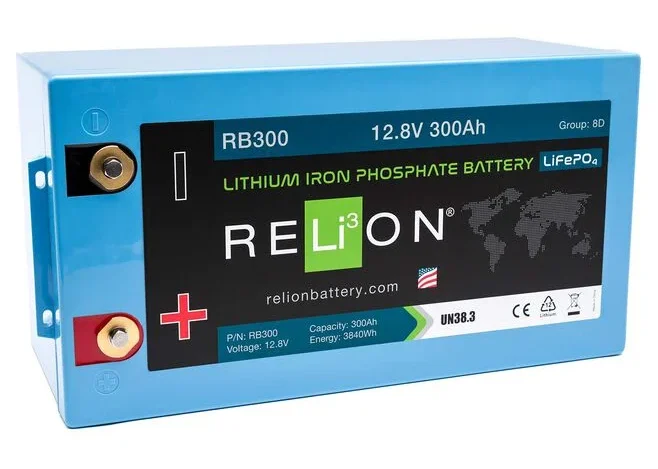
Description: Relion represents itself as a global company, with locations across seven continents, with a technology center in China and a U.S. head office. Their sole focus is on lithium-ion batteries, with applications across all sectors. Their products are sold by West Marine in the U.S. Their battery specifications are some of the more conservative, with a very modest claim on peak discharge current.
Voltage: 12 V
Capacity: 300 ah
Max charge: 0.33 C (100 A)
Max discharge (peak): 0.67 C (200 A)
Max discharge (continuous): 0.33 C (100 A)
Dimensions: 522 x 267 x 220 mm
Heating: No
Bluetooth: No
Price: $1,224.98
8. Victron BAT512120705
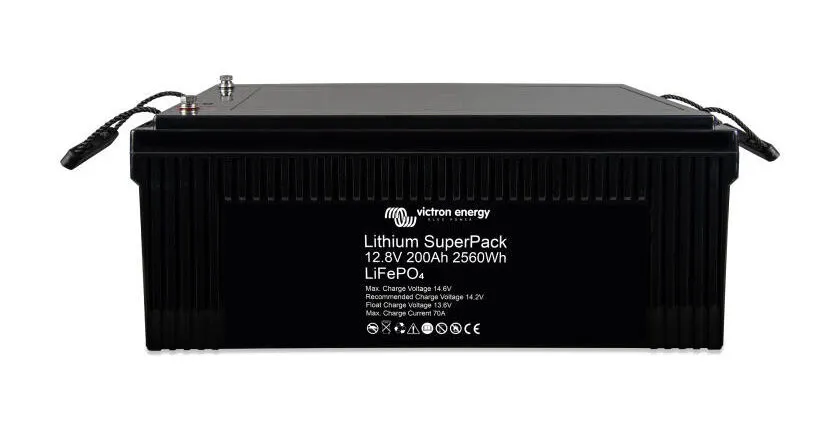
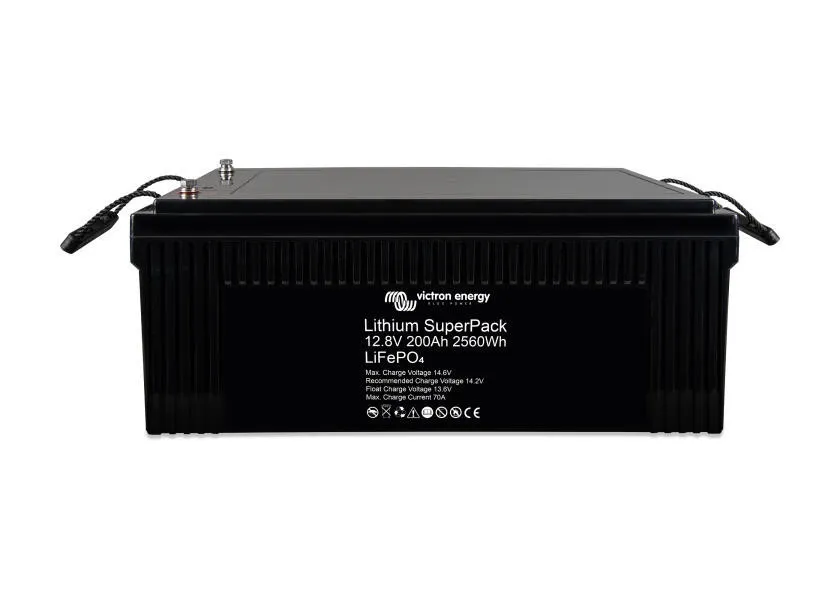
Description: Victron is, of course, a household name for solar controllers, inverters, controllers etc. but they also sell a range of LifePO4 batteries. They are headquartered in the Netherlands, with operations across the globe. Their battery specifications are generally conservative. If you are considering a complex set up—such as multiple batteries in series or parallel, possibly for propulsion needs—it would be well worth investing some time in exploring what Victron can offer in terms of data sharing between equipment and batteries.
Voltage: 12 V
Capacity: 200 ah
Max charge: 0.35 C (70 A)
Max discharge (peak): 0.5 C (100 A)
Max discharge (continuous): 0.35 C (70 A)
Dimensions: 520 x 269 x 208 mm
Heating: No
Bluetooth: No
Price: $1,198.48
9. Relion RB200
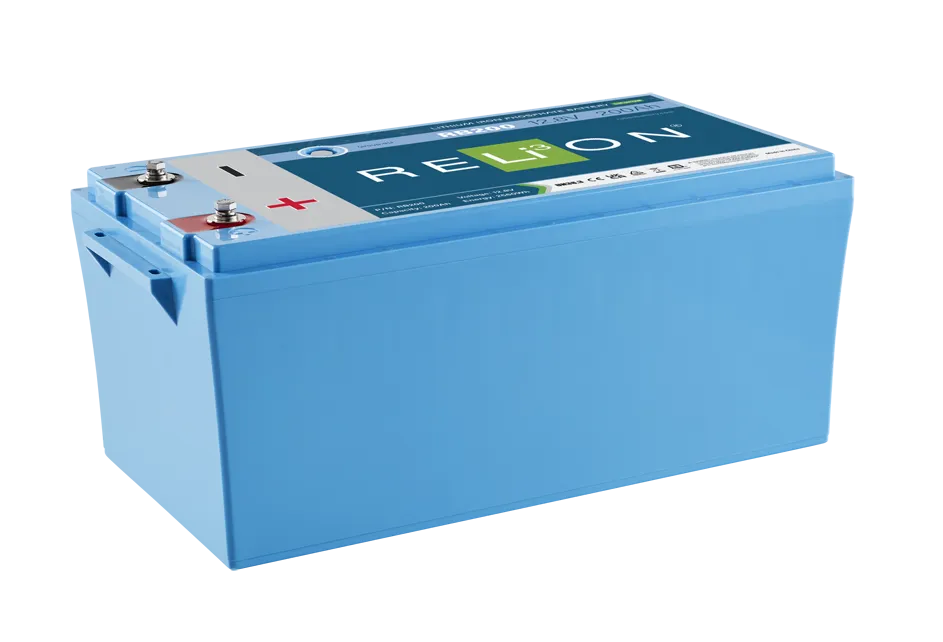
Description: This is another Relion product, also sold by West Marine in the U.S. and, at 200 ah, the baby brother of the product we just looked at.
Voltage: 12 V
Capacity: 200 ah
Max charge: 0.5 C (100 A)
Max discharge (peak): 1 C (200 A)
Max discharge (continuous): 0.5 C (100 A)
Dimensions: 521 x 267 x 220 mm
Heating: No
Bluetooth: No
Price: $860.98
10. Li Time B0BYH8J176
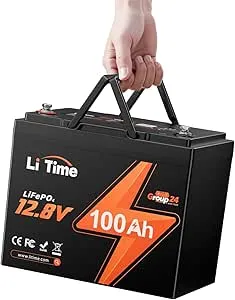
Description: Li Time is a Chinese based company, that was recently rebranded from the former Ampere Time. Beyond buyer reviews on Amazon, third‑party test data on this brand is limited.
Voltage: 12 V
Capacity: 230 ah
Max charge: 0.8 C (200 A)
Max discharge (peak): 1 second: 4 C (1,000 A); 5 second: 3 C (600 A)
Max discharge (continuous): 0.8 C (200 A)
Dimensions: 6.7 in. D x 19 in. W x 9.5 in. H
Heating: No
Bluetooth: No
Price: $499.99
11. Goldenmate B0CZRQK3CG
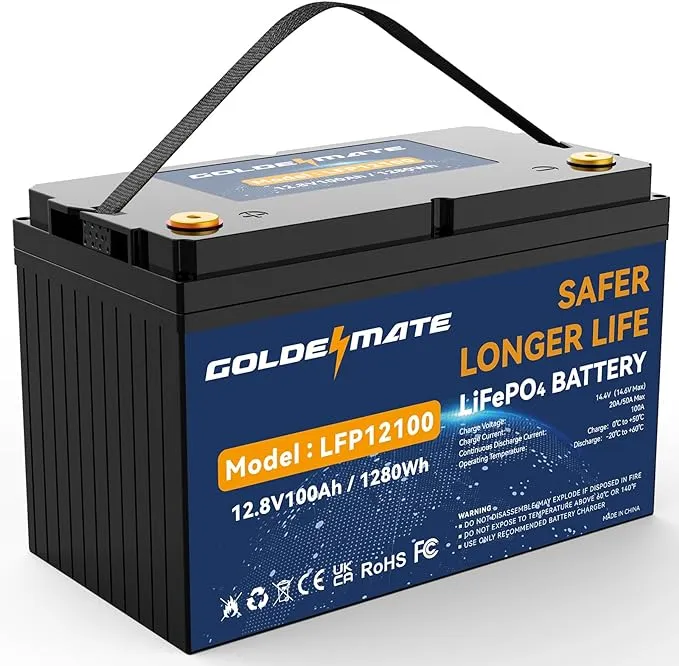
Description: Similarly, not a lot is known about Goldenmate, but their battery has a “made in China” sticker so they are presumably a Chinese based company. They sell a range of products, including uninterruptible power supplies (UPS) for business, homes etc. as well as a wide range of batteries. They are sold in the U.S. and U.K. on Amazon, and they seem to have obtained largely favorable reviews from purchasers.
Voltage: 12 V
Capacity: 300 ah
Max charge: 0.5 C (150 A)
Max discharge (peak): 5 second: 1.3 C (400 A)
Max discharge (continuous): 0.67 C (200 A)
Dimensions: 523 x 269 x 218 mm
Heating: No
Bluetooth: No
Price: $322.99











It says 100 Ah on the Li Time battery pictured. Also my Li Time battery that looks like the one pictured has Bluetooth.
Check out SFK, made in the US
Hmm…my Victron 330s have BT and cost less than what is posted for the 200 above.
I have 15 KW of Eco-Worthy metal case UL approved BT LiFe batteries in my home solar/backup system and they tested to full specs and have performed well for the 4 months I have had them. I have 4 165Ah metal case DCHouse BT LiFe batteries in my sailboat, which I believe are made in the same factory as the EcoWorthy. They also tested to full capacity and have performed well for 9 months. Metal cases help me sleep better, just like the wires in my house are in metal conduit! (A plastic case heater nearly burned my house down 4 years ago and plastic case Li battery consumer devices did burn down 2 of my counsin’s houses in the last 2 years!)
While the comments about fewer bigger batteries makes sense, the BMS systems on these batteries makes them complex electronic devices, which have a lot more failure modes than traditional LeadAcid batteries. So having a few batteries in parallel provides needed operational redundancy. If cost is no concern for you, paying 2-5 times the dollars per watt above, may get you something. My view with a lifetime working in these industries is that this market will inevitably consolidate and if your battery maker is not around, you won’t get that 10 year warranty serviced. The most expensive and the cheapest makers tend to not survive, so picking a company with a good market strategy and a good product makes sense. Buy a $50 LiFe battery capacity tester on Amazon and test every new LiFe batteries full capacity so you can return it right away if it does not meet specs.
I would agree with all that you say, here. Thankyou. Like you, I like the idea of having my LiFePO4 encased in steel. On multiple batteries – the sole issue with parallel operation is to ensure both batteries are equally loaded (which means you need common busbars, with equal length conductors – something that should not be difficult to achieve). Series connection is a whole different subject, however, as the risk is that one battery becomes under-charged while the other is over-charged (a common cause of battery failure). The simplest way to avoid that is to buy a 24V (or 48V) battery in the first place. The alternative approach is to have an external BMS, that is capable of monitoring all cells, as if they were a single battery. The LiFePO4 market place is so competitive, however, that manufacturers do not want to discuss such potential weaknesses and consequently all seem to claim that there is no downside to series operation.
So, what is the recommendation for best value?
So much depends on where you live and the complexity of your system. If you have a multi-battery system, maybe for propulsion service, then Victron is the gold standard. If it’s a simple, single battery house system, I am very happy with my Eco Worthy purchase – the price is hard to beat, I like the steel enclosure and their technical support was dependable..
With regards to LiFePO4 batteries, would you consider installing them under sleeping quarters, assuming that the installation has Class T fusing, a switch to isolate the bank, and appropriate sized wiring?
That’s a good question. From what I recall of the ABYC standard, they talk about the location being secure, not overly hot or cold etc but nothing about proximity to personal space. Storage is usually so limited on a sailboat, that one has to make tough decisions such as you pose – personally, i would be more comfortable sleeping over a LiFePO4 battery than – say, tins of inflamable paint or cleaning products.
The key questions that still need to be resolved are what standards NFPA and ABYC are going to modify and post in 2026 as well as USCG CFRs. From what I have read, USCG and NFPA are awaiting authorization to study and expand their rules and standards. This will have an impact on these types of batteries in recreational marine vessels. They will likely also impact what type of firefighting equipment is going to be required. NOTE: currently ABYC, NFPA and USCG identify the batteries as “Lithium”. They consider LiFePO4 under the umbrella “Lithium” technology. While the industry claims LiFePO4 to be far safer and less susceptible to Thermal Runaway, they are not immune. I for one, will remain in the camp of AGM (lead acid) as the standards and CFRs are clear, stable and defined regarding monitoring and firefighting equipment on my sailboat.
With the advent of larger LiFePO4 batteries why shouldn’t you use them to start a small inboard diesel? The measured inrush current of my older Universal M4-30A engine is 170A with a constant draw of 70A while cranking. Using the Sterling battery example in the article it has a 300A BMS and can easily handle the required load at just 56% C with inrush. A 200A BMS with a 200A plus battery should work just as well. If I have made sure the charging infrastructure (absolutely critical), eg. shore charger and Alternator with external voltage regulator, is in place what problems are likely to occur?
IMHO we need to restructure our thinking regarding batteries. Lead Acid batteries are NOT benign. We are just used to the dangers.
On engine starting – yes, the real concern has been with big currents flowing through a small battery. Bigger LiFePO4 batteries partially address that concern. Note, however, that most outboard motor manufacturers will not honor their warranty, if started by a lithium-ion battery, because experience has been that the BMS can trip out on the starting surge current plus their alternators were designed for lead acid charging.
Secondly, as you say, it is regrettable that all the various agencies have included LiFePO4 in the much broader category of Lithium-Ion, as the risks are not comparable. I gather that the various manufacturers have been lobbying, for LiFePO4 to be separated out but I guess the industry is still too young, for such a distinction to be possible. While the risk of a runaway thermal event in a LiFePO4 battery is not zero, my understanding is that the risk only really arises with abuse, such as puncture, overheating, over-discharging etc. or through amateur wiring configurations etc.
Since there are so many LiFePO4 batteries on the market, I can understand why you limited your review to ten. In the course of your research for this article, did you happen to consider RedOdo? I have a pair of 12 v models and to date have been pleased with their performance. The company’s support system has also been very responsive.
As you say, we had to limit which batteries we looked at, and explained that we did so by limiting it to those that the major retailers support. I just checked up the Redodo name, however, and yes, they look very legitimate. Pleased that they are working out for you.
What about the elephant in the room, Battleborn? Was there a conscious decision to leave them off the review list? A lot of controversy about them at the moment online.
That’s interesting. The sole reason I didn’t include them was because they are not marketed through any of the major retail channels. i was aware, however, that the YT Channel, ‘Sailing Uma”, originally had (i think) 12 of them and removed them well before their normal life expectancy, due in part to multiple BMS shutdowns (which they blamed on the way they used the batteries, rather than the product).
Very glad to see this buyer’s guide on LiFePO4 batteries. Great stuff overall, but for the sake of US readers, it would be nice to see the dimensions in inches as well as mm (though one model is listed in inches). It’s just math, so readers can do the conversion, but for future guides it would just be easier to have both dimensions across all models. Also for comparison’s sake, It’s worth noting the size of standard Group 24, Group 27, and Group 31 batteries for comparison’s sake, as many boats are set up with boxes or trays for these sizes. Here they are in mm: Group 24 = 260 L X 173 W X 225 H; Group 27 = 306 L X 173 W X 225 H; Group 31 = 330 L x 173 W x 240 H. Few of these batteries seem to conform to these standard sizes, so what would you advise on finding boxes or trays, if needed, and reconfiguring for required space if you think it’s best to go with bigger batteries?
From an electrical point of view, bigger batteries are always going to be preferable to several smaller batteries (whether in serues or parallel). Given the ultra-competitive landscape, manufacturers seem to avoid raising raising any concerns over multiple battery configuration (see my response to a similar comment above) . I believe the concept of a battery box or tray goes back to wet lead acid batteries, where there was a concern in containing any liquid spill. The new ABYC-13 standard only refers to the mounting being both secure and well ventilated (which wouid argue against anything like a battery box). On my own installation, I secured my single battery, with straps to a solid platform floor and the corner of two walls – so on three of the six sides – with zero movement and good ventilation
Personally I’m very happy with my 2 x 300Ah 12V Epoch Pro batteries in my Victron based system. I kept the AGM starting battery but added a Victron DC-DC charger for the different battery types. Epoch has a great product line and excellent support, and integrates perfectly with Victron equipment.
Given ABYC communication requirements are the first 4 the only ones that can be used on a boat?
i checked all of their published material and found none of them made such a claim – indeed it’s possible that the ABYC spec is so recent that none of them are yet capable of complying. You will need to ask them directly. One wouid presume, however, that this only requires a software (not a hardware) upgrade, so compliance should not be too difficult.
I just checked with one of the leading LFP manufacturers and they said that they do not intend to offer the early warning alarm and actually view it as a bad move. Their view is that if a battery is approaching any such fault condition, it should be shut down immediately, with no interval for notifying an operator.
ABYC have required communicating a shut down for 3 years.
Do you think that is too recent? How will any batteries without bluetooth comply?
It seems to me that your recommended batteries will fail an insurance inspection.
I think by that definition, probably all wouid fail, as i think their comms are designed just to talk to a smart phone app (which may or may not be on, at the time). I suspect that the ABYC-13 had in mind something more substantial, such as a visual signal plus an audible bell or buzzer (that could be heard over (say) an operating diesel). A big part of the issue is that the industry is geared towards the volume market (primarily commercial vehicles), with small leisure boats a small part of the market. If any manufacturer offers such a communications protocol it would be Victron (they do have the communications to talk to external BMS). Whether insurers refuse cover, in future, for a LFP set up without external alarm remains to be seen.