

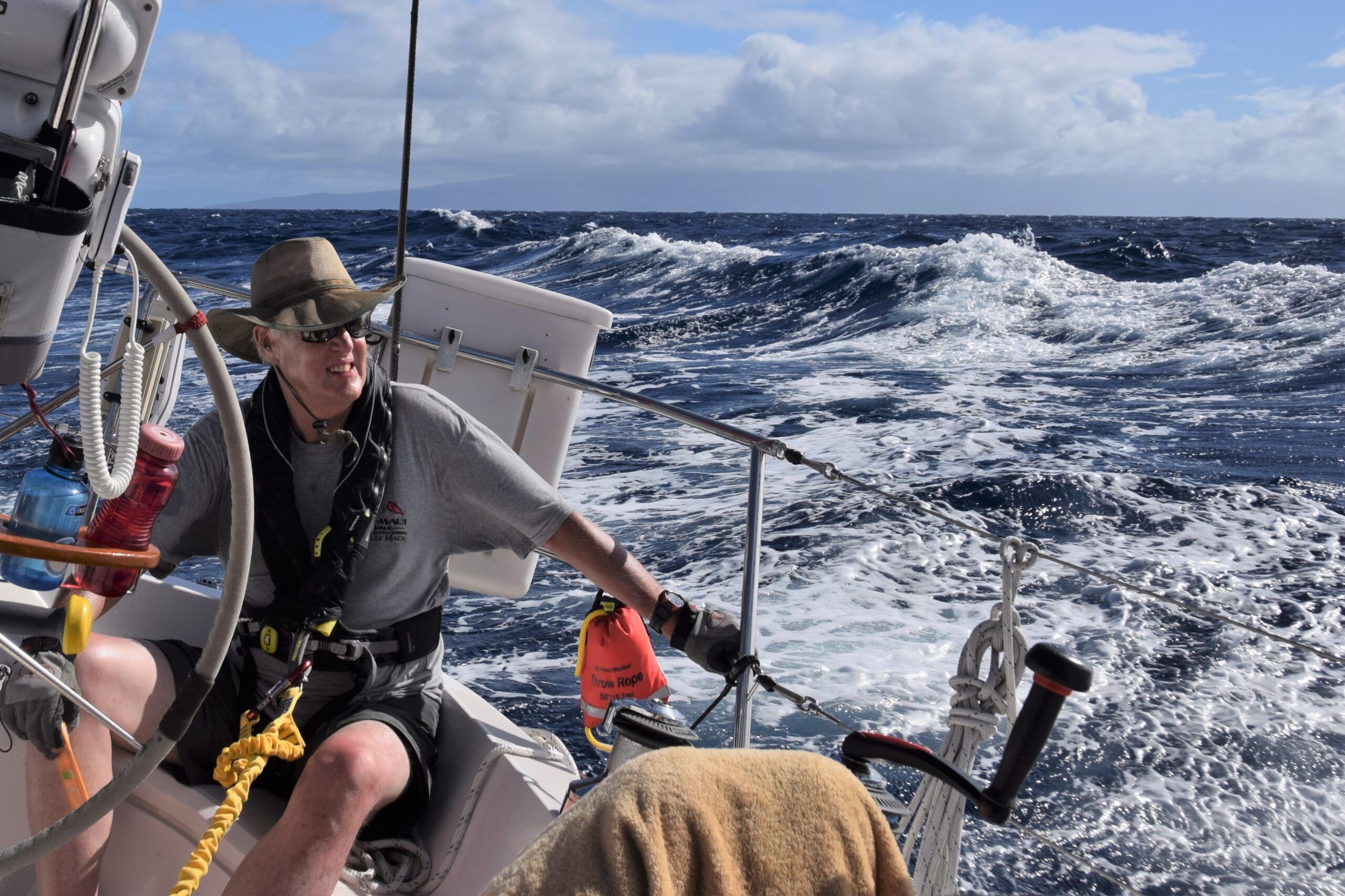
A lifetime of sailing the protected waters of Vancouver Island on British Columbia’s west coast has given me a wealth of sailing experience. But I had no ocean crossing miles. I had dreamed of that possibility but realized that an old 30-foot coastal cruiser was not the practical boat for such an adventure. Sure, I had sailed the west side of Vancouver Island’s open ocean, and conditions there could be as treacherous as any other stretch of water in the world, but a safe anchorage was always within reach. What would it be like to really head out into the wild blue yonder? There are plenty of books to read, and videos to watch, but it isn’t the same as actually being there.
The Call
Then an opportunity came up. A sailing friend announced that he was planning to participate in the Victoria to Maui race, double handed, aboard his Sabre 386 Amiskwi. Chris had crossed oceans before and had an experienced sailing buddy as crew for the race; would I be interested in helping bring Amiskwi back to Victoria as a third crew member? Of course I would! What an opportunity!
I knew the boat well, I looked after her during the winter months and had worked on her in the past. In the year-long preparation for the race Chris, Rick and I undertook some major projects to comply with the off-shore racing standards. I felt comfortable with the boat, and both Chris and Rick were good buddies and competent sailors. My concern was myself; could I live up to their expectations and the demands of ocean sailing?
Seasickness Preparation
Having sailed in big seas and rough water I knew I was prone to seasickness if I wasn’t driving the boat. That would prove a challenge for any long-distance trip. I had secured a supply of seasickness pills from a local pharmacist, medication that I had used before and knew worked without putting me to sleep. I had also purchased scopolamine transdermal patches as a worst-case back-up plan. I had used them years before when instructing high-speed drivers’ training (watching the driver, not the road) and I knew they also worked for me in continuous motion.
Amiskwi Sails to Maui
The Victoria–Maui race started as scheduled and Amiskwi drifted out of view off the Victoria waterfront. I followed their progress with the Race Tracker app, providing communication support as needed. My flight to Maui found Amiskwi secured, Mediterranean style, at the tiny Lahaina harbour after a successful 17 day race. The boat was in excellent condition and required little in the way of repair. Purchasing portable containers for additional fuel for the return trip seemed to be the only challenge. The racing fleet seemed to have cleaned out local supplies!
Nerves Before First Ocean Crossing
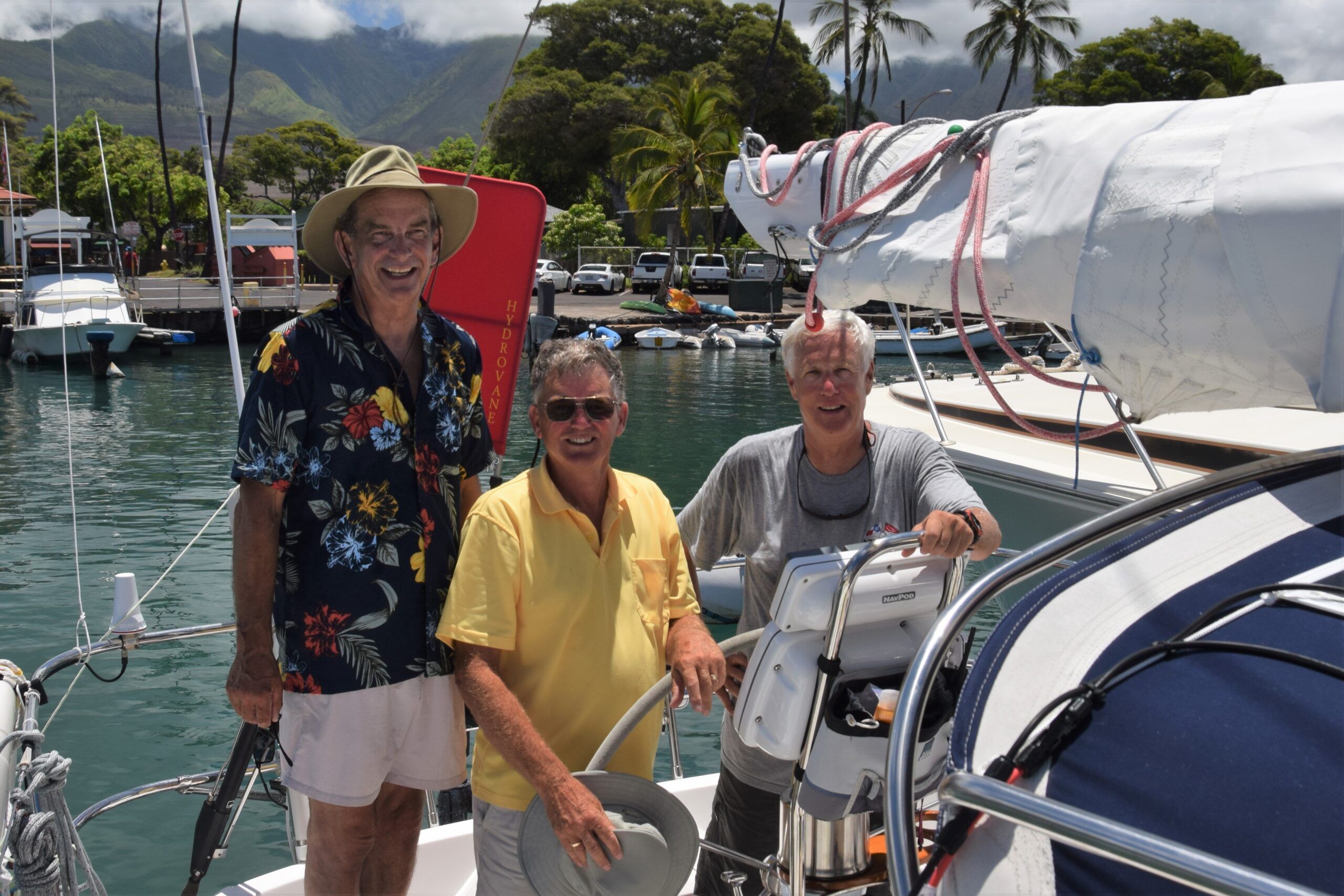
Anticipation was running high the day before departure, a nervous excitement. I was worried. Would I be able to function if I got sick? Would I be a liability to my buddies? I could picture myself heaving over the side for days on end, perhaps forcing the boat back to Maui to throw me on the beach! I decided to forgo the pills and go straight to the patches, sticking one behind my ear as I climbed into bed for one last night ashore.
I woke up the next morning and crawled out of bed—then promptly fell on my face. Oh, did I feel bad. I was nauseous and could hardly stand. Obviously, the patch was not agreeing with me this time. Oh well, nothing to do but tough it out. I forced myself to adapt, packed up and wandered down to the harbour, hoping the effects of the patch would dissipate with fresh air and action. I didn’t want to give up on it just yet. I was first to Amiskwi and washed the accumulated sand off the deck, then realized the portlights had been left open overnight! Seems this wasn’t going to be my day.
Casting Off the Docklines
Chris and Rick arrived with an entourage of family and friends for the big send-off. There was hardly a ripple on the water as we maneuvered out of the narrow harbour entrance. Fenders were brought in and sail cover removed as we motored around the lee side of Maui and abruptly into the 20-plus knot trade winds and 6-ft. swells. A hot sun and warm, humid wind enveloped us as we sailed due north on a tight reach, spray flying back to the cockpit. These were spectacular sailing conditions, the stuff I had dreamed of. But I didn’t last long, already nauseous from the patch, I was soon on the lee rail feeding the fish. Great start! The guys were rather non-plussed about it and I saw the occasional smirk.
First Watches at Sea
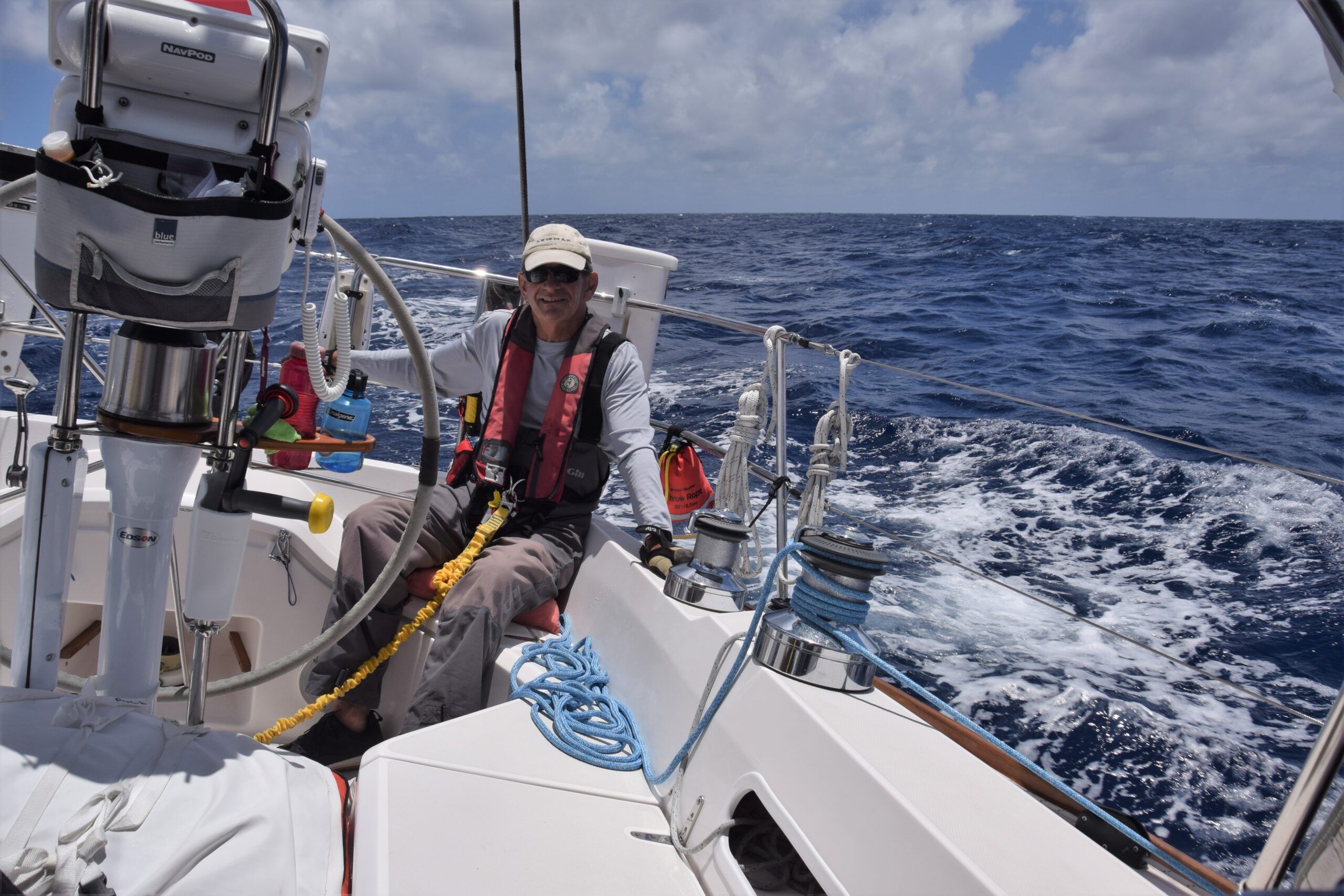
We divided watches into three-hour rotations, and I stood my watch as required, sick or not. I gave up on the patch and went back to the pills. As the first sunset approached it idly crossed my queasy mind that we should be looking for an anchorage soon. Ha! That wasn’t going to happen. I slept in the cockpit.
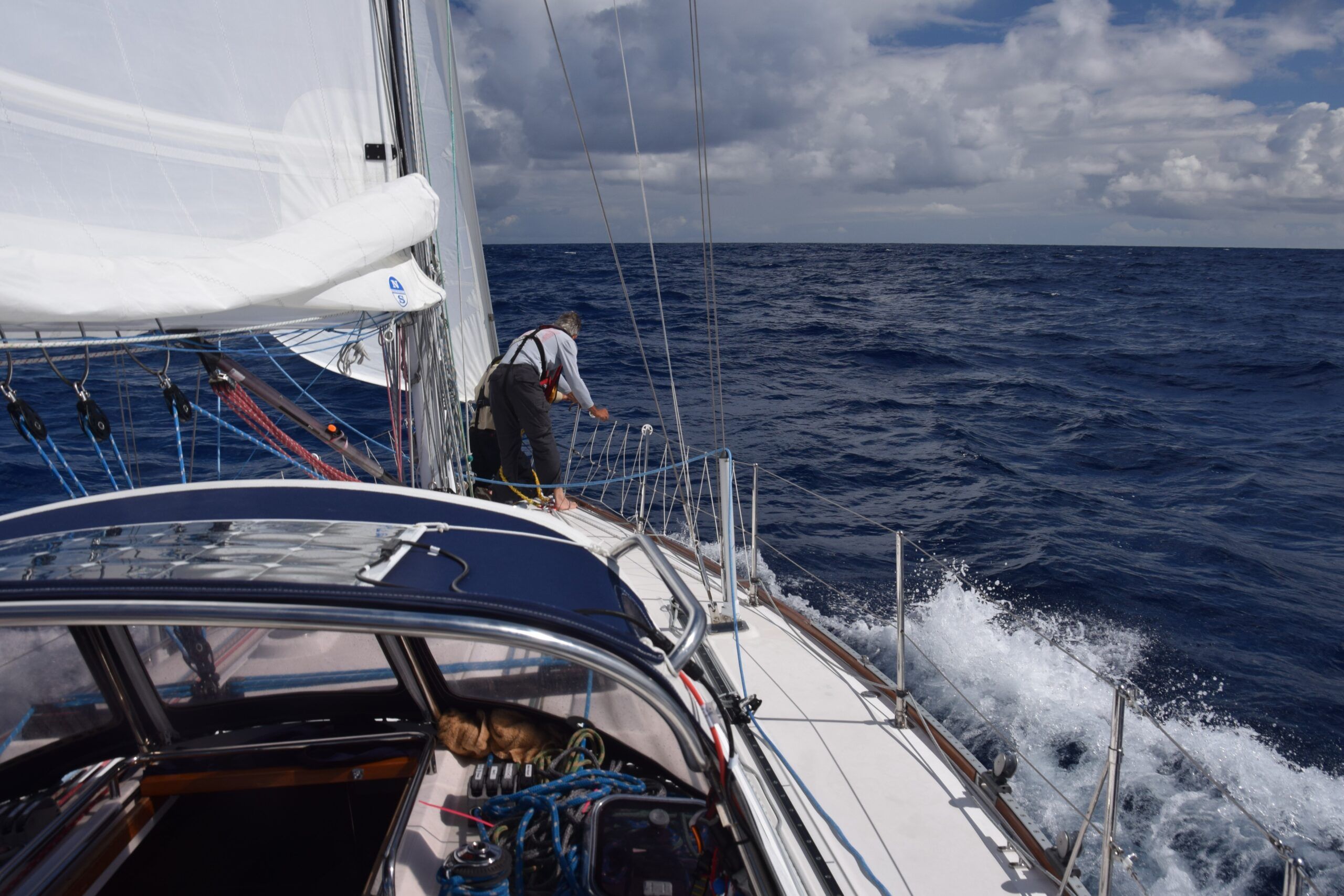
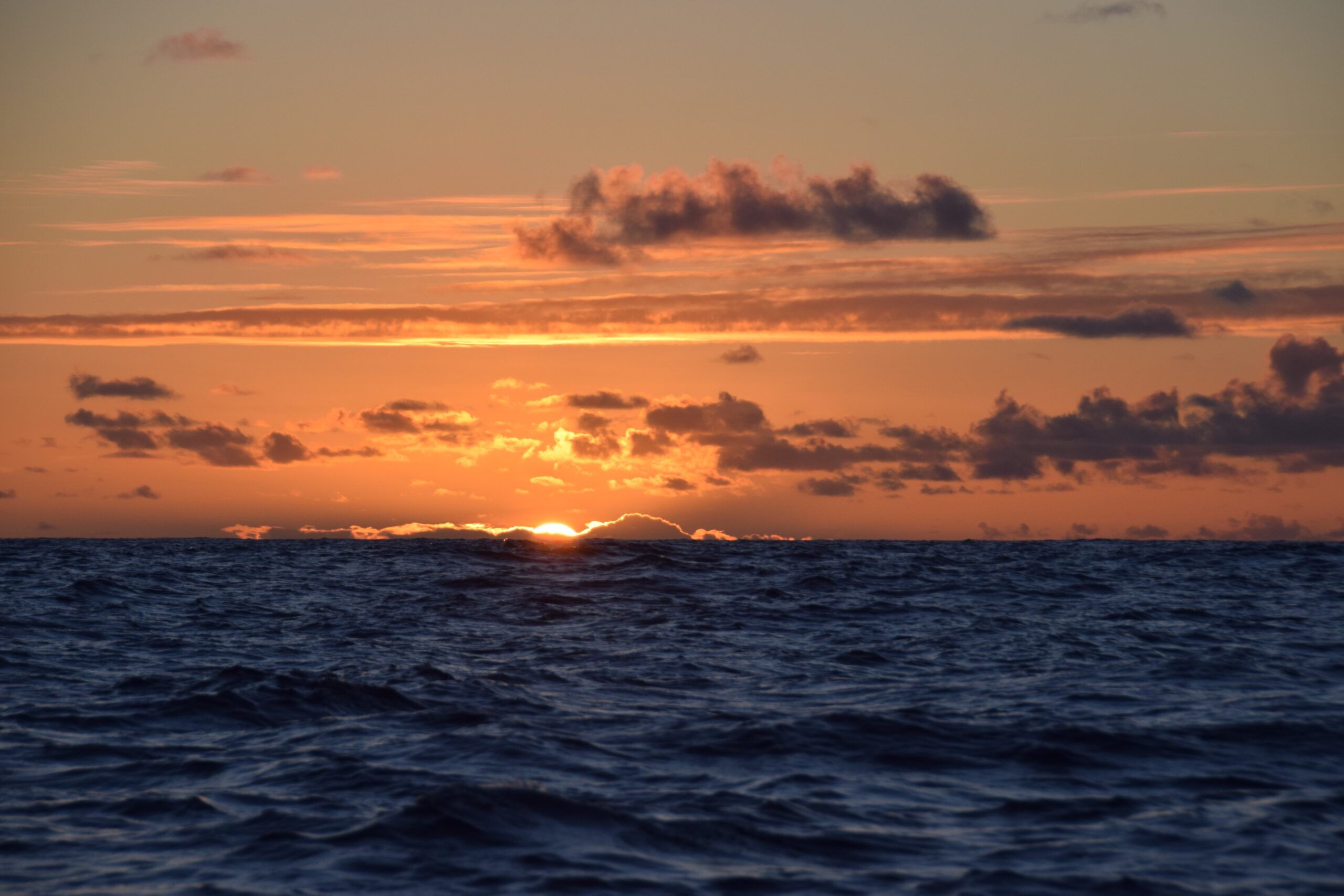
By the end of day two I was back on my feet again, feeling a bit deflated but able to function. I could start enjoying the experience. And what an experience—warm, turquoise water and blue skies, steady wind just off the bow as we thrashed to windward under jib and reefed main. We were on the starboard tack for the next 10 days. There were spectacular golden sunsets, a glowing moon during the nights, and the constellation Orion emerging from the eastern horizon to herald the coming day. The wind vane did yeoman service keeping us on course, aimed due north to avoid the large high-pressure system that dominates off the BC/Washington State coast during the summer months.
The Rhythm of Bluewater Sailing
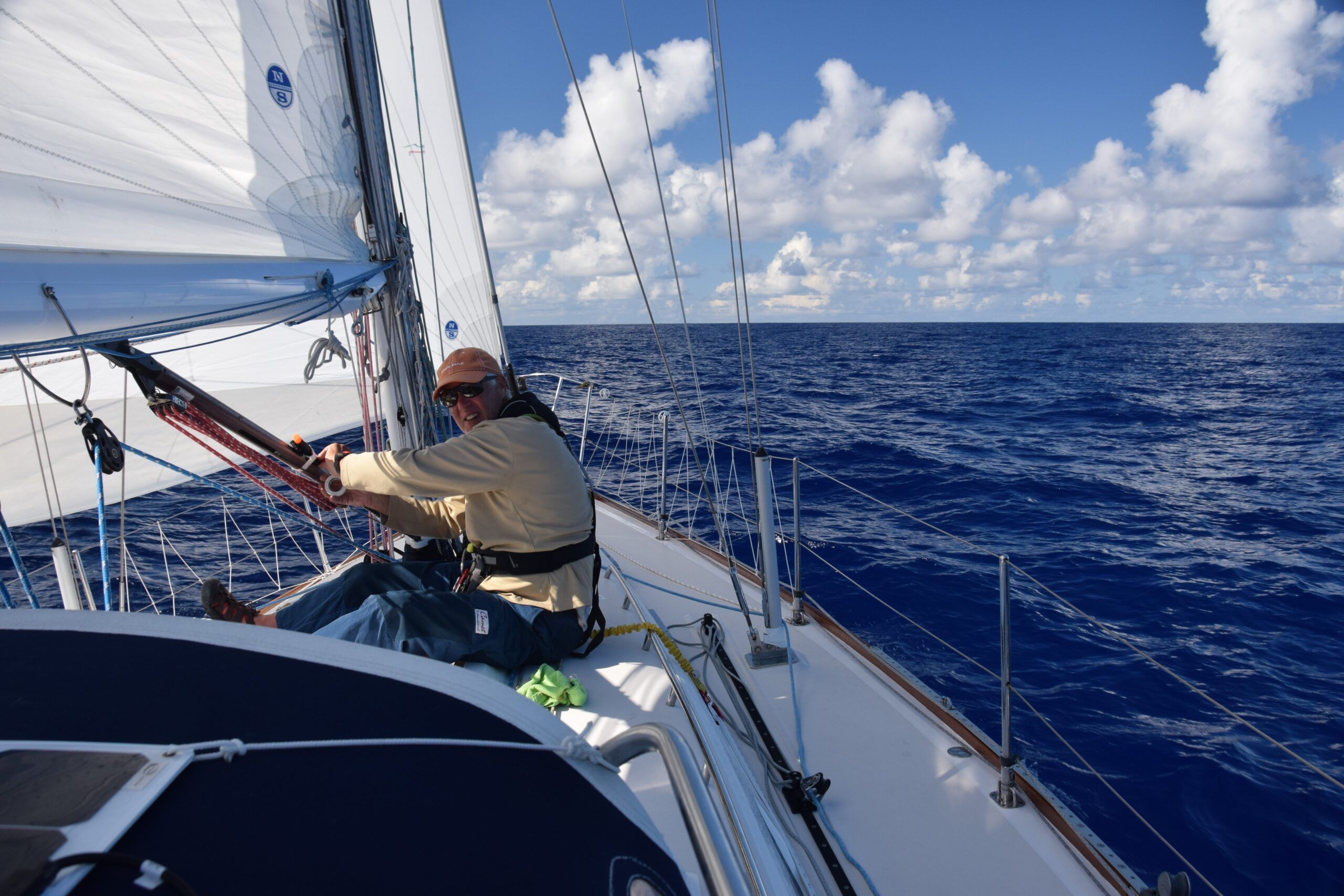
The days started going by in a blur. The wind, the sunsets, the moon overhead, the squalls rolling in from the east, all fabulously enjoyable for a neophyte. The trade winds subsided as we travelled north, the boat motion easing considerably. At one point it was like sailing in the protected waters of the Canadian Gulf Islands, perfect conditions as we read books, prepared meals, and enjoyed lively conversations.
Dolphins came and went, the shadows of small shearwaters fluttered across the mainsail under the full moon, laughing like the munchkins of the Wizard of Oz. Countless Pacific Portuguese Man-of-War covered the water for miles, their tiny white sails catching the wind with determination as we sailed through the carpeted waves. The occasional frigate bird skimming the wavetops, keeping a respectful distance. There wasn’t a sign of any other boat on the horizon, even though we knew there were others travelling nearby, also headed back to Victoria.
Night Watch Illusions
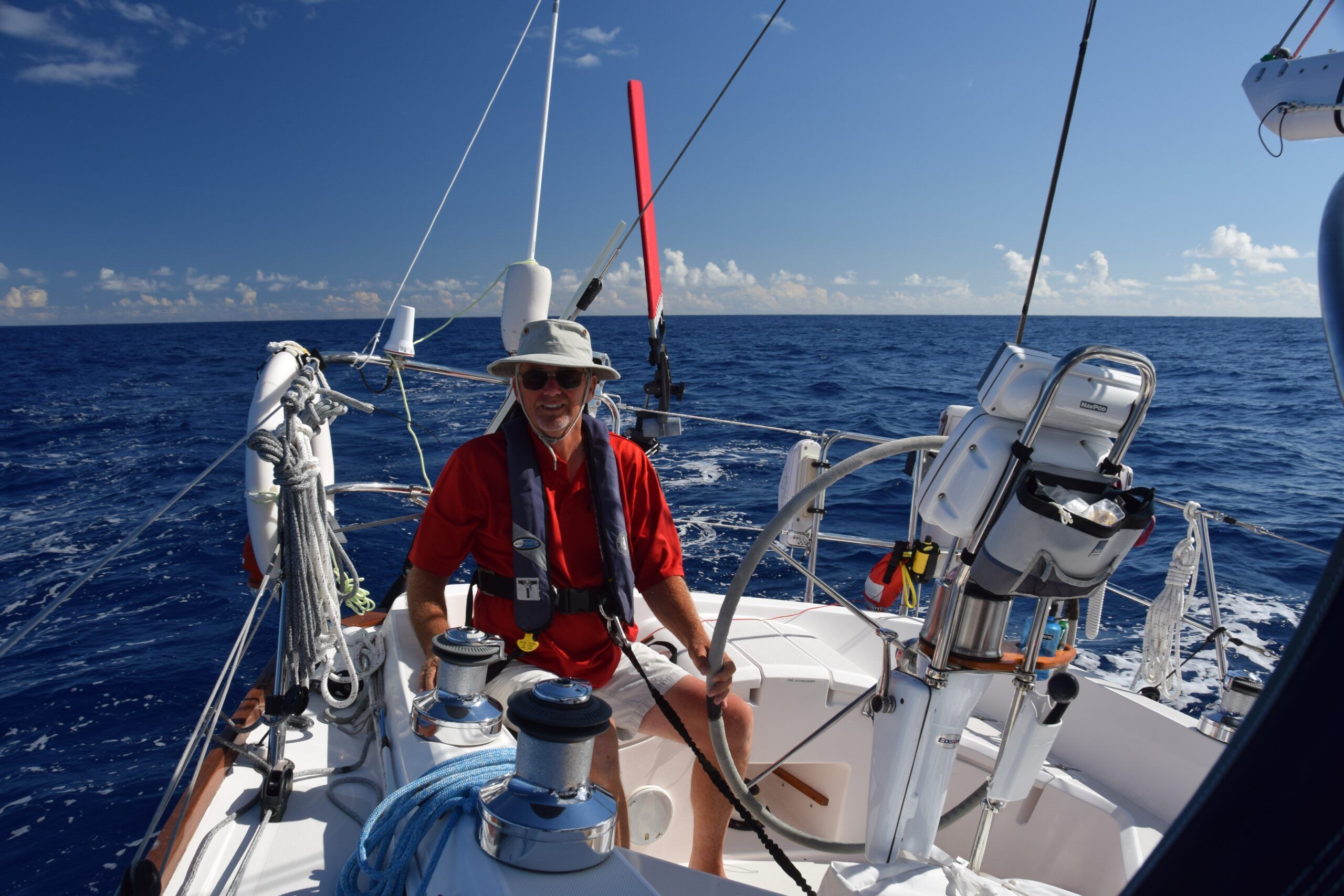
Having experienced may years of shiftwork I knew how long and lonely the dark hours could be. I had a bag of hard candies at the binnacle and an iPad full of music at hand. While on watch in the wee hours I would stand-up every three tunes and do a complete sweep of the horizon, searching for any sign of a commercial vessel.
Near the end of one midnight watch I was driving the boat along this seemingly canyon of white cliffs, a full moon lighting the clouds overhead. Ahead I could see a farmhouse with a white picket fence. It was getting closer and I could see a children’s swing beside the porch. I would have to tack or head down to avoid a collision! I was ready to call the guys on deck, the standing rule being any change in direction required at least two on deck. I was moving towards the companionway when I came to my senses, realizing it was a hallucination caused by fatigue. I had a good laugh. I can still see that house and picket fence to this day.
Wind Shifts
As we sailed north word came that the Pacific high between us and the BC coast had narrowed into an hourglass shape. Should we turn east towards the narrowing section where wind was likely to be nonexistent, or continue north towards Alaska, staying in the wind and sail around the top of the system? We had extra fuel aboard to cross the high, and continuing north was a much longer route. It was time to tack and head east.
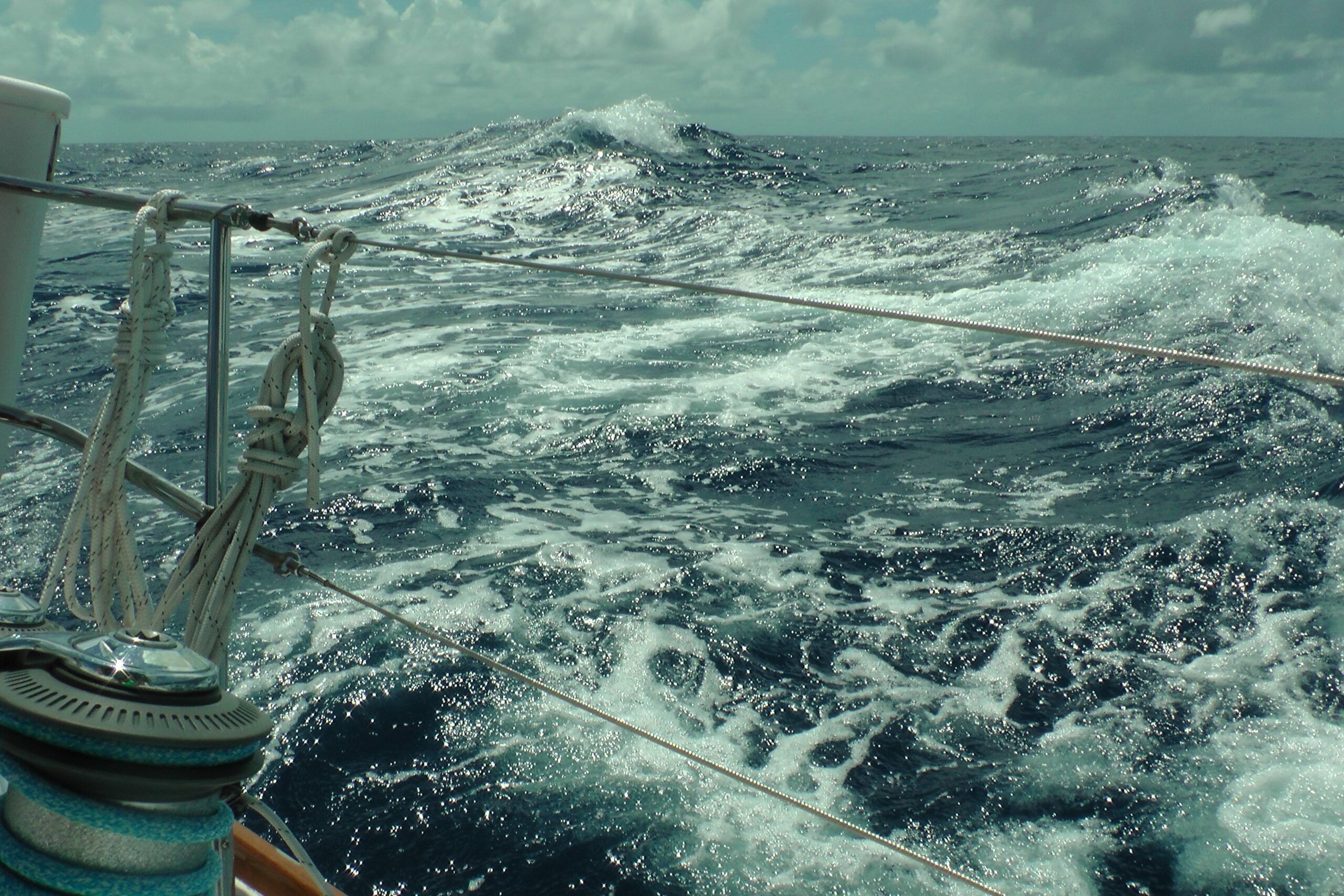
Under greying skies, the wind went light and then virtually calm, the long ocean swells rolling by from the northwest. At the most economical engine speed we powered for a day and a half, aiming for the mid point of Vancouver Island, well north of the Strait of Juan de Fuca and our destination. We knew that there would be a river of northwest wind on the far side of the Pacific high and feared being swept down the Washington, or even worse, the Oregon coast. Having to tack to windward to reach the mouth of Juan de Fuca against the anticipated winds would be brutal.
Reaching the Northwesterlies
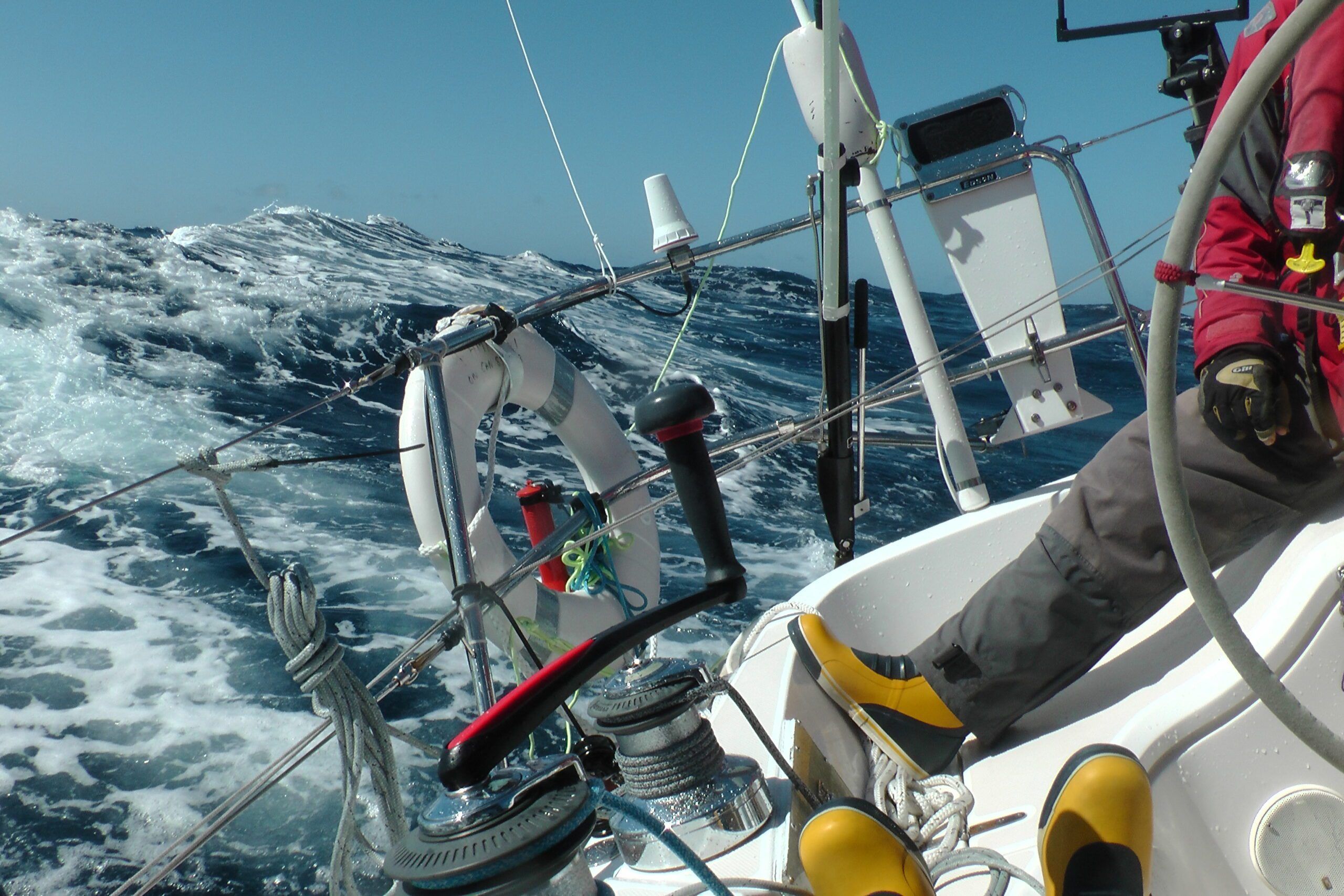
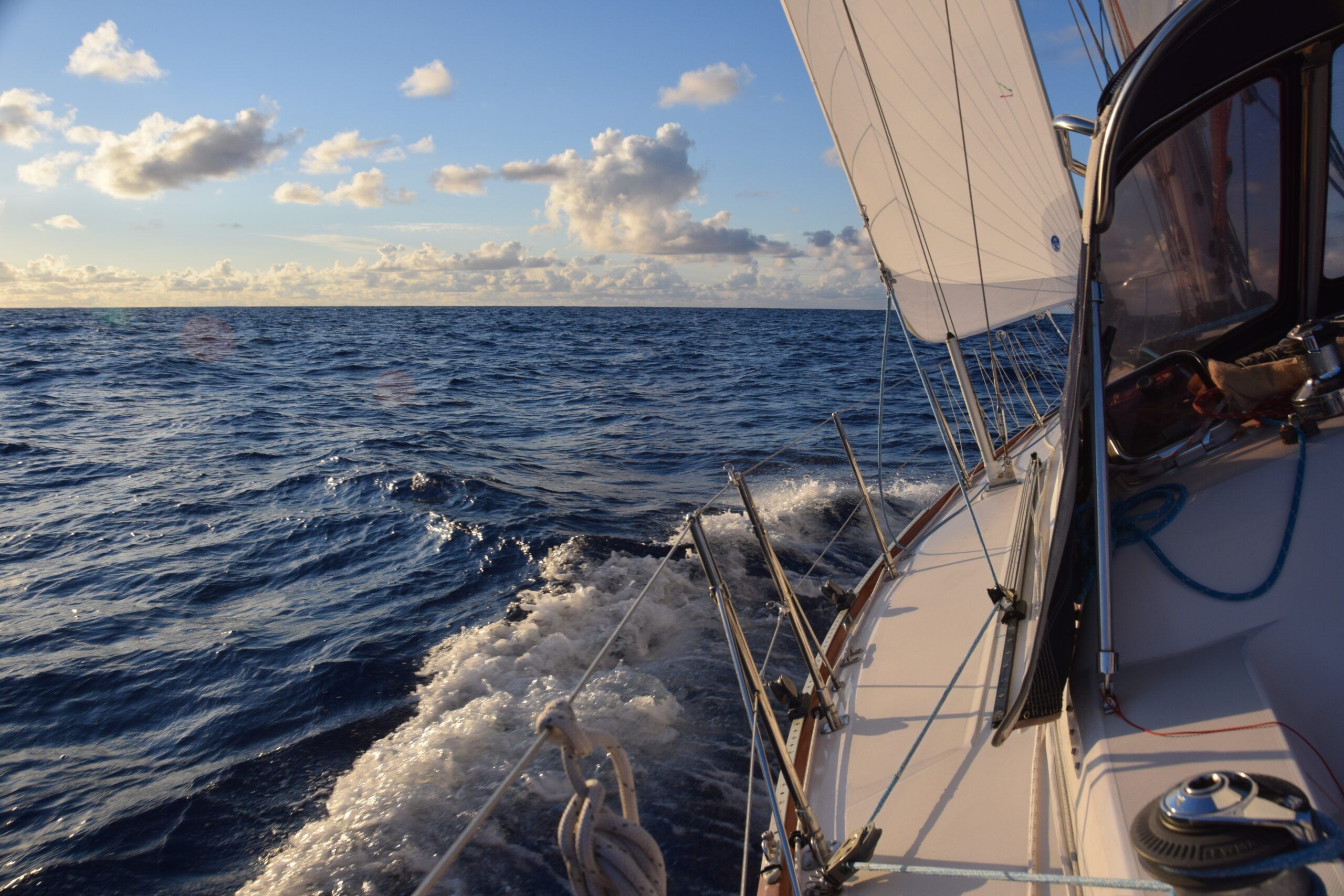
Finally, under magnificently clear skies and a canopy of stars, a breeze heralded the beginning of the northwesterlies. Each mile brought stronger winds as we sailed out of the Pacific high and into a wall of northwest wind. Before long a smaller jib and double reef the main were in place. Chris and Rick had crawled forward on hands and knees, the bow plunging into cold dark water in the pre-dawn light. By mid morning the long cresting rollers and 25-plus knot winds were creating a maelstrom of sound and motion as Amiskwi raced for home, hard on the wind.
The jib was soon rolled up and replaced by the small storm sail hanked onto the inner forestay. What a day! What a sail! Moving mountains of deep blue water beneath a brilliant sky, whitecaps as far as the eye could see, every movement aboard carefully planned before letting go of anything. This was definitely not a Sunday afternoon sail. But this was ocean sailing at its most thrilling.
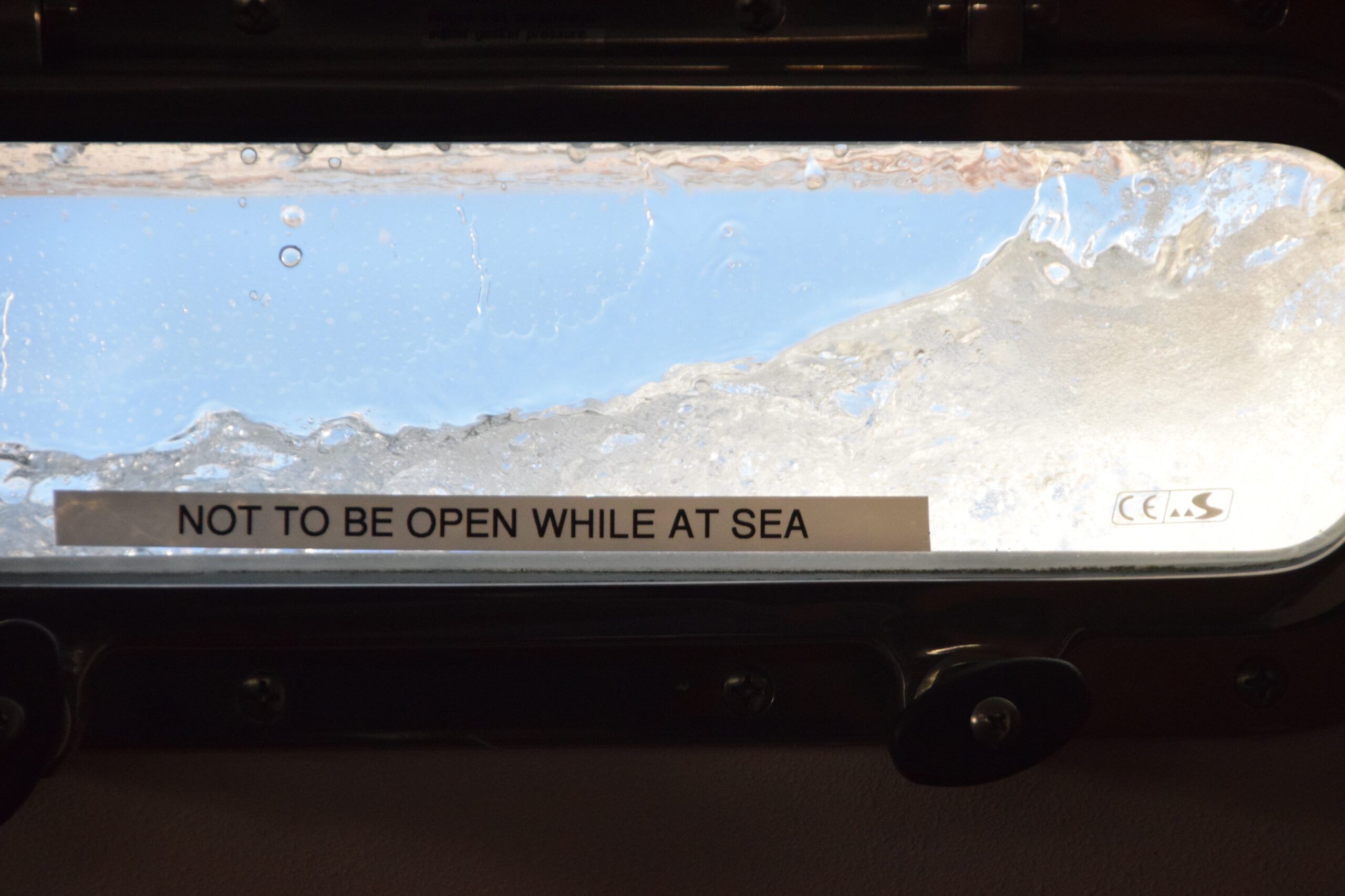
The windvane was able to maintain a steady course, the on-watch sailor making minor adjustments while unsuccessfully trying to keep dry. Foul weather gear eventually turned into personal swimming pools. Evening approached with another spectacular sunset casting golden shadows on the moving mountains surrounding us. We shortened watches to two hours and, as darkness enveloped us, we entered a very small world, the nearest crest, the nearest trough.
Wild Seas and High Excitement
Amiskwi plunged onward, bullets of spray flying back into the cockpit. With my back turned to the wind and spray, I would turn for a glance to windward, watching for large commercial vessels bearing down on us. The view was intimidating. Towering snow-topped mountains that seemed destined to crash into the cockpit, but always slid under the stern. The instruments showed a steady 35-plus knots with higher gusts. I had total confidence in the boat, what Rick and Chris called “naive optimism.” But I knew the boat was built for these conditions and well maintained. Should a mechanical failure happen, it would be met with three competent and motivated sailors. I was having a blast.
Land Ho!
The second day of the “big wind” saw the pressure start to ease as we approached the west side of Vancouver Island. Out of the haze I watched an ocean-going freighter on a reciprocal course about eight miles to windward. Then, behind the freighter was the faint outline of a mountain range—Vancouver Island! I identified Mount Ozark at the north edge of Barkley Sound with its large white radar dome, a familiar sight from my cruising days along these shores. One more night on the water and we’d be home.
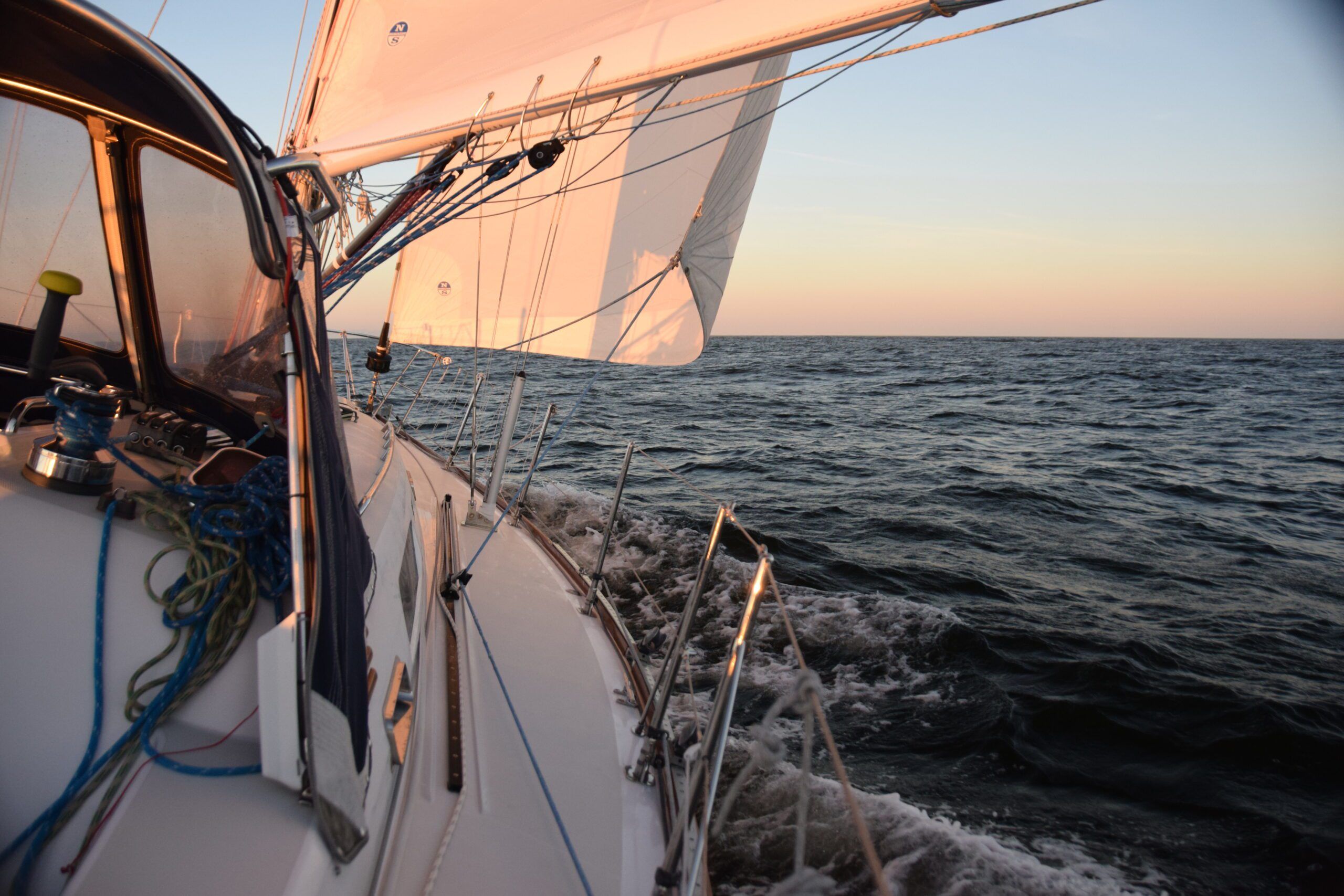
The wind evaporated completely overnight as we drifted into the entrance of Juan de Fuca Strait, the full moon shimmering on glassy water, the lights of Neah Bay to starboard. Motoring past Victoria to our home port of Sidney was a bit anticlimactic after such a raucous sail. An unexpected dock party with family and friends welcomed us into the marina, a fitting end to our experience.
A Taste for the Blue
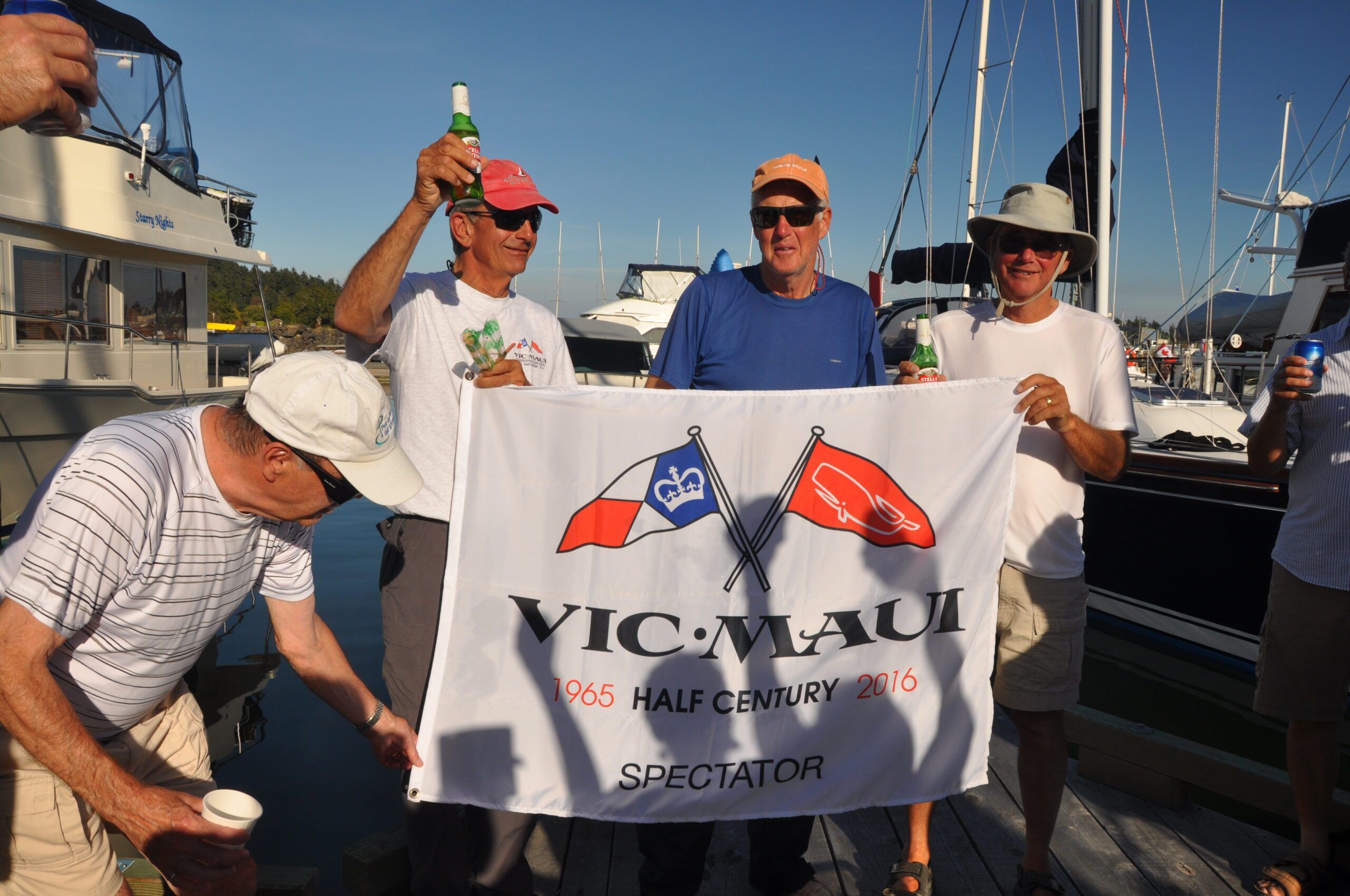
Although glad to be home, arrival was a bit poignant as well. It had been an amazing eighteen days of sailing, and it was already over. The anticipation of getting home conflicted with the wish that the trip would go on and on.
Of course, the question arises: Would I do another ocean crossing? In reflection, it would have to be with the right boat and crew. This crossing was an experience that would be difficult to surpass.
Resources:



Great story enjoyed by this novice….maybe some day, lol
How many days before your seasickness was gone?
Hello Mike. Thanks for the question. I suffered through one and a half days of sea sickness, mostly as a result of the medication patch. It affected me much more than it had all those years ago. I should have removed it when I woke up that morning when I felt seasick standing on firm ground! Once removed, mid day of the second day at sea, I started to feel better by the evening. I still stood my watches, just couldn’t keep food down.