
“Is everything okay? Your EPIRB was set off.”
It’s a call no sailor wants to receive.
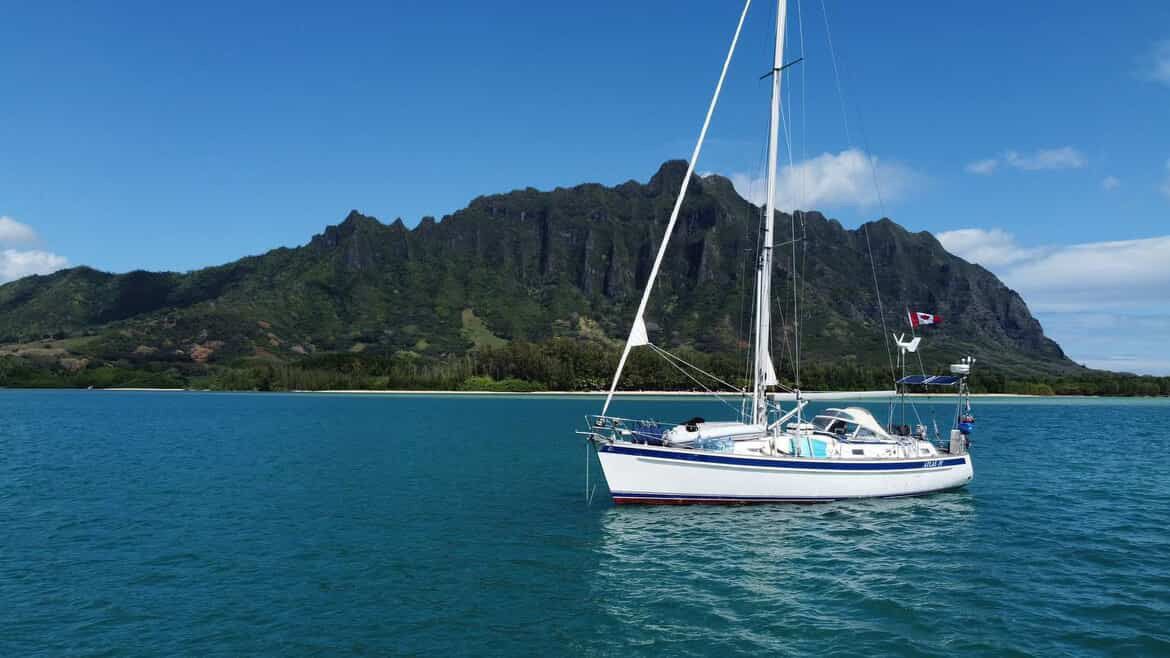
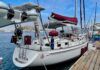
For Josh Verstoep and Sierra Grant, that call set off an extraordinary chain of events that eventually led to their Hallberg-Rassy 40, Atlas IV, dragging anchor in Colón, Panama, without a functioning engine. Seamanship, level-headedness, and more than a little luck ultimately saved the boat from serious damage, and possibly from becoming another wreck in a notoriously unforgiving anchorage.
A Cockpit Drain Hose Fails
At the time of the call, Josh was working in northern Canada as a navigator aboard a supply vessel. He splits his time between professional work and cruising with his fiancée, Sierra. Atlas IV was left in Panama for hurricane season, tucked safely into the mangroves under the supervision of a caretaker. Everything should have been fine.
It wasn’t.
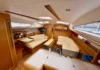
The likely culprit was a cockpit drain hose that had reached the end of its service life. According to Josh, the hose had likely been degrading slowly, allowing water to seep into the boat. The bilge pump managed the ingress for a time, masking the problem. Eventually, the hose failed completely. Water rose eight inches above the cabin sole and triggered the hydrostatic EPIRB release.
The boat came within inches of being lost.
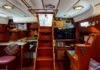
Family members acted quickly while Josh was unable to leave work. The boat was hauled, and saltwater was cleaned out, but the damage was severe. Electronics were destroyed, and the engine was no longer operational.
Background in Engineless Sailing
Josh is no stranger to life at sea. At age eight, his parents announced they would circumnavigate as a family. He spent five formative years aboard a catamaran sailing throughout the Caribbean. That experience set the course for a life afloat. Josh knew he needed to find a job in the maritime industry on top of wanting to sail all the time.
Later, while living in British Columbia, Josh owned a small sailboat, Whisper, powered by an unreliable outboard. Eventually, sailing without an engine became simpler than troubleshooting it. He learned to anchor, dock, and maneuver under sail alone.
He later purchased Atlas IV, a 2003 Hallberg-Rassy 40, and singlehanded her to Hawaii and later back to San Diego and eventually to Mexico before Sierra joined full-time. Sierra had limited sailing experience beyond occasional outings on Whisper, but she quickly developed her sailing skills aboard Atlas.
Today, the couple divides their time between cruising in Panama and teaching sailing on a tall ship in Victoria, British Columbia.
That background would soon prove critical.
Stranded in Bocas del Toro
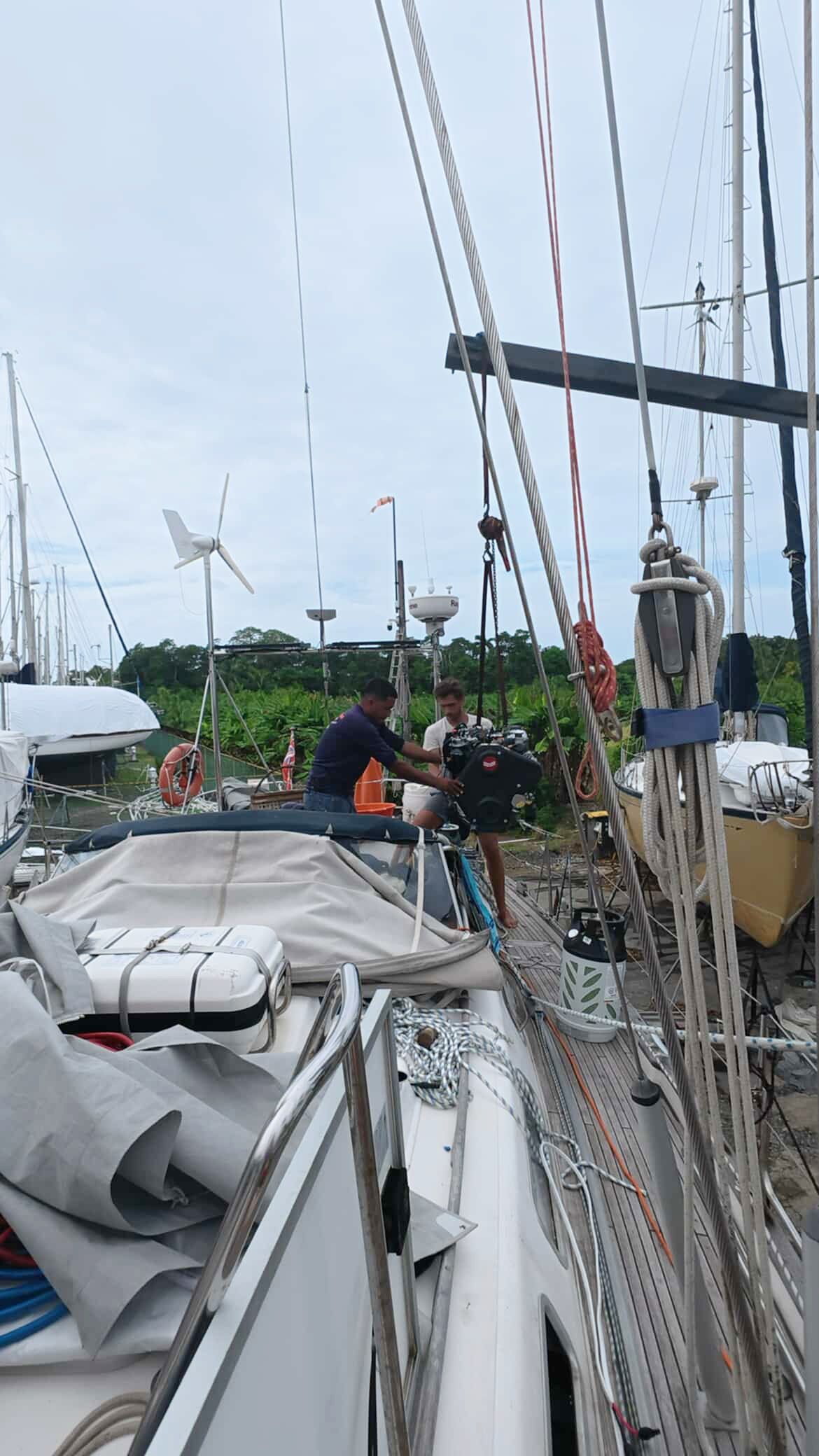
When Josh returned to Panama, he quickly realized the scope of the problem. The boat was in a remote yard—the engine would not start.
“I wasn’t nearly as versed in engines as I am now,” Josh admits.
He relied on local tradespeople, but diesel expertise was limited. He was told it was a starter battery issue. He purchased several new batteries, but the engine still refused to turn over. At no point, did anyone think to investigate if there was water in the engine. Ultimately there was, so they would need a full replacement.
After weeks in Bocas del Toro with no resolution, the couple made a decision.
“We knew we weren’t going to get the help we needed there,” they explained. “We had both sailed engineless before and had been moving around the archipelago for months. We felt confident we could get to Colón and find proper help.”
The passage north to Colón, roughly 130 nautical miles, is famously uncomfortable. Wind and current rarely align favorably. Their first attempt ended in retreat due to seasickness and worsening conditions.
The second attempt went better. With a brief stop at an island anchorage, they aimed to arrive in Colón early in the morning. Favorable conditions pushed them faster than expected, and they arrived in the evening, just before sunset.
They were tired. They planned to anchor, rest, and head into a marina at first light to begin major repairs and get on with their now shortened cruising season.
Anchoring in Marginal Holding Ground
Josh had done his research.
“I knew the holding wasn’t great,” he says. “And the charts showed several wrecks in the anchorage.”
The holding in the Colón anchorage is noted as muddy with poor holding in strong winds. On top of that, because of the amount of traffic, there was a lot of fouled ground under the water.
Atlas IV carries 60 m of 8 mm chain followed by 40 m of rode and a Spade anchor. Josh has long trusted his ground tackle, noting he’s never had issues with the setup before cruising Atlas IV.
They deployed their full length of chain in 10 m of water. The secondary anchor, a 25 kg Bruce, was prepared for immediate use. The dinghy was hip-tied and ready to assist. Josh took visual transits on shore and checked them repeatedly before deciding to sleep in the cockpit as a precaution. After over 20 hours of sailing, the crew was understandably tired.
Everything was set as conservatively as possible.
When the Squall Hit
Around 2230, Josh felt the first drops of rain. Within minutes, wind increased rapidly to an estimated 30 to 35 knots. The rain turned torrential.
Almost immediately, Josh checked his transits. The boat began to drag. Immediately, Josh dropped the secondary anchor. Then they started the dinghy to motor against the wind and give the anchors a chance to set. The anchors were holding, but still dragging.
Josh initially sought out another cruiser in the anchorage for assistance as their 8 hp outboard wasn’t going to be enough to push the boat. The response was discouraging. The other sailor doubted Josh’s plan and began to panic at the distance between Atlas and the wreck. Josh quickly abandoned this help as an option.
With limited options, they contacted the Panama Canal Authority for assistance.
While waiting, Josh implemented a kedge maneuver. Josh would dinghy out and drop the secondary anchor abeam of the boat. Using this maneuver repeatedly, they attempted to angle the boat’s heading diagonally away from the wreck. They continued to drag slowly, but at least their angle reduced the immediate collision risk.
Canal Authority Assistance Arrives
Within an hour, a small Canal Authority RIB arrived. In his best Spanish and the other’s best English, they discussed a plan. After discussion, and a plan to get towed to the commercial mooring balls, the RIB captain tied up alongside Atlas and instructed them to drop their anchors.
Josh attached a float to the primary anchor line, hoping to retrieve it later. They placed their faith in the RIB to tow them toward a nearby commercial mooring. By this time, they were an estimated 30 m away from the wreck.
The RIB came alongside on the windward side, but it quickly became apparent that the RIB, with it’s one inboard engine, lacked the power to control a 15-ton sailboat in gusting conditions. With no anchor deployed, Atlas was at the mercy of wind and current and an underpowered RIB. The captain told Josh another boat, a bigger one with two engines, was coming. Everyone remained tied together to wait for reinforcements while doing their best to keep the situation from getting worse.
The Tow That Failed
A larger pilot vessel soon arrived, capable of ferrying crews to commercial ships. Initially, the vessel came alongside and was pushed into Atlas by the wind, and without fenders, there was some damage. Fortunately, Hallberg-Rassy yachts are built with substantial rub and rails and the damage was limited to some bent stations.
Josh quickly communicated that a side-tie wasn’t going to work and a traditional tow would be best. He retrieved pre-coiled hurricane lines and rigged for a conventional bow tow. He communicated instructions in Spanish and secured the towline. But because of the stretchiness of the lines, he secured it around the windlass and then took cover away in case it snapped.
The vessel began pulling Atlas at four to five knots as it had no ability for low geared towing. Progress was made toward the mooring, but a new problem emerged. There was no clear method to slow or safely stop the combined momentum. Josh yelled in his best Spanish and used his only light to indicate that they were closing in on the mooring. Eventually the crew of the towboat understands and quickly turns around. At the helm, Sierra had to slowly follow the path of the towboat while Josh kept tension on the towline—at the same time Josh had to try to get it undone from the boat as quickly and safely as possible.
“Then tow boat and Atlas pass each other in opposite directions,” Josh recalls.
Moments later, the towline snapped with a loud crack. It likely fouled the towboat’s propeller. At this point, both the RIB and pilot boat withdrew from Atlas.
Atlas IV was adrift once again.
At least, this time, they had room.
A Dangerous Entanglement
Josh told Sierra to prepare the headsail. The plan was to sail downwind, raise the main and tack out to sea.
“We had space,” he explains. “We could sail back out to sea and heave-to until morning.”
Winds remained in the low 20-knot range.
Then they heard an unfamiliar rubberized stretching and groaning sound.
The dinghy, still tied alongside, was being dragged under the hull. A big polypropylene blue line had gone between the rudder and keel of Atlas and the eye of the line was around the dinghy’s outboard leg and was pulling it under the boat between the rudder and keel.
They had a plan to sail out of the anchorage, but were now stuck to some line. Without knowing what the line was connected to (if anything), Josh jumped in the water with a bread knife and began cutting.
Sierra recalls hearing a pop and seeing a flashing light. Josh recalls feeling huge pressure on his chest and thinking he was having a heart attack—that wasn’t the case. Josh’s life jacket had auto-inflated while he worked, and the small SOS light illuminated the submerged line.
In a stroke of luck, they realized what had happened.
They were attached to the mooring—the line fouling the dinghy was the mooring pennant.
Josh called for the hurricane lines, swam to the mooring buoy, and made Atlas IV fast.
Finally secure, the exhausted crew slept.
Repairs and Reflection
The next morning, they arranged a tow into the marina. The following weeks were spent replacing the engine and all damaged electronics. Now, both Josh and Sierra have a deep knowledge of Atlas and her systems.
“Looking back, we probably should have hove-to offshore and entered in daylight, directly to the marina,” Josh reflects. “But we were tired and made what felt like the best decision at the time.”
“I thought we were going to lose Atlas,” Sierra admits.
Josh remained outwardly confident throughout, but both agree the debrief afterward was critical.
Lessons in Seamanship
Several key takeaways emerged from the ordeal.
Organization Matters
Tools, lines and gear were accessible and properly stowed. Hurricane lines were coiled and ready. The dinghy keys were easy to locate. That organization reduced stress and saved valuable time.
Know How To Maneuver Under Sail
Their experience sailing engineless aboard Whisper proved invaluable. They were comfortable anchoring, tacking in confined waters, and preparing to sail on and off anchor.
“Atlas is a sloop with a fin keel, so she’s relatively nimble in tight quarters,” Josh explains. “Every sailor should know how to maneuver under sail, especially in anchorages.”
Understand Towing Fundamentals
Whether assisting others or being assisted, knowing how to rig a proper tow is essential. Bow-to-stern and alongside towing techniques should be familiar before they are needed.
Do Not Rely on the Engine
Engines are mechanical systems. They fail. Seamanship must fill the gap.
Know the Local Language
Even imperfect Spanish enabled Josh to communicate with Canal Authority crews. Without that ability, coordination would have been significantly harder.
Would They Do It Again?
Asked whether they would cruise engineless again, Sierra answers quickly.
“No.”
Josh pauses.
“I love the romantic idea of sailing engineless,” he says. “Would I do it again? Maybe one day.”
For now, though, Atlas IV has a new engine. And her crew carries forward a reminder that in tight anchorages, marginal holding and squally conditions, seamanship remains the most reliable auxiliary aboard.



Nice article. Those early days with sketchy outboards are golden.
Either a `British Seagull or a Clinton 3 1/2 hp. Yuk.